Seven Perfect Shuffles Randomize a Deck of Cards. But How Many Sloppy Ones?
Seven Perfect Shuffles Randomize a Deck of Cards. But How Many Sloppy Ones?
By John Pavlus | June 17, 2026
For decades, a cornerstone of mathematical probability has been the claim that seven "riffle shuffles" are sufficient to fully randomize a standard deck of cards. However, this "magic number" comes with a catch: it assumes you possess the surgical precision of a professional card mechanic.

The "Mathematical Miracle" of 1992
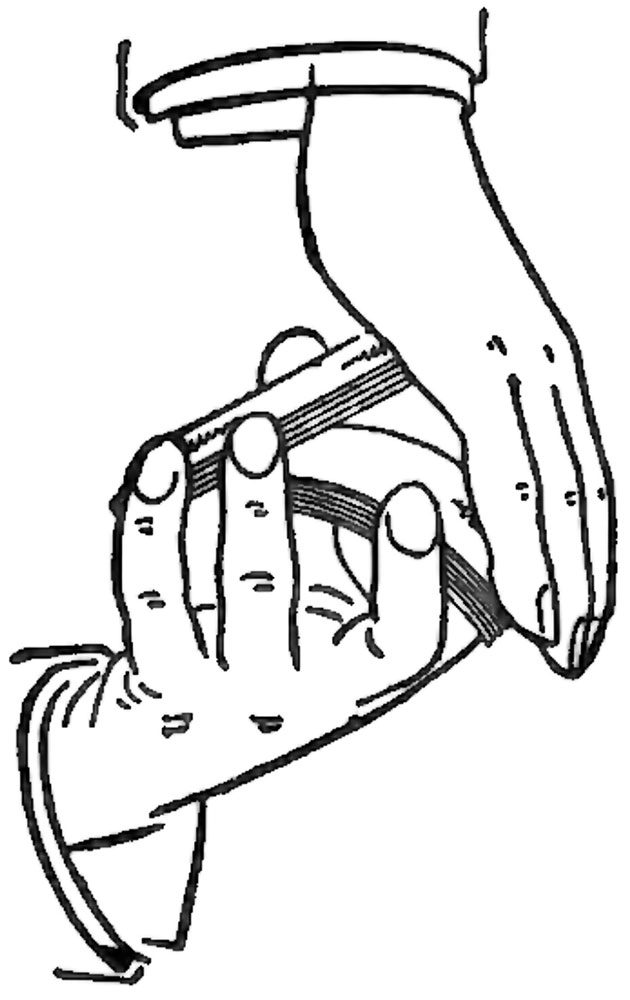
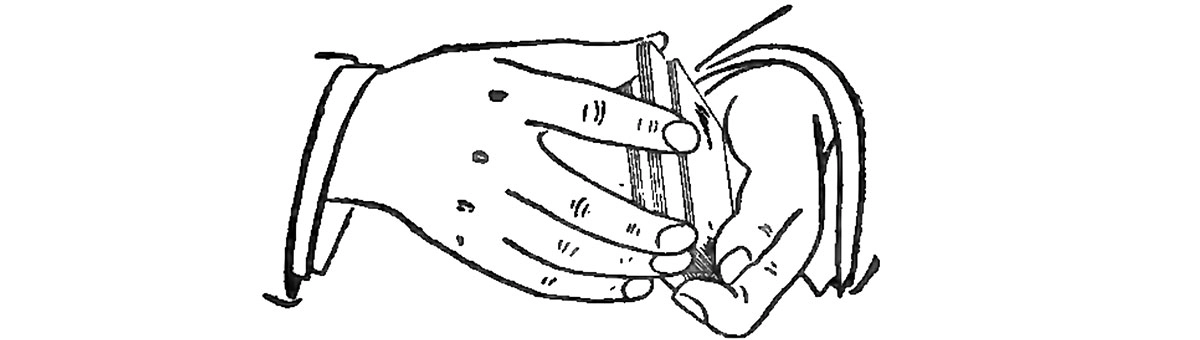
In 1992, mathematicians Dave Bayer and Persi Diaconis provided a proof regarding the riffle shuffle—the technique where a deck is split into two halves and interleaved using the thumbs. Their findings revealed a startling pattern: the deck does not become random linearly. Instead, it experiences a cutoff phenomenon.
"Cutoff phenomena... happen in much the same way as Ernest Hemingway famously described going bankrupt: gradually, then suddenly."
For the first few shuffles, the deck remains surprisingly structured. Then, upon the seventh shuffle, the system abruptly tips into a state of high entropy (disorder). This behavior isn't unique to cards; it is observed in various dynamical systems, such as spin glasses in condensed matter physics.
The Combinatorial Scale
To understand why this is impressive, consider the sheer scale of a deck's possibilities. The number of ways to arrange 52 cards is defined by the factorial:
This results in approximately configurations. To put this in perspective:
- It is nearly equal to the estimated number of atoms in our galaxy.
- Every time you shuffle a deck, you likely create a sequence that has
never existed beforeand will never exist again.

The Mechanics of the Cutoff
Cutoffs are conceptually similar to phase transitions in physics. For example, liquid water remains liquid as it cools until it hits , at which point it suddenly crystallizes into ice. In mathematics, these are studied via Markov chains—models that track how a system transitions between different states.
While these cutoffs are believed to exist in most large, complex systems, proving them is notoriously difficult. Laurent Saloff-Coste of Cornell University notes that for most suspected cutoffs, mathematicians simply don't know how to prove them.
The "Perfect Shuffle" Requirements
The Bayer-Diaconis proof was considered a "miracle" because it provided a universal formula for any deck size. However, it relied on two strict constraints:
- The Interleaving Model: Cards must be dropped from the left or right pile with a probability proportional to the number of cards remaining in that pile.
- The Precise Cut: The deck must be split almost exactly in half.

Expanding the Theory: The "Sloppy" Shuffle
If you shuffle like a middle schooler rather than a pro, the 1992 proof fails. In 1999, Steven Lalley of the University of Chicago tried to address this, noting that people often cut decks too high or too low. In these "sloppy" cases, certain clusters of cards tend to stay together, resisting randomization.
Now, a new team has bridged this gap. Mark Sellke (Harvard/OpenAI), Jialu Shi (Cambridge), and Jiamin Wang (Princeton) have proven that a cutoff phenomenon still exists even when the deck isn't cut evenly.
Comparison: Perfect vs. Sloppy Shuffling
| Feature | Bayer-Diaconis Model | Sellke-Shi-Wang Model |
|---|---|---|
| Cut Precision | Must be | Can be uneven/sloppy |
| Outcome | Sharp cutoff at 7 shuffles | Cutoff still exists (though varies) |
| Complexity | Rigid constraints | Flexible, realistic constraints |
| Status | Mathematical "Miracle" | "Brilliant piece of mathematics" |
Summary of the Process
To achieve the "perfect" randomization described in the original theorem, one would need to follow this checklist:
- Split the deck into two equal piles of 26.
- Interleave cards based on proportional probability.
- Avoid simple alternating patterns (L, R, L, R).
- Repeat the process exactly seven times.
For those who cannot maintain this rigor, the new research provides comfort: the "sudden" transition to randomness still happens, even if your cut is off.
Logic of a Riffle Shuffle (Pseudo-code)
def riffle_shuffle(deck):
    left_pile, right_pile = cut_deck(deck) # Can be uneven in new proof
    shuffled_deck = []
    while left_pile or right_pile:
        # Probability based on pile size
        if random.random() < (len(left_pile) / (len(left_pile) + len(right_pile))):
            shuffled_deck.append(left_pile.pop())
        else:
            shuffled_deck.append(right_pile.pop())
    return shuffled_deck