Google Hits 50% IPv6
Google Reaches the 50% IPv6 Milestone

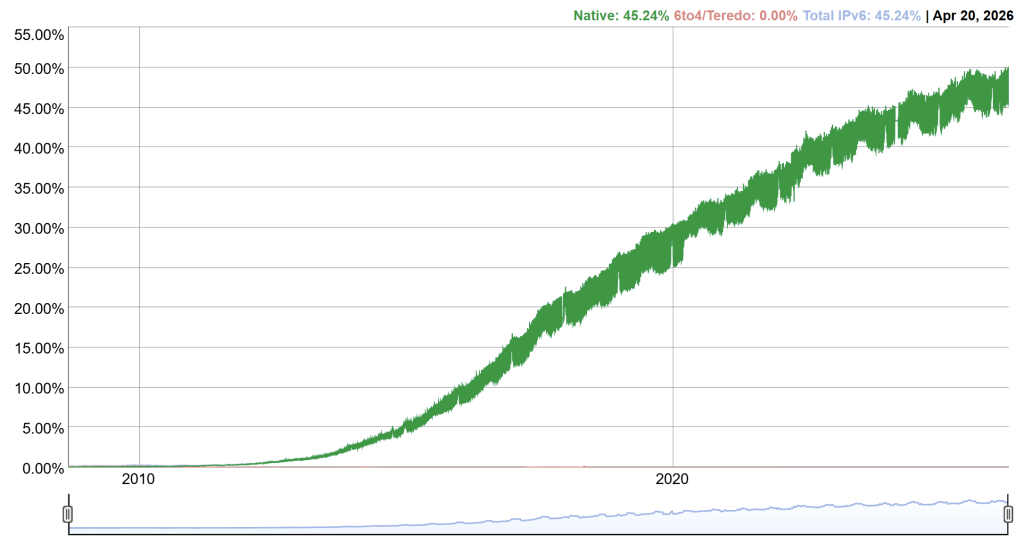
Recent reports have highlighted a major turning point in internet infrastructure: Google's internal metrics now show that IPv6 adoption has hit the 50% mark for the first time.
These figures are derived from Google's ongoing observation of its user base, specifically tracking the percentage of people who connect to Google's suite of services via the IPv6 protocol. Crossing this threshold is more than just a number; it serves as empirical evidence that IPv6 is a stable, mature, and globally viable protocol capable of operating at a massive scale.

The Complexity of Global Adoption
While a single percentage looks clean on a graph, the actual rollout of IPv6 is far from uniform. The global trend line masks significant regional disparities. Because Google provides limited per-economy data and no detailed regional statistics, these nuances are often hidden.
To get a clearer picture, we must look at APNIC Labs data. For instance, the adoption trajectories in the following nations differ wildly from the global average:
- India
- Viet Nam
- Saudi Arabia
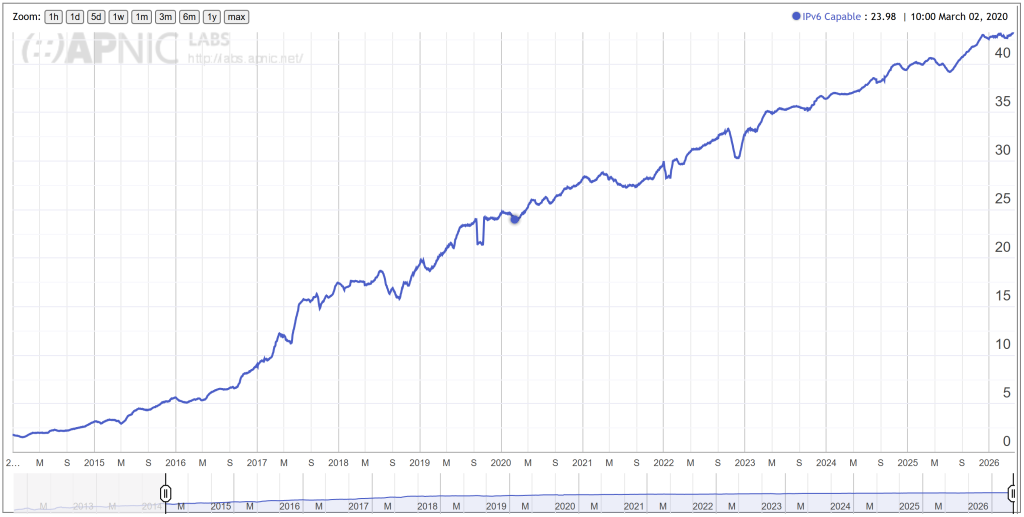
Interestingly, APNIC’s own measurements indicate a 42% worldwide IPv6 capability (as seen in Figure 2), creating a noticeable gap between their findings and Google's.
Analyzing the Measurement Gap
Why do two organizations using similar tools arrive at different numbers? To understand this, we have to look at the methodology.
How APNIC Measures Capability
APNIC Labs utilizes Google Ads to distribute measurement triggers. These ads appear across various platforms:
- Web browsers
- Mobile games
- Third-party applications
The process follows this logic:
- Broad Exposure: Ads are run 24/7 globally to capture a wide sample.
- Technical Analysis: The system tests
IPaddresses,BGProuting, andDNSconfigurations. - Privacy First: No Personally Identifiable Information (PII) is stored; data is only aggregated by ISP, economy, or region.
This initiative is supported by partners including ICANN and Google Research.
The Weighting Factor
The core difference lies in how the data is processed. Google's numbers reflect traffic to Google, whereas APNIC attempts to model actual internet usage.
Since Google Ads are optimized for revenue and delivery, the number of samples collected is not proportional to a country's population. For example, if there is a spike in ad demand in Tunisia or Egypt, APNIC will receive more samples from those regions than from Asia or South America on that specific day.
To correct this, APNIC uses a statistical weighting model:
# Simplified logic for APNIC weighting
def calculate_global_ipv6(economy_data, population_data):
    total_weighted_sum = 0
    total_pop = sum(population_data.values())

    for economy, capability in economy_data.items():
        weight = population_data[economy] / total_pop
        total_weighted_sum += capability * weight

    return total_weighted_sum
Comparison Summary
| Feature | Google Measurement | APNIC Labs Measurement |
|---|---|---|
| Primary Metric | Traffic to Google Services | General Internet Capability |
| Weighting | Raw traffic volume | Population-weighted (World Bank data) |
| Result | ||
| Focus | Service accessibility | Global infrastructure health |
The Path to Deployment
The variance between these two figures effectively "brackets" the reality of IPv6 adoption. While some critics argue that the slow climb to 50% represents a systemic failure, this view ignores the economic realities of infrastructure.
"The global Internet is not a ‘command economy’; it evolves through collaboration and cooperation within market-driven conditions."
The transition requires massive capital expenditure. The speed of adoption depends on how ISPs balance three factors:
- Network Growth
- User Expectations
- Operational Realities
Economic Drivers of Adoption
- Legacy Providers: Many established ISPs invested heavily in
IPv4and sought to maximize their Return on Investment (ROI) by maintaining viableIPv4networks. - New Entrants: For newer providers, especially in the mobile sector, starting with
IPv6is the rational choice as it significantly lowers the Total Cost of Ownership (TCO).
Data Flow Visualization
In conclusion, while the numbers may vary depending on the lens used, the trend is clear: IPv6 is no longer a future goal—it is the current reality of the global internet.