A US military exercise to launch a satellite on short notice
Stealthy Space Maneuvers: The US Military's Rapid Satellite Deployment Test
A recent US military operation in the cosmos began with almost no public fanfare. The US Space Force is currently attempting to revolutionize its orbital logistics, aiming to shrink the timeline for deploying new satellites from years down to months weeks, days, or even hours.
The "Quiet" Launch
On a recent Friday, Rocket Lab executed a discreet launch from its private facility at the Māhia Peninsula in New Zealand. This was not a standard commercial mission; it was a high-stakes exercise to evaluate the Space Force's capacity for "responsive space" during a low-Earth orbit (LEO) crisis.
The operation was characterized by an unusual level of secrecy:
- No Livestream: Unlike typical Rocket Lab missions, there was no public broadcast.
- Limited Warnings: The only public hint was a standard safety notice advising mariners and pilots to avoid the flight path.
- Official Silence: Neither the Space Force nor Rocket Lab issued formal press releases immediately following the event.
However, the truth emerged via the US military's space object catalog, which was updated to include a new asset: Victus Haze Puma.
Orbital Parameters
The Puma satellite was placed into a specific polar orbit. The technical specifications are as follows:
| Parameter | Value (Imperial) | Value (Metric) |
|---|---|---|
| Perigee (Low point) | 215 miles | |
| Apogee (High point) | 286 miles | |
| Inclination |
Mission Profile: Victus Haze
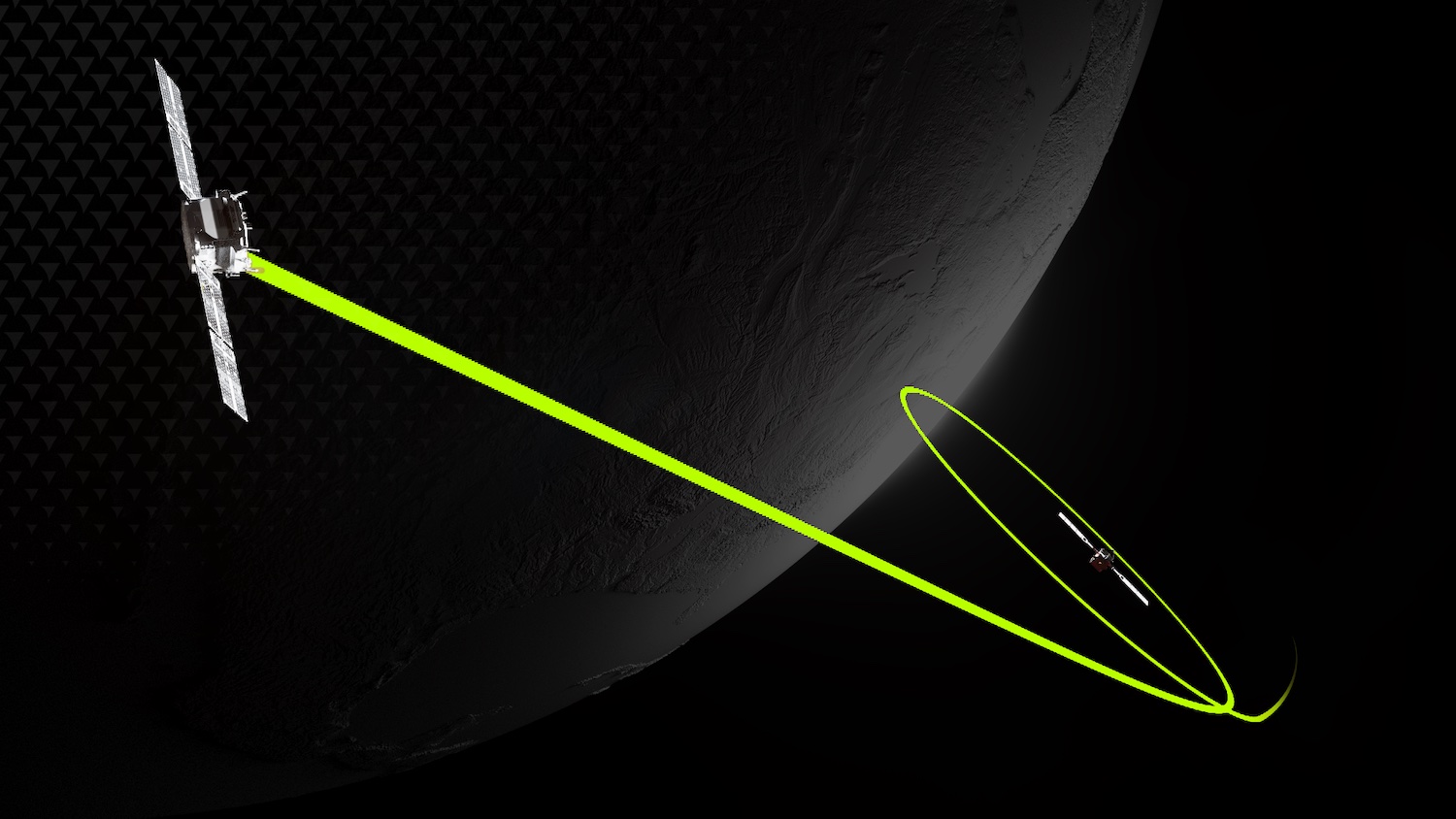
The Victus Haze mission is a sophisticated "cat-and-mouse" game designed to simulate a real-world confrontation with an adversary (such as Russia or China).
The Operational Flow
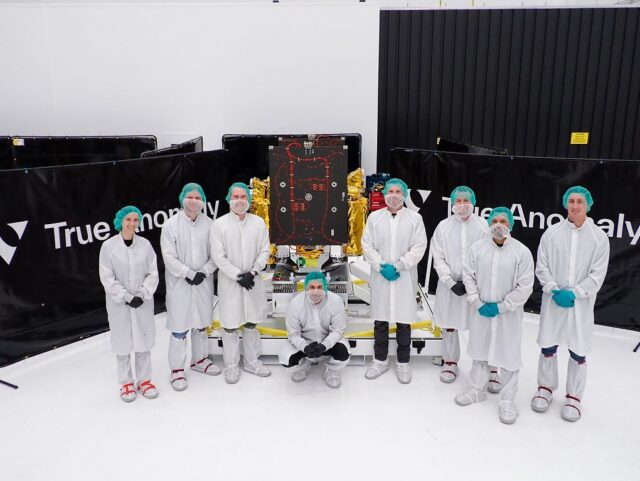
- The Target: A satellite built by True Anomaly (the
Jackal-0004) was launched on May 3 via a SpaceX rideshare. - The Inspector: Rocket Lab maintained a satellite on standby, ready to launch the moment the order was given.
- The Encounter: According to astrophysicist Jonathan McDowell, the
Pumasatellite closed the gap to within 60 miles () of theJackalonly eight hours after its launch.
Mission Objectives Checklist
- Rapidly launch an inspector satellite.
- Execute closed-loop tracking of a maneuvering target.
- Perform uncooperative rendezvous.
- Switch roles (Jackal as inspector, Puma as target).
Technical Capabilities & Partnerships
True Anomaly, based in Colorado, specializes in satellites designed for national security. Their software stack allows for "end-to-end uncooperative rendezvous and proximity operations."
"Jackal has been fully commissioned and is prepared for its next phase of mission," the company stated, noting that the spacecraft successfully validated its moving object detection algorithms using both wide- and narrow-field cameras.
Evolution of Responsive Space
This mission builds upon the foundation of the 2023 Victus Nox mission.
{
  "mission_comparison": {
    "Victus_Nox": {
      "partner": "Millennium Space Systems / Firefly Aerospace",
      "achievement": "Launch within 27 hours of order",
      "complexity": "Low (Single satellite/rocket)"
    },
    "Victus_Haze": {
      "partner": "True Anomaly / Rocket Lab",
      "achievement": "Multi-asset coordination",
      "complexity": "High (Multiple satellites, rockets, and spaceports)"
    }
  }
}
Interestingly, the Victus Haze plan had to be adapted. True Anomaly's component was originally slated for a Firefly Alpha rocket, but a launch failure grounded that vehicle for nearly a year, necessitating a shift in strategy.
The Space Force continues to push for this "responsive" capability to ensure that if a critical satellite is disabled or a threat appears in orbit, the US can react in hours rather than years.