Tokenmaxxing is dead, long live Tokenmaxxing
Tokenmaxxing is Dead, Long Live Tokenmaxxing
Generally, when a person drops tens of thousands of dollars on a venture, they expect a tangible return on that investment.
I've noted before that the consumer market is a strange beast; people love spending money on things that either waste their time or cause them genuine distress. This explains the current obsession with gambling apps. For instance, some people are thrilled to bet $100 on the unlikely event that Victor Wembanyama hits a three-pointer while performing a handstand and singing the French national anthem.
The Corporate Paradox
In the corporate world, you rarely hear a CEO announce that they are going to incinerate capital simply because it "feels good." This is a far cry from a "whale" in a game like Genshin Impact spending a fortune on gacha pulls.
Imagine if Mark Zuckerberg suddenly declared that Meta would start burning cash for the sheer thrill of it. Usually, once you reach the helm of a massive, influential company, you stop doing things just for kicks—with one notable exception.
What is "Tokenmaxxing"?
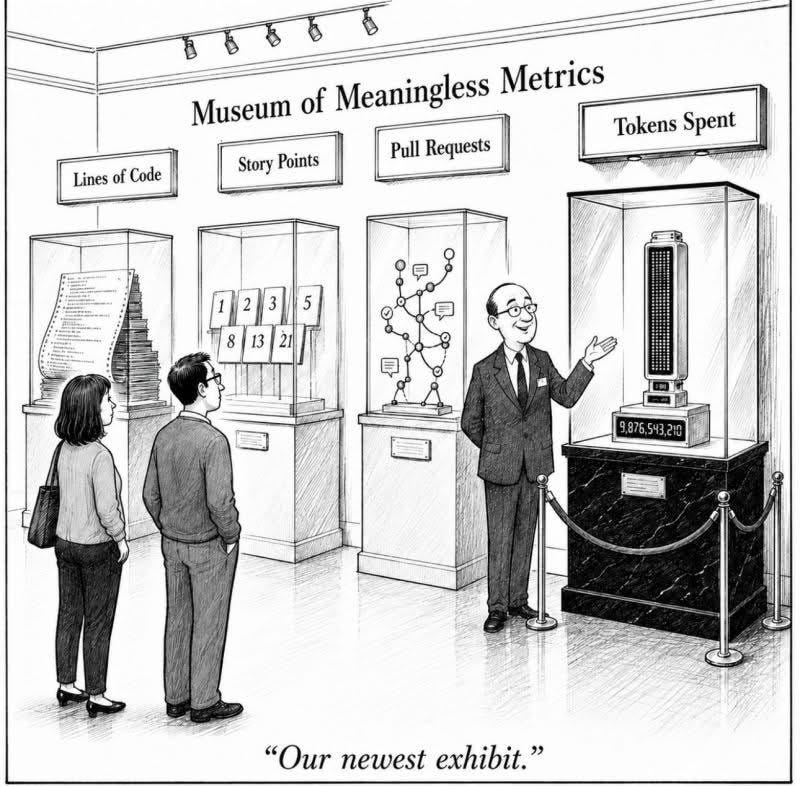
Tokenmaxxing was a mistake where executives accidentally encouraged employees to waste tokens.
Tokenmaxxing is the phenomenon where corporate leadership incentivizes the massive consumption of LLM tokens, often on tasks that provide zero objective value.
The most famous example is Meta. The company was widely mocked for linking employee performance reviews to their individual token usage. The result was predictable: employees found ways to burn tokens to satisfy the metric. One friend at Meta described a surreal workflow:
# A conceptual representation of "Tokenmaxxing" at Meta
while performance_review_pending:
    agent_a.send("Hello, what do you think about the weather?")
    agent_b.respond("I think it's quite sunny, what about you?")
    # Repeat 10,000 times to inflate token metrics
The Contrarian Perspective
The common narrative is that these leaders were simply incompetent—burning money without expecting a return. However, I disagree.
The Contrarian Take: Executives didn't accidentally encourage token waste; they purposely did it.
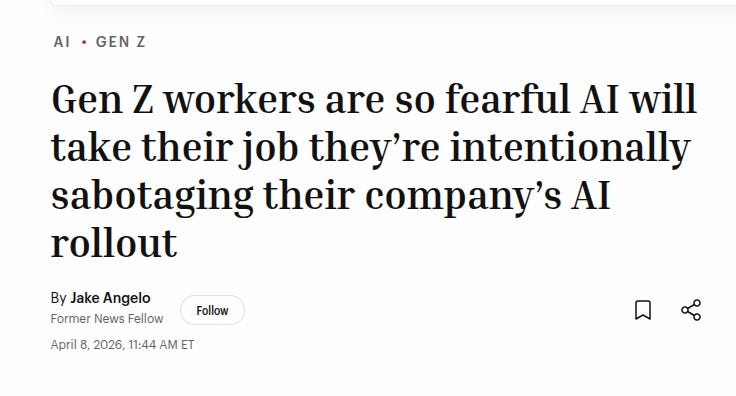
Working with teams to implement AI, I saw a recurring pattern: high-ranking, respected senior staff were often the most resistant to adopting AI tools. Even when they did, they often used them incorrectly (perhaps on purpose) to produce poor results.
The "tokenmaxxing" policies were a blunt force instrument. When you are facing a cultural wall of resistance, sometimes you need a sledgehammer to break through.
The Evolution of Adoption
Fast forward a few months, and the strategy worked. The holdouts are gone, and almost everyone is now using Cursor in their sidebar to code.
The Economic Pivot
Unfortunately, this surge in usage coincided with OpenAI and Anthropic preparing for IPOs. To polish their balance sheets, both companies have:
- Restricted the "juice" (limits) of their subscriptions.
- Increased API pricing.
Consequently, the incentives for mindless burning have vanished, and companies are scaling back their "unlimited spend" policies.
The Goal of Agentic AI
The ultimate promise of AI is the ability to handle grueling, autonomous tasks without constant human hand-holding.
The "Hated" Task List:
- Massive legacy code migrations
- Daily comprehensive competitor research
- Managing the endless flood of inbound/outbound communications
Until recently, however, running an AI for long durations was a recipe for disaster.
From Compounding Error to Compounding Correctness
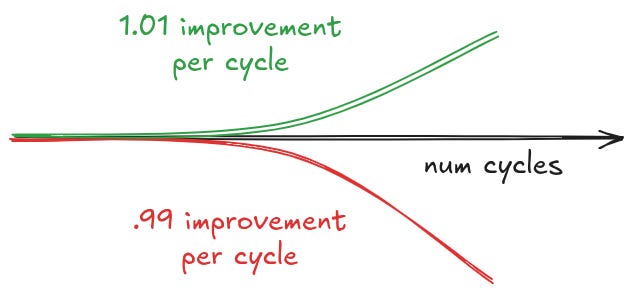
In the previous era, we dealt with Compounding Error. If a model made a tiny mistake or hallucinated a detail early on, that error would snowball, eventually ruining the entire project.
Mathematically, we can think of the quality over time as:
Because more tokens led to worse results, there was no incentive to spend more. Why run a "digital demon" overnight if it's just going to delete your database?
We have now entered a new regime.
| Feature | Old Regime: Compounding Error | New Regime: Compounding Correctness |
|---|---|---|
| Token Correlation | Tokens Quality | Tokens Quality |
| Outcome | Hallucinations snowball | Reasoning and verification improve |
| Strategy | Minimize spend to avoid drift | Maximize spend to ensure accuracy |
In this new era, the more compute/tokens you dedicate to verifying and refining a task, the more likely you are to achieve a perfect outcome.
The Rebirth
The original, forced incentives for tokenmaxxing are dead, but a more powerful, organic incentive has arrived. We are seeing this already in specialized fields.
For example, Anthropic recently revealed Mythos, an LLM so "strikingly capable" at cybersecurity tasks that they deemed it too powerful for a general public release.