The bottleneck might be the air in the room
The Invisible Bottleneck: Is Your Air Killing Your Productivity?
By Mike Bowler
You assemble your most highly compensated experts in a single room to tackle your most critical organizational challenges. However, as the clock ticks into the second hour, a subtle degradation occurs: the group's ability to make sound decisions begins to plummet.

The Science of Stale Air
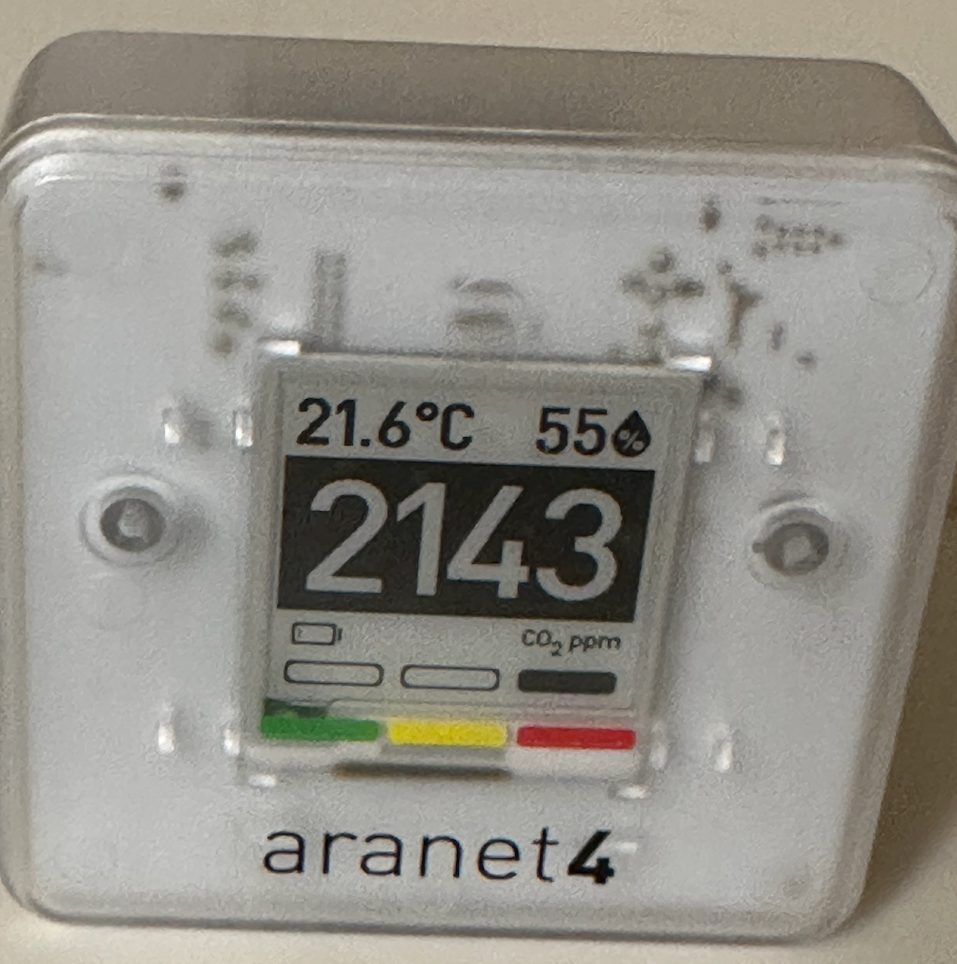
In enclosed spaces with several occupants, levels can spike rapidly. I have personally witnessed monitors climb past 2,000 ppm in standard meeting rooms. The biological impact of this is not merely a feeling of "stuffiness"—it is a measurable cognitive decline.
Research Findings
Two major studies highlight the danger of poor ventilation:
- Lawrence Berkeley National Laboratory: Researchers manipulated levels in a controlled chamber to observe the effects on decision-making.
- Harvard University: This study focused on cognitive scores and found that the most severe losses occurred in the exact skills required for high-level corporate meetings.
| Concentration | Impact on Performance | Status |
|---|---|---|
| Baseline / Clean Air | Optimal | |
| Significant drop in 6 of 9 decision metrics | Impaired | |
| Substantial drop in 7 of 9 metrics | Dysfunctional |
Targeted Cognitive Erosion
The Harvard research indicates that as rises, the brain struggles most with:
- Strategic Thinking
- Complex Planning
- Information Processing under pressure
The "Invisible" Culprit
In windowless boardrooms during all-day planning sessions or architecture reviews, you are essentially placing your highest-stakes intellectual work in the worst possible environment.
When the team begins to feel foggy, exhausted, or disengaged, they rarely blame the air. Instead, they assume it is due to:
A lack of sleepThe grueling length of the meetingThat one colleague who won't stop talking
The Remote Work Paradox
This isn't just an office problem. With the shift to remote work, many employees operate out of tiny home offices with the doors shut. That mid-afternoon "slump" might not be a lack of motivation, but rather a room that hasn't had a fresh air exchange since the morning.
The Corporate Spin: I once had a client attempt to use air quality as a lever to force employees back to the office, claiming the corporate HVAC was superior to home setups. While some areas were indeed better, the meeting rooms remained problematic—and the more people gathered, the worse the air became.
Systems Thinking for Human Performance
Throughout my career studying why talented teams fail, I've developed a rule of thumb: be skeptical of any diagnosis that blames the individuals first.
Before deciding that your staff is unmotivated or incapable of strategic thought, check the cheapest variable in the environment.
If you treat your people like a system, you should measure their inputs. You already track:
Build pipelinelatencyCycle timeDefect rates
The air they breathe is a critical system input that remains largely unmeasured.
Meeting Readiness Checklist
- Open a window or door
- Check levels (if monitored)
- Schedule "fresh air" breaks every 60 minutes
- Ensure HVAC is functioning for high-occupancy rooms
Final Thought: While I once learned this lesson through a dramatic Halloween stunt—sealing my team in a -rich room—the real-world version is a quiet, daily drain on your company's intelligence.
def check_decision_quality(co2_level):
    if co2_level < 1000:
        return "High Quality"
    elif 1000 <= co2_level < 2500:
        return "Impaired"
    else:
        return "Dysfunctional"

# Current boardroom status
print(check_decision_quality(2143)) # Output: Dysfunctional