Snails' Teeth Beats Spider Silk as Nature's Strongest Material
Nature's New Heavyweight: Limpet Teeth Outclass Spider Silk
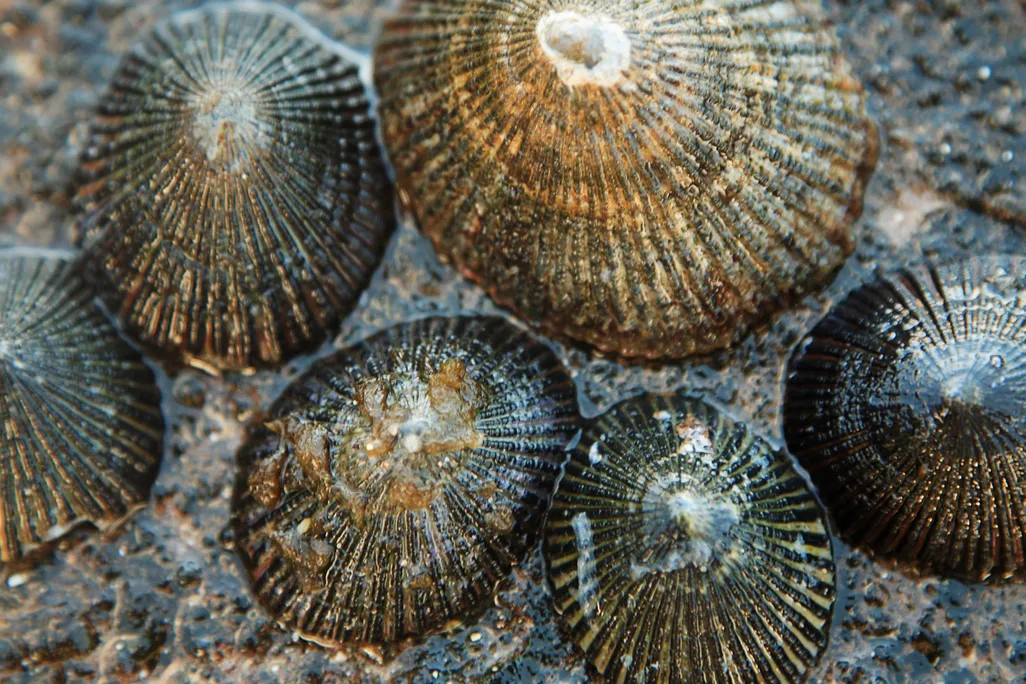
Marine snails, specifically those known as limpets, are masters of tenacity. These mollusks can anchor themselves to rocky shores against crashing waves with a staggering force of , utilizing a combination of a chemical adhesive and their powerful muscular "foot."
However, their most impressive feat isn't how they hold on, but how they eat. Limpets use a specialized, tooth-lined tongue called a radula to literally grind away at rock surfaces.
The Breakthrough Discovery
Engineers from the University of Portsmouth in the U.K. have revealed that the material composing these tiny teeth is the most robust natural substance ever discovered. For a long time, it was believed that spider silk (often likened to Kevlar) held this title.
"It's comparable to a single strand of spaghetti holding up about 3,300 one-pound bags of sugar," explained lead author Asa Barber to the BBC.
Material Composition
The secret to this strength lies in the microscopic architecture of the tooth. According to reports in Science, the teeth consist of:
- Goethite: Iron-containing crystal nanofibers.
- Protein Matrix: A biological "glue" that encases the nanofibers.
Strength Benchmarks
While these teeth are natural wonders, they sit in a complex hierarchy of strength when compared to synthetic and rare materials.
| Material | Origin | Strength/Property | Comparison |
|---|---|---|---|
| Spider Silk | Natural | High | weaker than limpet teeth |
| Kevlar | Synthetic | Very High | Surpassed by limpet teeth |
| Limpet Teeth | Natural | Extreme | On par with top carbon fibers |
| Graphene | Synthetic | Ultra-Extreme | Stronger than limpet teeth |
Beyond the Snail: The Hardest Substances
If we shift the conversation from "strongest" to "hardest" (the ability to resist scratching), diamonds are the common answer. However, man-made nano-materials and a few rare natural occurrences still beat them:
- Wurtzite Boron Nitrate: A rare material with an atomic structure similar to diamond, but composed of boron and nitrogen.
- Lonsdaleite: A hexagonal carbon structure (unlike diamond's cubic structure) formed when graphite-rich meteorites strike Earth. It can withstand more stress than a diamond.
Engineering Goals
Scientists are now studying these biological blueprints to improve human technology. Their "to-do" list includes:
- Developing next-generation structural materials.
- Designing more durable machinery.
- Creating flexible yet unbreakable armor.
⚠️ Technical Clarification
The following distinction is vital for understanding the physics involved in the research published in the Journal of the Royal Society Interface:
Note on Terminology: In this context, "strength" and "toughness" refer specifically to tensile strength (the resistance to being pulled apart). This is distinct from compressive strength (resistance to squeezing) and hardness (resistance to scratching/cutting). For example, the discussion regarding wurtzite boron nitrate pertains to hardness, not tensile strength.
{
  "material_analysis": {
    "subject": "Limpet Radula",
    "primary_component": "Goethite",
    "classification": "Natural Nanocomposite",
    "status": "Strongest Natural Material"
  }
}