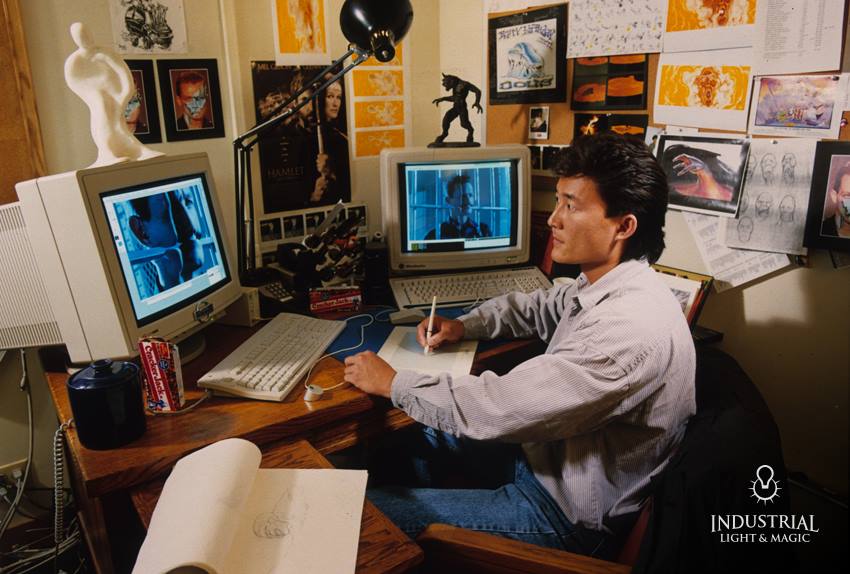
The tech of 'Terminator 2' – an oral history (2017)
Retrospective: The Technical Evolution of Terminator 2
Written by visual effects journalist Ian Failes, this oral history delves into the groundbreaking work performed by Industrial Light & Magic (ILM) for the 1991 classic Terminator 2: Judgment Day. Under the guidance of VFX supervisor Dennis Muren, the team had to essentially pioneer the digital landscape to create the "liquid metal" effects of the T-1000.
While the film is legendary, the actual number of CG shots is surprisingly low. However, the software developed to achieve them—specifically tools like Make Sticky and Body Sock—became milestones in the industry.
The Era of Nascent CGI
At the time, ILM was operating out of San Rafael with a remarkably small computer graphics division. They were transitioning from traditional practical effects to a digital frontier, emboldened by their success on James Cameron's The Abyss.
The Technical Stakes
Unlike The Abyss, where digital elements could potentially be bypassed if they failed, T2 left no such room for error. The T-1000 was central to the plot.
Meet the Architects of the T-1000
The following table summarizes the key contributors and their roles during this pivotal production:
| Name | Role | Key Contribution/Background |
|---|---|---|
| Tom Williams | CG Shot Supervisor | Bridge between Pixar and ILM; Alias expert. |
| George Joblove | CG Shot Supervisor | Managed limited hardware resources. |
| Eric Enderton | CG Software Developer | First dedicated "software-only" writer at ILM. |
| Jay Riddle | CG Shot Supervisor | Trained under John Lasseter. |
| Doug Chiang | VFX Art Director | T-1000 conceptual design and digital fix-its. |
| Michael Natkin | CG Software Developer | CG expert transitioning into the film world. |
| Jonathan French | CG Animator | Young recruit who joined the team at 23. |
| Steve 'Spaz' Williams | CG Animation Supervisor | Alias veteran; worked on Epcot's Body Wars. |
Personal Accounts from the Trenches
The Grind and the Gear
Tom Williams recalls the sheer exhaustion of the era:
"I actually worked full-time for both Pixar and ILM for most of T2. I would fall asleep, driving home once, and freaked myself out and realised you can’t really do that."
George Joblove emphasizes the struggle with hardware:
"Each single gig at ILM was a small step above what we'd done before. And we were fighting with the limited computing resources we had at the time."
The Software Shift
Before Eric Enderton arrived, the artists were writing their own code. Enderton changed the workflow by becoming the first person hired solely to write tools.
// Conceptual representation of a T-1000 tool logic
void applyBodySock(Mesh &characterMesh, Mesh &liquidMetalMesh) {
    if (characterMesh.isTouching(liquidMetalMesh)) {
        liquidMetalMesh.setSticky(true);
        liquidMetalMesh.conformToSurface(characterMesh);
    }
}
The Learning Curve
Jay Riddle learned the ropes from the legendary John Lasseter during the "Graphics Group" era of Lucasfilm, utilizing vector graphics displays and early frame buffers. Meanwhile, Michael Natkin remembers the culture shock of entering the film industry:
"I showed up at ILM in a suit, which was hilarious... I knew a lot about computer graphics, but nothing about movies whatsoever."
Onboarding a New Generation
Jonathan French describes his whirlwind entry into the studio:
- Land at SFO at 11:00 AM.
- Rent a car (despite being only 23).
- Sign the Non-Disclosure Agreement (NDA).
- Read the script and the ILM terminology booklet.
- Eat lunch at the only Afghan restaurant in Marin.
- Receive a standing ovation during the first dailies.
Visual Legacy
The collaboration between the digital team and artists like Doug Chiang and Stan Winston created a seamless blend of reality and imagination.
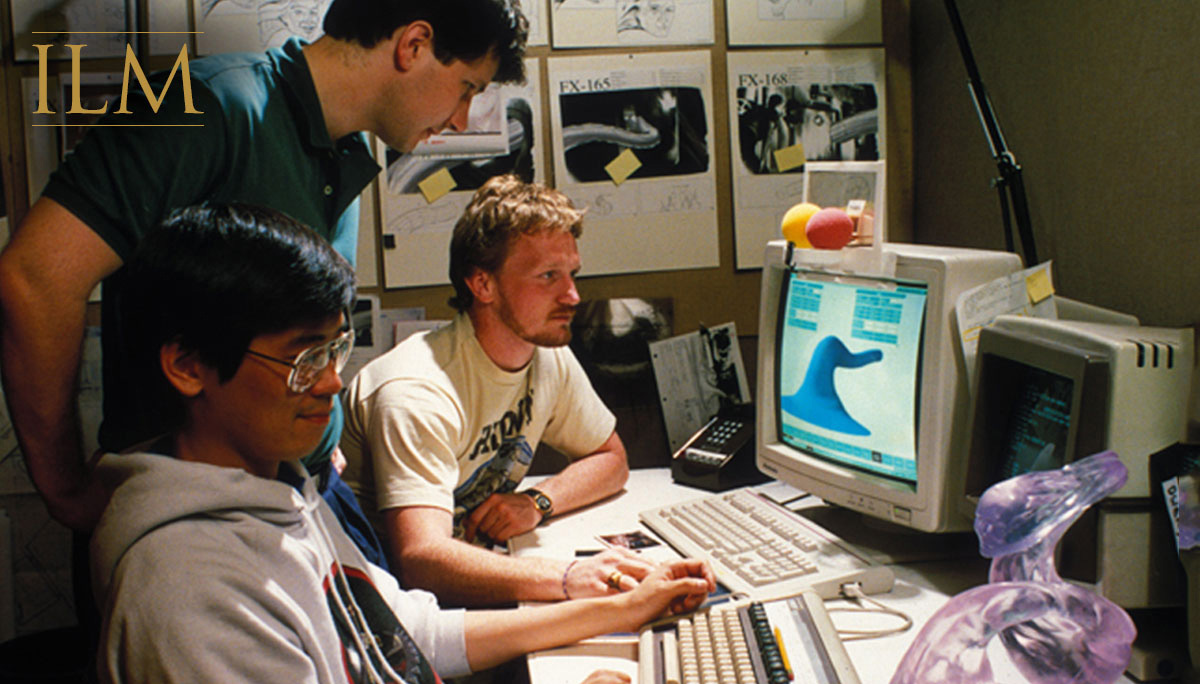
 The ILM crew pushing the boundaries of 1991 technology.
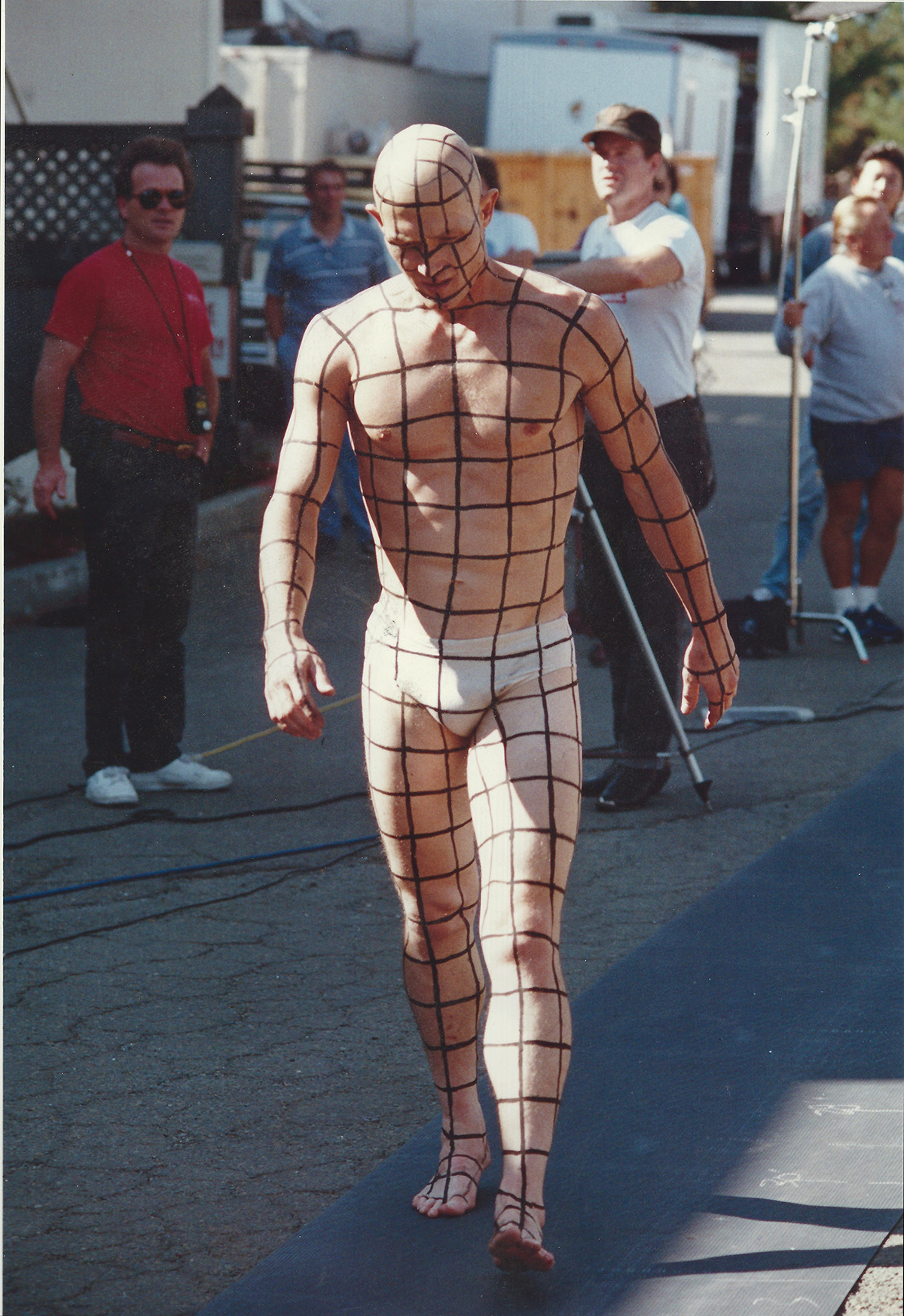 The result of the 'liquid metal' innovations.
Steve 'Spaz' Williams entered the fray from Alias, where he had been advocating for Video Animation (VA) over Industrial Design (ID). Before tackling the T-1000, he worked on a heart fly-through for Epcot's Body Wars ride.
Additional Gallery