FCC approves test of space mirror to light night sky
FCC Greenlights Space Mirror Experiment to Illuminate the Night
The United States Federal Communications Commission (FCC) has officially granted approval for a massive orbital mirror designed to provide "sunlight on demand." This decision signals a shift toward an increasingly surreal era of Low Earth Orbit (LEO) activity.
The "Sunlight on Demand" Initiative
A company known as Reflect Orbital (which markets itself as "the sunlight company") has received the go-ahead to test its first satellite, the Earendil-1. The goal is to bounce solar rays back to the planet's surface to provide supplemental solar energy and wide-scale illumination.
Technical Specifications of the Test
| Feature | Detail |
|---|---|
| Satellite Name | Earendil-1 |
| Beam Width | |
| Adjustment Frequency | Repointing required every 4 minutes |
| Long-term Goal | satellites by the year 2035 |
| Target Sectors | Agriculture, Industrial, Emergency Response |
A Cascade of Concerns
Despite the approval, the project has faced significant backlash from the general public and the astronomical community. The risks are multifaceted:
- Human & Environmental Health: The artificial light could severely disrupt the circadian rhythms of humans, animals, and plant life.
- Public Safety: Sudden flashes during the mirror's repointing process could blind or distract drivers and pilots.
- Scientific Interference: High-intensity light could overload and permanently damage sensitive detectors in research telescopes and star-tracking cameras on other satellites.
"The risks of harm raised on the record regarding Reflect Orbital’s solar reflector are unrelated to the Commission’s role in authorizing use of radiofrequency spectrum." — The FCC
The Era of "Weird Space Stuff"
The FCC recently acknowledged that LEO is becoming a hub for "emergent space activities" that were once the province of science fiction now corporate reality. They even published a document titled Spectrum Abundance for Weird Space Stuff.
Current and Proposed "Outlandish" Activities:
- Space-based pharmaceutical manufacturing
- Private inhabitable spacecraft
- Robotic lunar missions
- Orbital AI data centers (millions planned)
- Billionaire hotels
- Space burials for cremated remains
- Artificial meteor showers
- Infrared beams for data center power
- Orbital missile systems
The SpaceX Hegemony
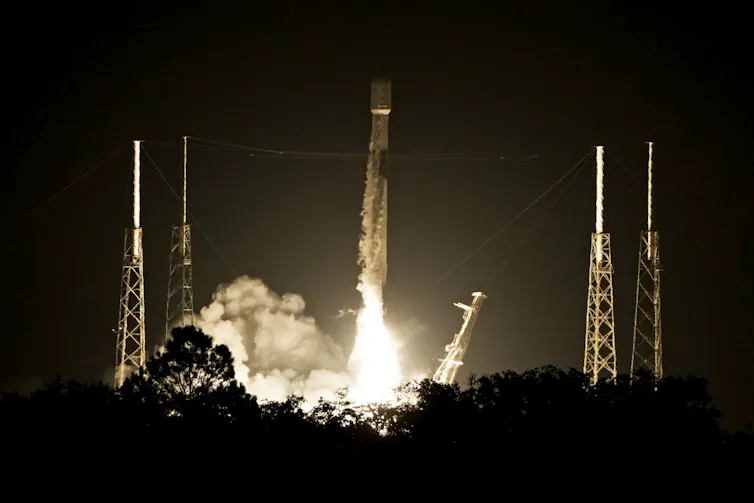
Currently, SpaceX dominates the orbital landscape with nearly 11,000 Starlink satellites. This concentration of hardware creates a bottleneck for all other space actors.
Even prestigious NASA missions, such as Artemis I (2022) and Artemis II (2026), have had to schedule "cutout" windows in their launch timings specifically to avoid Starlink constellations.
Legal Implications
The 1967 Outer Space Treaty, signed by global powers including Russia, China, and the USA, explicitly states:
"outer space is not subject to national appropriation by claim of sovereignty, by means of use or occupation."
The question remains: Does SpaceX's massive occupation of LEO violate this international principle?
The AI Satellite Explosion
In February, SpaceX requested permission to launch one million additional satellites to support AI data centers. To put the scale of this request into perspective:
The FCC approved this filing with startling speed, leaving the global scientific community only 30 days to analyze the impact using incomplete data regarding:
- Orbital distribution
- Satellite composition
- Mass and size
Since then, four other companies have filed "copycat" proposals for tens of thousands of AI satellites, and SpaceX has requested another 100,000 satellites to interface with the original million.
Regulatory Failure
The FCC was originally designed to manage radio broadcasts. Now, it is the primary arbiter for orbital safety and atmospheric integrity—areas where it lacks specialized expertise.
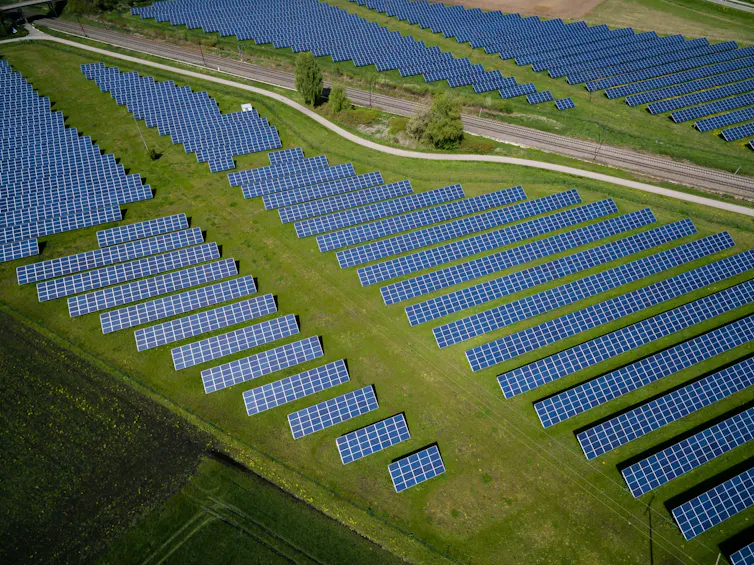
Future proposals are even more daunting, including space-based solar energy beams. These beams could:
- Alter the chemistry of the atmosphere.
- Kill wildlife (birds) that fly through the beam.
- Necessitate the creation of permanent "no-fly zones" around receiving stations.