Infinities, impossibilities, and the man in the white linen suit
Infinities, Impossibilities, and the Man in the White Linen Suit
In the twilight of his existence, Kurt Gödel succumbed to starvation. Driven by a paranoid conviction that his meals were being laced with poison, he adopted a strict rule: he would only consume food that his wife, Adele, had sampled first.
When Adele was admitted to the hospital following a stroke in late 1977, Gödel's safety net vanished, and he ceased eating entirely. He passed away on January 14, 1978, at Princeton Hospital, weighing a mere 29 kilograms.
"Malnutrition and wasting from neglect caused by personality disturbance." — Official Death Certificate
It is a poignant irony: the most formidable logician since Aristotle—the man who demonstrated that mathematics contains truths that are fundamentally unreachable—was ultimately destroyed by a distorted internal logic from which he could not break free.
The Princeton Pair
From the 1940s, Gödel and Albert Einstein were both faculty members at Princeton’s Institute for Advanced Study. Einstein, who felt increasingly alienated from the trajectory of modern physics, famously remarked that he visited his office primarily for the privilege of walking home with Kurt Gödel.
They were a striking duo on the streets of Princeton:
- Einstein: Rumpled, laughing, and relaxed.
- Gödel: Dapper, wearing a signature
white linen suit, speaking animatedly in German.
John von Neumann, who abandoned his own lecture series on David Hilbert’s work after encountering Gödel’s 1931 paper, described Gödel's contributions as "singular and monumental," a landmark that would remain visible across vast stretches of time and space. This raises a critical question for our current era: Why does this matter during an AI gold rush where trillions are spent on the premise that intelligence is simply a matter of scaling?
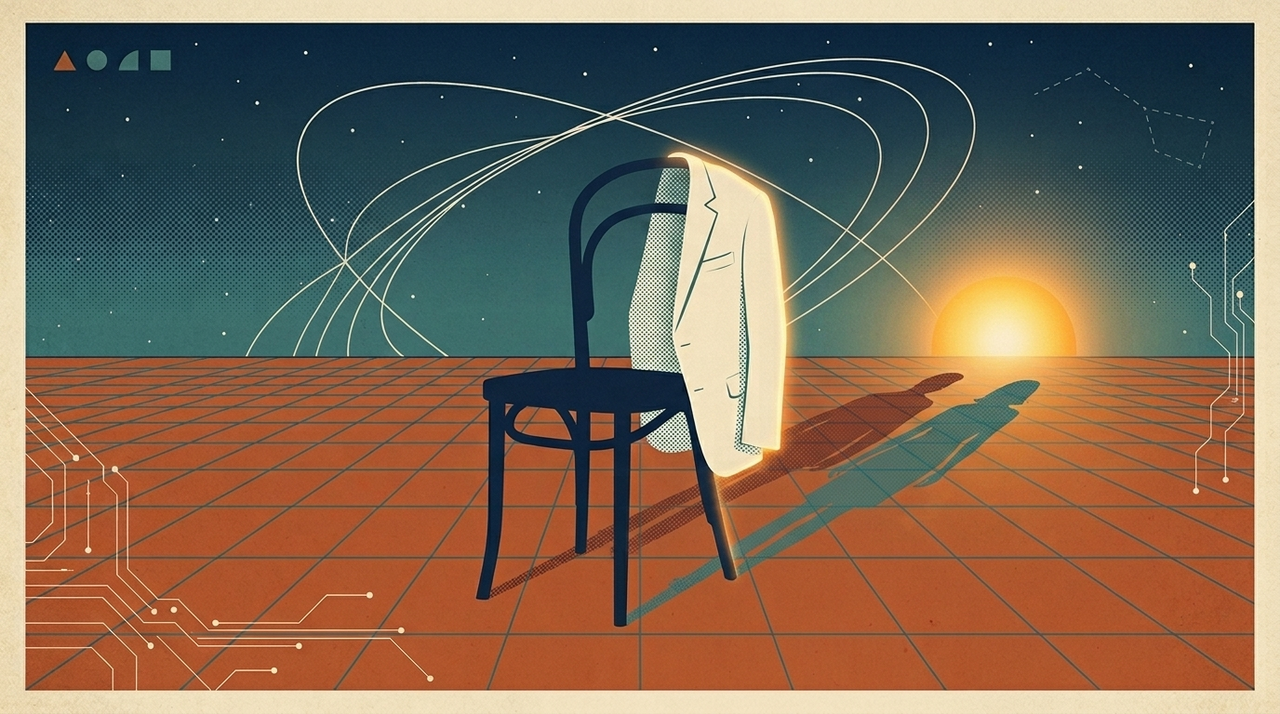
Understanding Incompleteness
At its core, Gödel proved that mathematics is incapable of fully explaining itself.
Around 1900, David Hilbert proposed a grand challenge: the creation of a "perfect machine" for mathematics. The blueprint was as follows:
- Establish a set of axioms (fundamental truths that require no proof).
- Use these axioms to derive every mathematical truth through mechanical, step-by-step logic.
- Ensure the system is
Complete(every truth is provable). - Ensure the system is
Consistent(no contradictions).
If successful, mathematics could be reduced to a clerical task—a set of instructions followed by a rote worker. For thirty years, this was the guiding star of the field. Then, in 1931, a 25-year-old Gödel shattered this dream.
The Gödel Sentence
Gödel’s First Incompleteness Theorem posits that any rule-based system powerful enough to perform basic arithmetic will inevitably contain true statements that it cannot prove. This isn't a flaw in the rules, but a structural property of such systems.
He achieved this by creating a mathematical sentence that refers to itself. Imagine the statement:
"This sentence has no proof."
Gödel’s genius was encoding this linguistic paradox into pure arithmetic, turning statements about numbers into numbers themselves. The logical trap works like this:
In mathematics, a contradiction is fatal. If you can prove one false thing, you can prove anything—including the absurdity that . Therefore, any logical system would prefer to have "blind spots" (incompleteness) rather than contradictions.
The result: The "Gödel sentence" is true, but unprovable. Hilbert's dream of a total rulebook was dead. Furthermore, Gödel showed that no system can prove its own consistency using only its own rules. To verify a system, you need a larger system, which then inherits the same inherent limitations.
This is not a philosophical claim about the "soul" or "creativity"; it is a rigorous mathematical fact about rule-based systems—the very foundation of all software and AI.
The Death of Decidability
Hilbert had one final hope: decidability. He wanted a mechanical process that could determine, in a finite amount of time, if any given statement followed from the rules. In 1936, Alan Turing ended this hope as well.
Turing first defined a "mechanical method" via an imaginary device: a tape and a read/write head following a fixed table of rules (the Turing Machine). He then proposed a paradox involving a "checker" and a "saboteur."
The Halting Problem Analogy
Imagine a fortune-teller who is never wrong, and a customer who wants to prove her wrong. The customer's behavior is based entirely on the prediction.
| Role | Action |
|---|---|
| The Checker | Analyzes a program to see if it "finishes" or "loops forever." |
| The Saboteur | A program that asks the Checker for its own prediction, then does the opposite. |
The logic of the saboteur looks like this:
def saboteur(checker):
    prediction = checker.predict(saboteur)
    if prediction == "finishes":
        while True: # Loop forever
            pass
    else:
        return # Stop immediately
- If the checker predicts the saboteur finishes, the saboteur loops.
- If the checker predicts the saboteur loops, the saboteur stops.
Because the saboteur is built from the checker's own logic, the failure is inevitable. By building a perfect checker, you automatically create the tool for its own destruction.