Are we offloading too much of our thinking to AI?
Is Our Cognitive Autonomy Vanishing into AI?
Reflections on the cost of convenience and the intrinsic value of independent thought.
By Yennie Jun | July 14, 2026
Author's Note: I drafted the foundations of this piece while flying—completely disconnected from the internet and devoid of any AI assistance. .
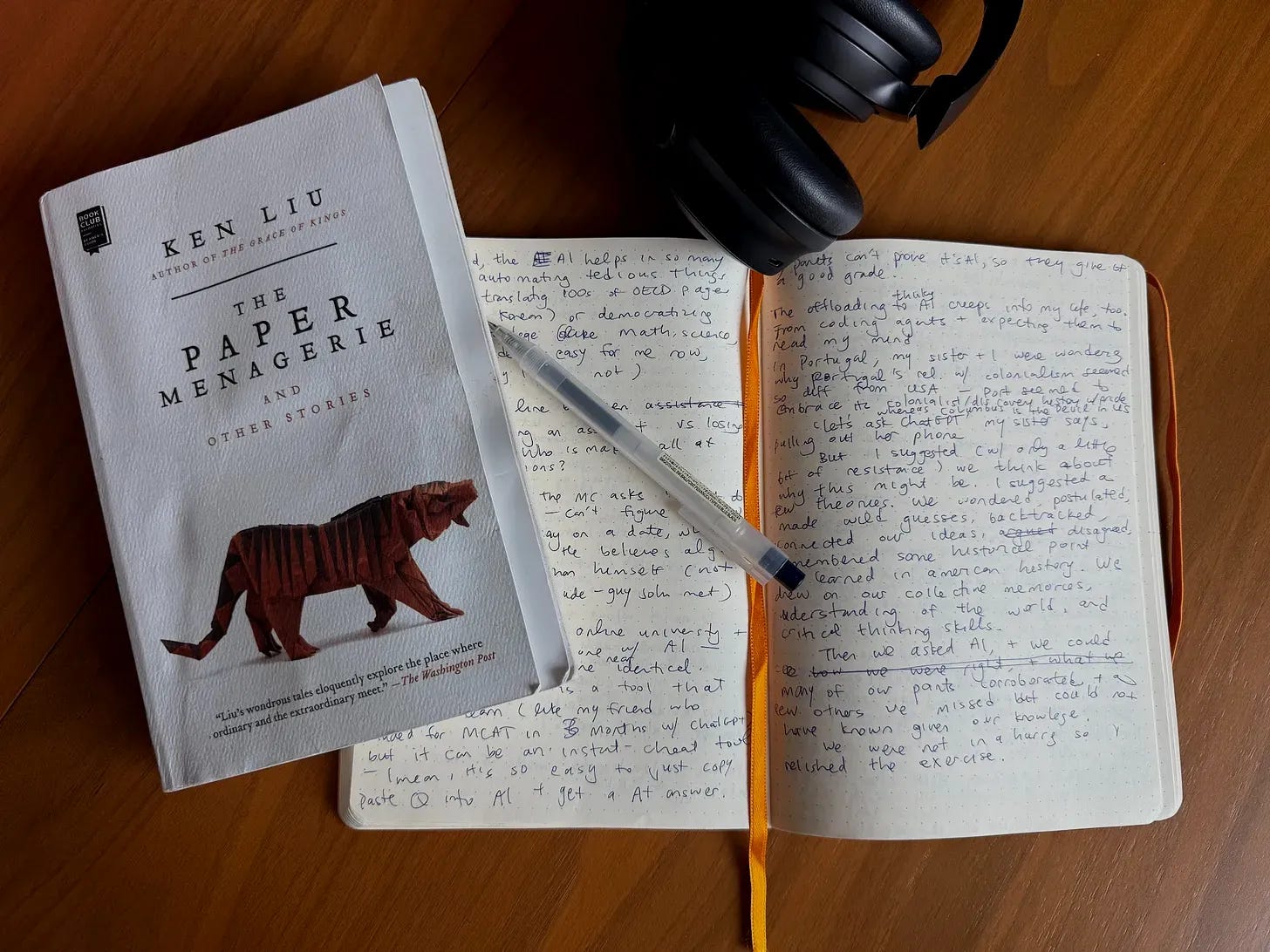
I have noticed a growing trend, both in my own habits and in the behavior of those around me: we are increasingly delegating our cognitive processes to artificial intelligence. Whether it is a mundane choice or a complex intellectual challenge, the path of least resistance is now to let AI handle the research, the reasoning, and the final answer.
The Warning in Fiction
This shift reminds me of Ken Liu’s 2012 short story, “The Perfect Match.” The narrative depicts a world where a universal AI assistant, Tilly, manages every facet of the protagonist's life.
Tilly doesn't just provide data; she provides direction. The main character relies on her for:
- Dietary choices: "What should I eat for breakfast?"
- Romantic curation: Finding the "ideal" date.
- Social scripting: Deciding what to say during interactions.
The protagonist has reached a state of cognitive atrophy where he no longer knows his own preferences. As Tilly puts it:
“Who knows your tastes and moods better than I?”
The "Microphone Man" of San Francisco
Fiction is quickly becoming reality. A friend recently told me about a man he met at a tech event in SF. This individual wore a polished metal capsule—a high-end microphone—pinned to his chest to record every single conversation he had throughout the day.
At night, he triggered a specific automation_workflow to process the audio. He spoke about his AI, Claude Fable, with a level of reverence usually reserved for deities:
“I think Claude Fable is smarter than me. It’s better at critical thinking than I am, so I let Fable do all of my thinking these days.”
Crucial Irony: The man's startup focuses on replacing human engineers by recording their workflows and inputs—often without their permission. He has not only outsourced his own mind but has built a business model around outsourcing the minds of others.
The Evolution of Cognitive Offloading
We didn't start with LLMs; we began with search engines. However, the nature of the "offload" has changed fundamentally.
| Feature | The Search Era | The AI Era |
|---|---|---|
| User Effort | Formulate query Scan results Synthesize | Prompt Receive Answer |
| Cognitive Load | High (Evaluation & Analysis) | Low (Consumption) |
| Process | Passive Receiving |
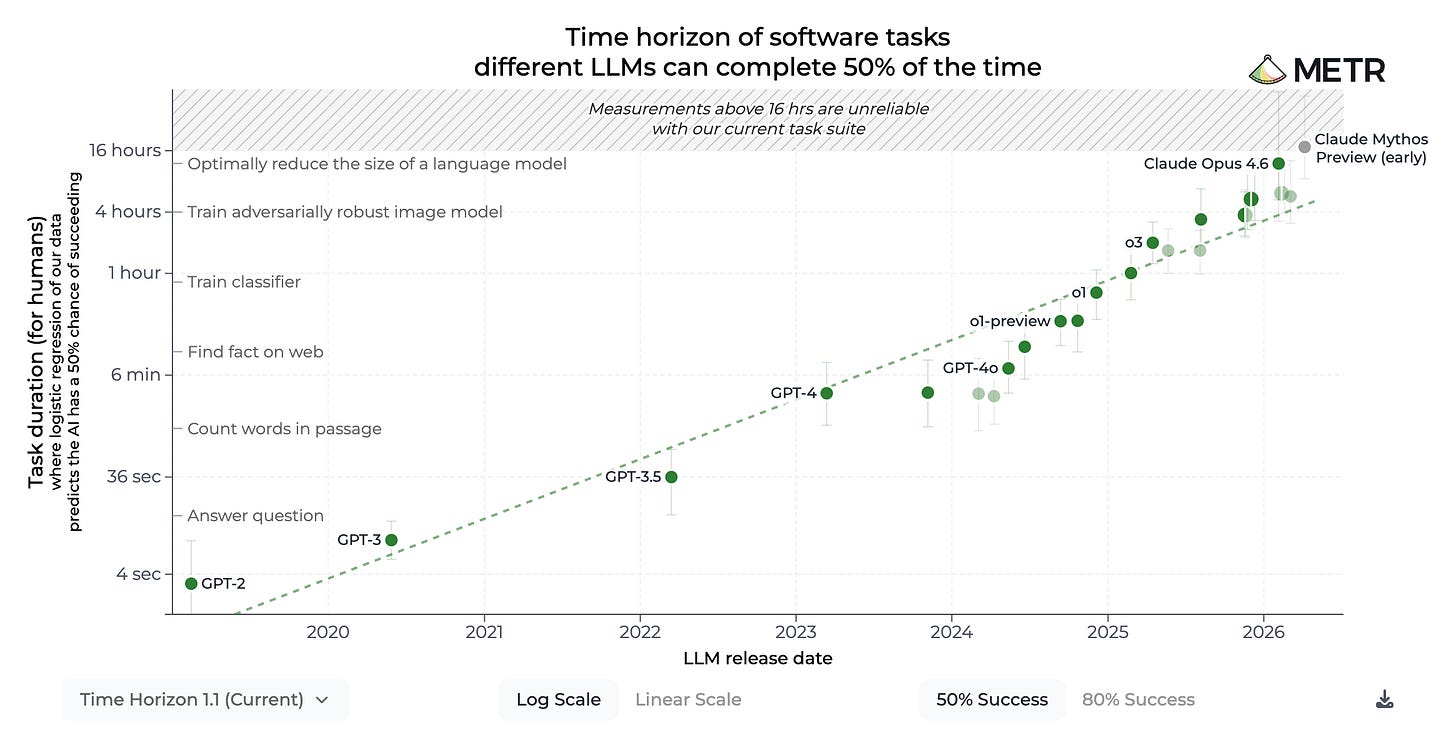
Modern tools like OpenAI Deep Research and Google Deep Research now automate the intermediate steps of synthesis. According to METR’s Task-Completion Time Horizons, AI is rapidly closing the gap on tasks that previously required hours or days of human effort.
The Autonomy Threshold
There is a precarious line between using a tool for efficiency and surrendering your agency. We must ask:
In Liu's story, the character justifies his dependence by claiming the algorithm is "scientifically proven" to fit his profile. Similarly, the "Microphone Man" believes the AI's superior "intelligence" makes his own thinking redundant.
The Value of the "Slow Path"
There is a constant tension between and . While AI is perfect for trivialities (e.g., "What are the best reviews for this skincare brand?"), there is a hidden cost to instant gratification.
I often take walks without my phone. When a random question strikes—Do cherries grow on bushes or trees? or When was the first World Cup?—I can't look it up immediately. By the time I return home, I usually forget the question. I've realized that forgetting the trivial is a feature, not a bug. It clears mental space for what actually matters.
A Lesson from Portugal
While visiting the Monument to the Discoveries in Portugal with my sister, we noticed a cultural divide. In the US, figures like Christopher Columbus are often viewed as "colonizers" or "conquerors." In Portugal, however, figures like Henry the Navigator are still widely celebrated as "explorers."
 (Note: The figure on the far left bears a striking resemblance to Lord Farquaad.)
Instead of asking an AI to explain the sociological difference, my sister and I decided to think through it. We engaged in a messy, human process:
- Postulated theories
- Made wild guesses
- Recalled fragmented high school history
- Disagreed and debated
- Connected disparate ideas
We hypothesized that Portugal's relative religious and ethnic homogeneity, compared to the US's immigrant diversity, might play a role. We wondered if the "Age of Exploration" is simply too central to their national identity to be "cancelled."
By refusing the instant answer, we utilized our collective memory and critical faculties. We didn't just get an answer; we experienced the act of thinking.
