Microsoft Comic Chat is now open source
Microsoft Comic Chat: Now Open Source!
By Robert Standefer and Scott Hanselman | July 16 | 4 min read
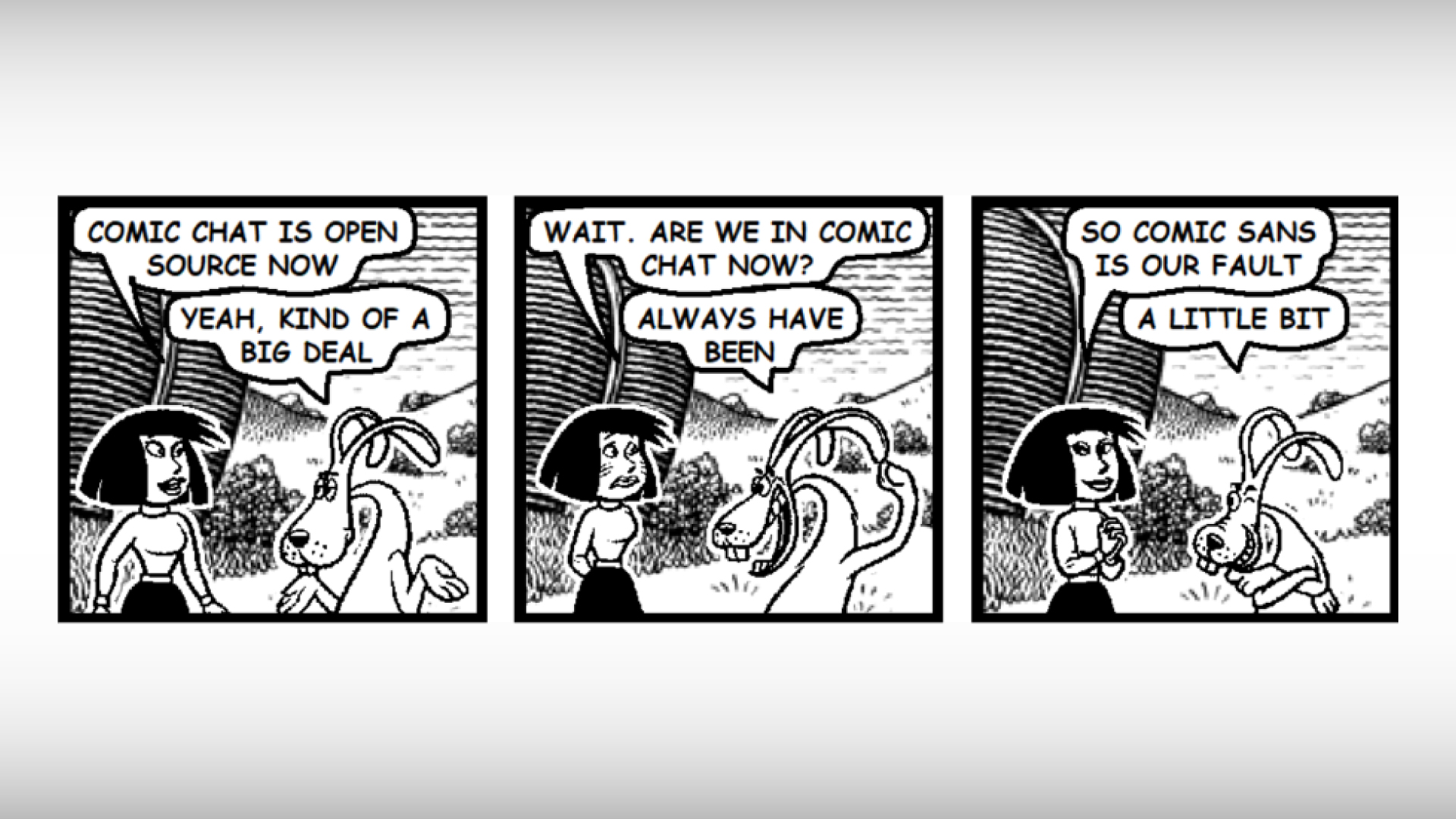
The legendary chat client that gave the world its first real taste of Comic Sans has officially migrated to GitHub. Microsoft is thrilled to announce that Microsoft Comic Chat—the software that transformed standard Internet Relay Chat (IRC) conversations into dynamic comic strips—is now open source.
Originally crafted by typographer Vincent Connare in 1994, Comic Sans found its ideal environment within Comic Chat. The font's casual, hand-drawn aesthetic was a perfect match for the app's speech-bubble interface.
A Digital Time Capsule
For some, Comic Chat is a nostalgic reminder of the era when we shifted from text-heavy telnet, Usenet, and IRC toward the visual experience of the modern web. For others, it is a piece of "software folklore" known only through old screenshots and heated debates over typography.
Now, this unconventional project is available for:
- Developers looking to study old-school architecture.
- Historians documenting the evolution of the UI.
- Retro-computing fans wanting to revive 90s software.
Reimagining Online Conversation
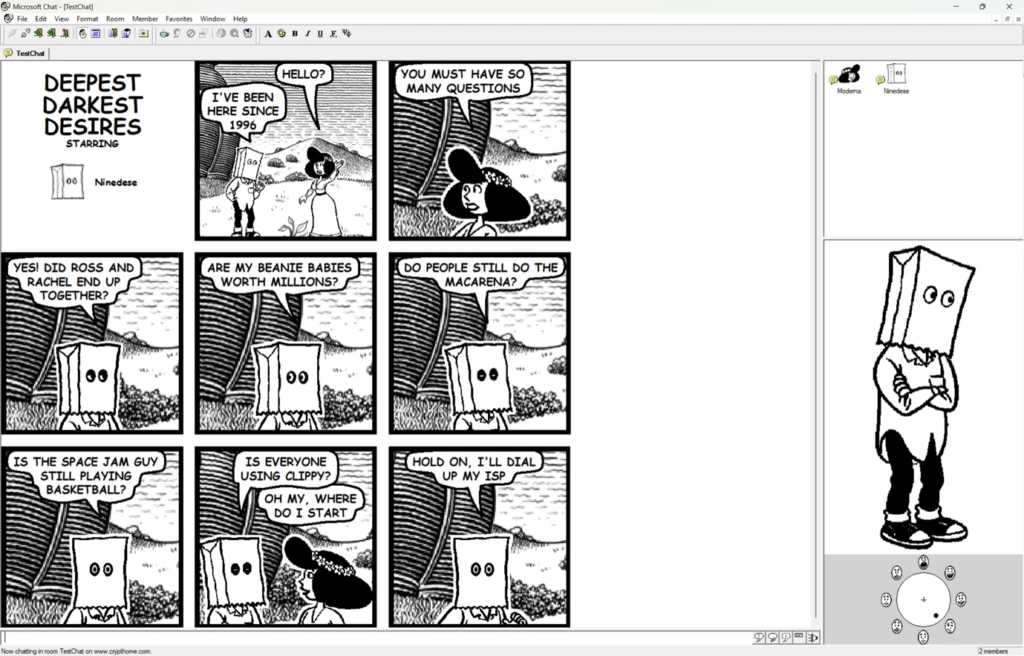
In the mid-90s, chatting online meant staring at endless walls of scrolling text. Comic Chat dared to imagine something different. Instead of plain text, it used illustrated characters and comic panels.
The software didn't just display words; it interpreted them. The logic followed a basic pattern:
For example:
- "I like that" Character points to themselves.
- Angry tone Character frowns or crosses arms.
The Architects of the Vision
The project was born in 1995 within the Microsoft Research Virtual Worlds Group, led by David “DJ” Kurlander.
Technical Specifications
| Feature | Detail |
|---|---|
| Language/Framework | Visual C++ 4.0 and MFC |
| Release Date | 1996 (bundled with Internet Explorer 3) |
| Distribution | Later bundled with Windows 98 |
| Localization | Available in 24 different languages |
| Academic Debut | SIGGRAPH ’96 (Paper by Kurlander, Skelly, and Salesin) |
The visual identity was provided by the renowned independent artist Jim Woodring. To refine the system, the team provided Woodring with actual chat transcripts to illustrate, using his art to validate the concept of automatic layout construction.
Preserving History via Open Source
By releasing the source code, Microsoft is preserving a moment when the internet was still an experimental frontier. Along with the original code, the GitHub repository includes AI-powered modernization attempts. These examples show how to:
- Build the 90s-era
C++andMFCcode using modern Visual Studio. - Connect the client to contemporary IRC servers.
- Ensure the UI remains legible on high-resolution monitors.
"What if chat rooms looked like comics?"
This question may seem "unreasonably" playful today, but it resulted in a product shipped globally in two dozen languages. It serves as a reminder that the best innovations often stem from a willingness to be unconventional.
Your Turn to Create
Comic Chat was a product of a time when developers were encouraged to "color outside the lines." We invite you to explore the code and find inspiration for your own delightful projects.
Community Goals:
- Explore the original source code.
- Attempt a modern port to a new OS.
- Experiment with new character sets.
- Read the code in Comic Sans (we won't judge!).
// A conceptual nod to the spirit of Comic Chat
if (userMessage == "Hello World!") {
    character.setPose(WAVING);
    bubble.setText("Hello World!");
    renderPanel();
}


The source is open, the characters are ready, and the speech bubbles are yours to fill. Whether you are a historian or a hobbyist, come help write the next chapter of Comic Chat history.