First atmosphere found on Earth-like planet in habitable zone of distant star
Breakthrough: First Atmosphere Detected on Rocky Exoplanet in Habitable Zone
Researchers have achieved a milestone in astronomy by identifying the first atmosphere surrounding a rocky, Earth-like planet located within the habitable zone of a distant star. This finding, published in the journal Science, represents the most compelling evidence to date that planets with Earth-like environments may exist outside our own solar system.

The Target: LHS 1140b
The planet, designated as LHS 1140b, is situated approximately 48 light-years away. It orbits a red star, which is characterized by being significantly cooler and smaller than our Sun.
Planetary Profile
| Feature | Detail |
|---|---|
| Planet Name | LHS 1140b |
| Distance | light-years |
| Star Type | Red Dwarf (Cool/Small) |
| Composition | Rocky / Earth-like |
| Atmospheric Gas Found | Helium () |
"This is the first time anyone has found an atmosphere on a rocky planet in the habitable zone of another star," noted lead author Dr. Collin Cherubim of Harvard University, who emphasized that the discovery is a "big deal."
Understanding the "Goldilocks Zone"
For a planet to potentially harbor life, it must meet specific criteria. The most critical is its position relative to its host star, known as the Goldilocks zone.
Habitability Checklist
- Rocky Composition: Must be a solid planet, not a gas giant.
- Correct Orbit: Must reside in the Goldilocks zone.
- Atmosphere: Must have a gaseous layer to regulate temperature.
- Life-Sustaining Gases: Presence of oxygen, nitrogen, or methane (Still searching).
While over 6,000 exoplanets have been cataloged, only a few dozen are both rocky and located in this temperate zone.
The Atmospheric Composition
The current detection has identified helium in the upper atmosphere. While alone cannot support biological life, scientists believe it may be a "shield" or a top layer, with more hospitable gases potentially residing deeper down.
Dr. David Charbonneau (Harvard) explained that the primary significance is the confirmation of an atmosphere on a rocky world, addressing the fundamental human question: Are we alone?
Comparative Analysis of Other Candidates
LHS 1140b is not the only world being studied. The search for extraterrestrial life involves several high-profile targets:
- K2-18b: A sub-Neptune planet.
Initial reports suggested dimethyl sulphide (linked to marine life).- A 2025 NASA reanalysis found the signal too weak and suggested the gas could be non-biological.
- TRAPPIST-1 System: Seven rocky worlds.
TRAPPIST-1d: James Webb Space Telescope ruled out an Earth-like atmosphere.TRAPPIST-1e: Data remains inconclusive.
def check_habitability(atmosphere, composition, zone):
    if composition == "rocky" and zone == "Goldilocks":
        if atmosphere == "detected":
            return "High Potential for Further Study"
    return "Low Potential"

# Result for LHS 1140b
print(check_habitability("detected", "rocky", "Goldilocks"))
Related Space & Cosmic News
Beyond the discovery of LHS 1140b, several other stories have captured the public's imagination:
- Community Projects: A village in Kent has constructed a scale model of the solar system to educate locals about space.

- Pop Culture: Director Steven Spielberg has expressed his belief that alien intelligence will be discovered within our lifetime.

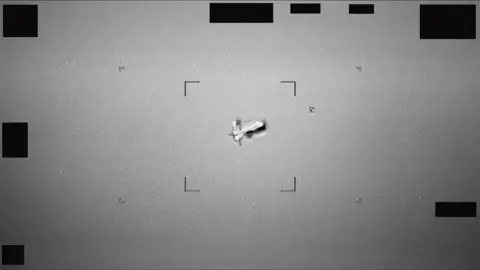
- Government Disclosures: The UFO community continues to analyze new imagery and documents released by the Pentagon.
- Urban Astronomy: A new pop-up planetarium in Hull's Queen Victoria Square is bringing the cosmos to city dwellers.
- Astrophotography: Josh Dury captured a rare "planetary parade" featuring six planets from Worth Matravers.