France's Anssi Will Block PQC-Free Products from Certification Starting 2027
France's ANSSI to Bar Non-PQC Products from Certification by 2027
On June 17, 2026, the Agence Nationale de la Sécurité des Systèmes d'Information (ANSSI)—France's primary cybersecurity authority—officially declared that it will cease the certification of security products that do not feature quantum-resistant encryption starting in 2027.
This announcement was delivered by Samih Souissi, ANSSI's chief of staff, during the France Quantum 2026 event held at Station F in Paris. According to reports from Reuters, Souissi further advised that by the year 2030, enterprises should transition exclusively to quantum-safe procurement.
The Stakes of "Qualification"
In the context of French regulation, certification is referred to as qualification. This process is not optional for those wishing to sell to:
- French government agencies.
- Operators of critical national infrastructure.
Essentially, failing to meet these standards means losing access to one of the most significant government technology markets in Europe. Souissi emphasized that this shift is not merely a technical update but a strategic move involving sovereignty, industrial planning, regulation, and governance.
The Threat: HNDL and Quantum Computing
The driving force behind this urgency is the threat of "Harvest Now, Decrypt Later" (HNDL). In these attacks, malicious actors capture encrypted data today, storing it until a Cryptographically Relevant Quantum Computer (CRQC) is developed.
Mathematically, the threat involves the ability of quantum algorithms to solve problems that are computationally infeasible for classical computers. For example, the security of current systems often relies on the difficulty of integer factorization:
Industry Perspectives
Industry leaders at the conference noted that the shift is already underway:
- Capgemini: Pascal Brier (Chief Innovation Officer) noted that public services and banks are already auditing their exposure.
- IBM: Jerry Chow suggested the quantum threat to existing cryptography could become a reality by the mid-2030s.
- Qperfect: Warned that the
ECDSA(Elliptic Curve Digital Signature Algorithm), a staple of blockchain, is a primary target. - OVHcloud: Fanny Bouton highlighted the "compounding compliance" burden.
"We face two challenges: auditing our products and securing all the data we hold in order to meet ANSSI's requirements," Bouton stated, noting that OVHcloud must balance the demands of ANSSI, the European Commission, and U.S. regulators.
National Strategy and Funding
France has aggressively pursued quantum leadership since 2021.
- Initial Commitment:
1.8 billion euros(public and private) over four years. - Updated Figures: Some reports (Reuters) cite 3 billion euros, likely accounting for newer initiatives like the
PROQCIMAprogram.

Analysis: The Compression of Deadlines
This move was expected. ANSSI released a position paper on PQC in 2022 and followed up in 2023, indicating that "long-term security" claims without PQC would no longer earn security labels. While the FAQ page had previously hinted at 2027, the public declaration at a major conference transforms a guideline into a binding market obligation.
A Global Convergence: The 2027 "Procurement Gate"
Interestingly, France's timeline mirrors that of the United States.
| Feature | ANSSI (France) | NSA (USA) |
|---|---|---|
| Deadline | 2027 | January 1, 2027 |
| Mechanism | Qualification/Certification | CNSA 2.0 / NIAP / RMF |
| Scope | Govt & Critical Infra (NIS2) | National Security Systems (NSS) |
| Requirement | PQC-capable for certification | PQC-capable for procurement |
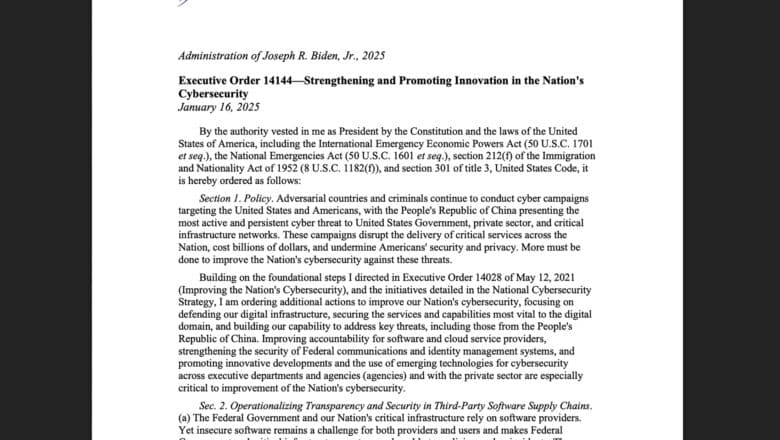
Vendors now face a "two-front" deadline. If they cannot prove PQC capabilities by 2027, they risk being locked out of both the U.S. and French government sectors.
The Hybrid Complexity
ANSSI's requirements are more stringent than the NSA's regarding how PQC is implemented. ANSSI strongly advocates for hybrid mechanisms—combining a classical algorithm with a post-quantum one.
Why Hybrid?
- PQC algorithms are relatively new.
- They are less "battle-tested" than classical methods.
- A hybrid approach ensures that if the PQC algorithm is broken, the classical layer still provides a baseline of security.
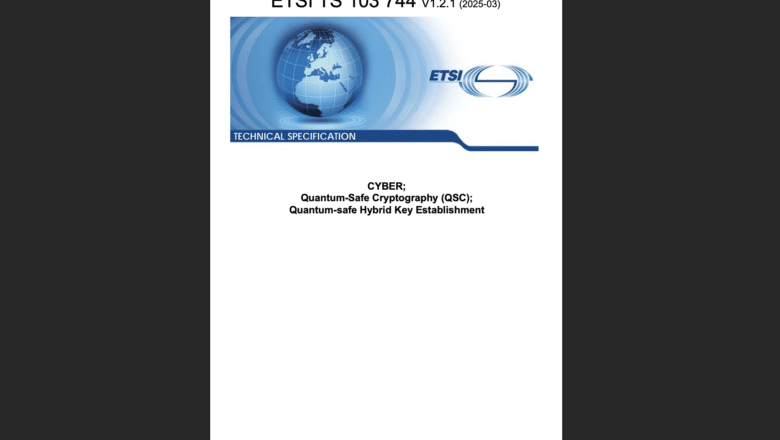
This stance is echoed by the European Cybersecurity Certification Group's Agreed Cryptographic Mechanisms v2 (May 2025), which specifies that LWE (Learning With Errors) and MLWE (Module-LWE) mechanisms should not be used in a standalone capacity.
Conceptual Hybrid Implementation
{
  "encryption_layer": {
    "classical": "AES-256-GCM",
    "post_quantum": "ML-KEM (Kyber)",
    "mode": "hybrid_combined"
  },
  "signature_layer": {
    "classical": "RSA-4096",
    "post_quantum": "ML-DSA (Dilithium)",
    "mode": "dual_signature"
  }
}
Vendor Readiness Checklist
- Audit current cryptographic inventory for
ECDSAandRSAusage. - Evaluate hybrid implementation paths for key establishment.
- Review ANSSI's 2022/2023 position papers.
- Align product roadmap with the January 2027 CNSA 2.0 gate.
- Ensure compliance with EU Agreed Cryptographic Mechanisms v2.

Author Note: The convergence of these deadlines suggests that PQC is no longer a theoretical exercise for the future, but a mandatory requirement for current procurement cycles.
