How to Survive Boiling Water
How to Survive Boiling Water
By Jane A. Cook | Published July 19, 2026

🥛 The Legend of the MIT Milk
Many great tales begin in the chaos of a college dormitory. In this case, the protagonist was a carton of milk bought in 1994 and rediscovered a year later by an undergraduate student named Justin Cave. Since Cave was lactose-intolerant, the milk—which had been abandoned in the fridge for ten months—was of no use to him.
Instead of being tossed, the "Milk" spent the next several decades residing in a single-walled glass jar, completely unrefrigerated. It became a mascot for the residents of Random Hall, who held annual birthday celebrations for it.
To manage the internal gas pressure, the jar was "burped" occasionally. Eventually, it settled into a stable, murky brown state. When asked why such a thing was kept, one student simply noted:
“Why throw something away when you can tell a story about it?”

🔬 The Pasteur Revolution
The idea of extracting wisdom from discarded waste is a common theme in science, most notably in the work of Louis Pasteur. While studying the acidic crystals that formed on the walls of winemaking vats, Pasteur and his peers looked closer at these byproducts rather than scrubbing them away.
This curiosity led to the discovery of fermentation, a process that fundamentally changed food safety. Before the 1850s, the prevailing theory (dating back to Aristotle) was that substances like milk or grain possessed an intrinsic quality that allowed them to spontaneously transform into beer, yogurt, or rot.
The Experiment
Pasteur proved that living organisms—not "intrinsic properties"—were the drivers of this change. He utilized specialized flasks that allowed air to enter but trapped microbes.
| Flask Condition | Exposure to Air Microbes | Result |
|---|---|---|
| Intact Neck | Blocked | Remained clear/sterile |
| Broken Neck | Exposed | Became cloudy and fermented |
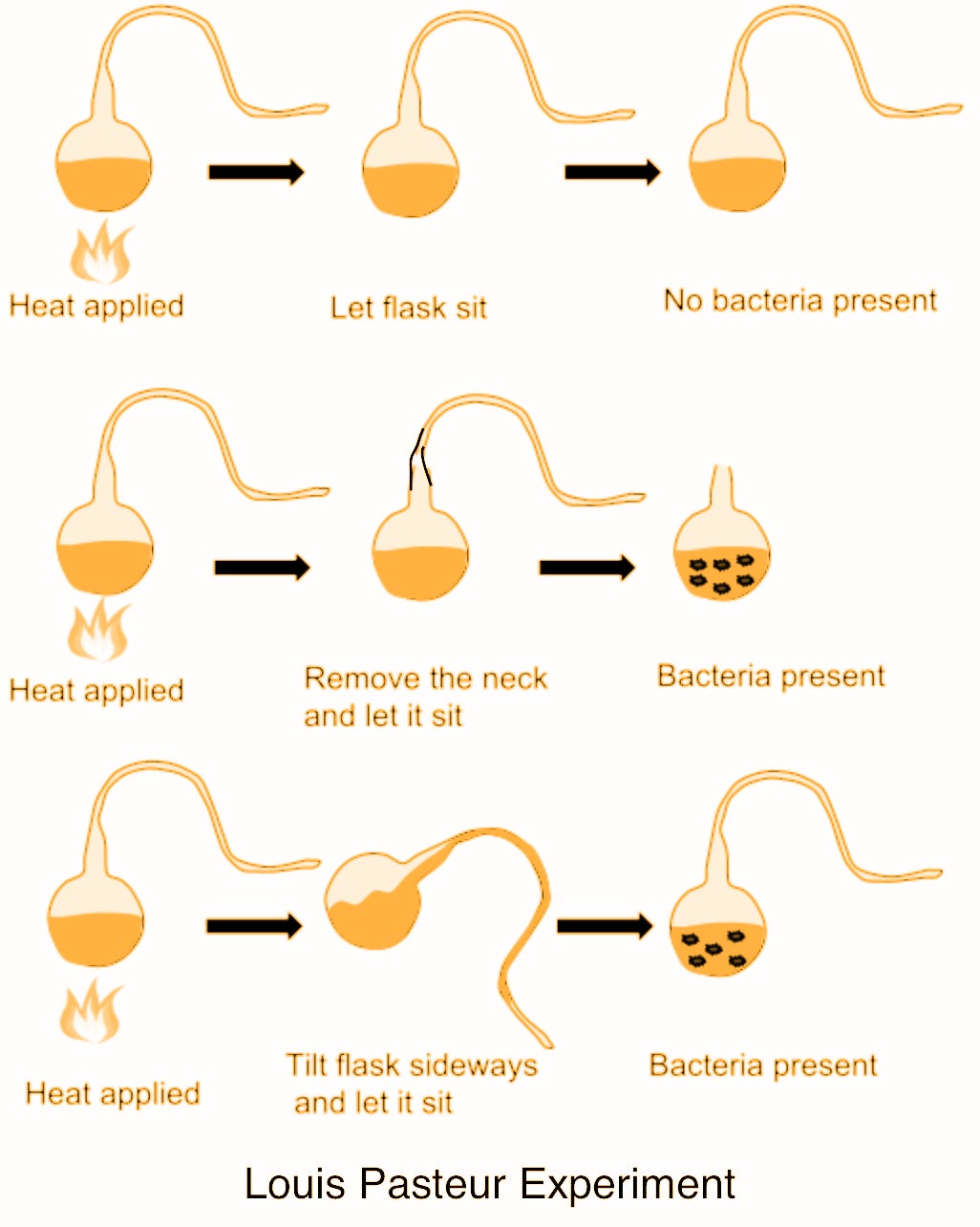
This discovery was a windfall for Napoleon. The French wine industry was suffering financial and reputational losses because their exports to Britain often spoiled during transit. To save the industry, Pasteur developed a method of heating wine just enough to eliminate the microbes without ruining the taste. This became known as pasteurization, and by 1865, it was applied to milk.
🧼 The Era of Sterilization
Once we learned how to kill bacteria, it became a central obsession of modern society. This manifests in several ways:
- Medical: Roughly of people in the U.S. use antibiotics (introduced in the 1940s).
- Domestic: An overwhelming variety of chemical disinfectants in every home.
- Industrial:
- Steris: A company specializing in high-pressure, high-heat sterilization with an annual revenue of \5\text{ billion}$21\text{ billion}$.
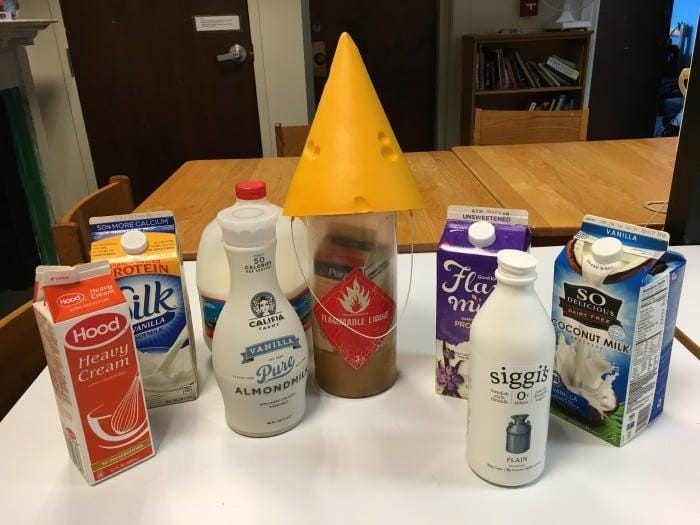
- Dairy: Approximately liters of fluid milk are pasteurized annually.
- Produce: Spinach and other greens are washed in dilute bleach to remove soil microbes.
💊 The Probiotic Paradox
Recently, a new industry has emerged, blending science with marketing. This sector argues that some microbes are beneficial and should be consumed in large quantities—often at a premium price.
Probiotic (meaning "for life") refers to living microorganisms. Essentially, taking a probiotic is the act of intentionally eating bacteria. While we consume microbes accidentally all the time, the probiotic industry seeks to exploit the fact that beneficial bacteria outnumber harmful ones in our bodies by a ratio of at least:
A Lesson in Tea
The author recently experienced the irony of this industry firsthand. While suffering from congestion, they purchased a box of Bigelow Lemon Ginger tea.
The "Probiotic" Brewing Process:
- Boil water
- Pour water over the tea bag
- Wait a few minutes
- Add honey
- Sip and regret
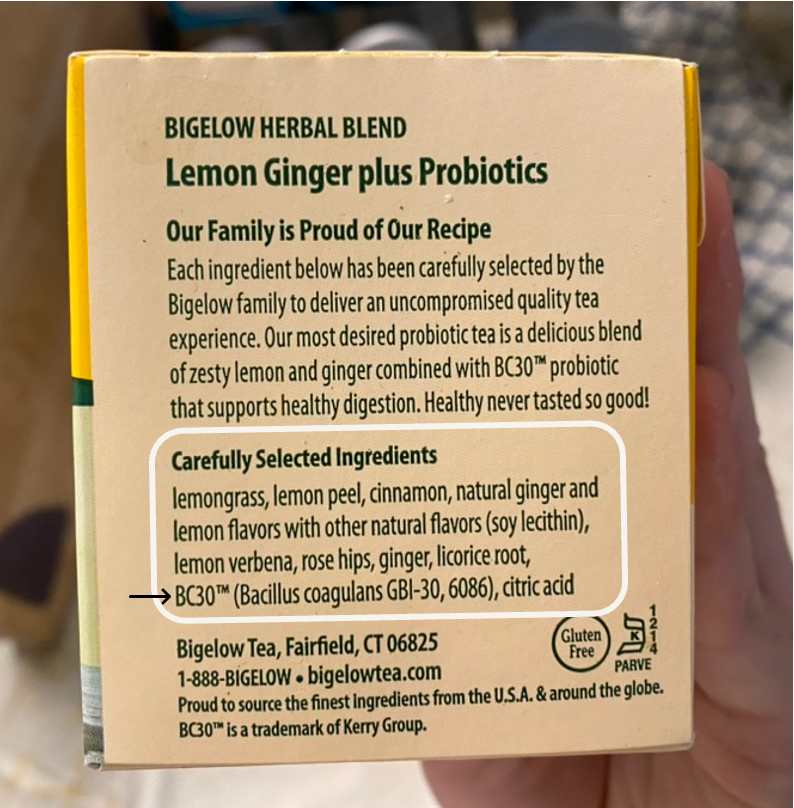
The tea had a strange, powdery, alkaline aftertaste. Upon checking the box, the author discovered they had bought the "with probiotics" version. The bacteria—the very thing they paid extra for—had been subjected to water temperatures higher than the pasteurization threshold.
The result? A cup of dead bacteria water. This raises the question: if the intended outcome of the product is the consumption of living microbes, what happens when the consumer simply follows the instructions to boil the water?