How Hollywood stopped making movies in Hollywood
The Great Exodus: Why "Hollywood" No Longer Films in Hollywood
The economics of production geography: why the industry abandoned Los Angeles, where it went, and if the viewers even notice.

The Breaking Point: #StayInLA
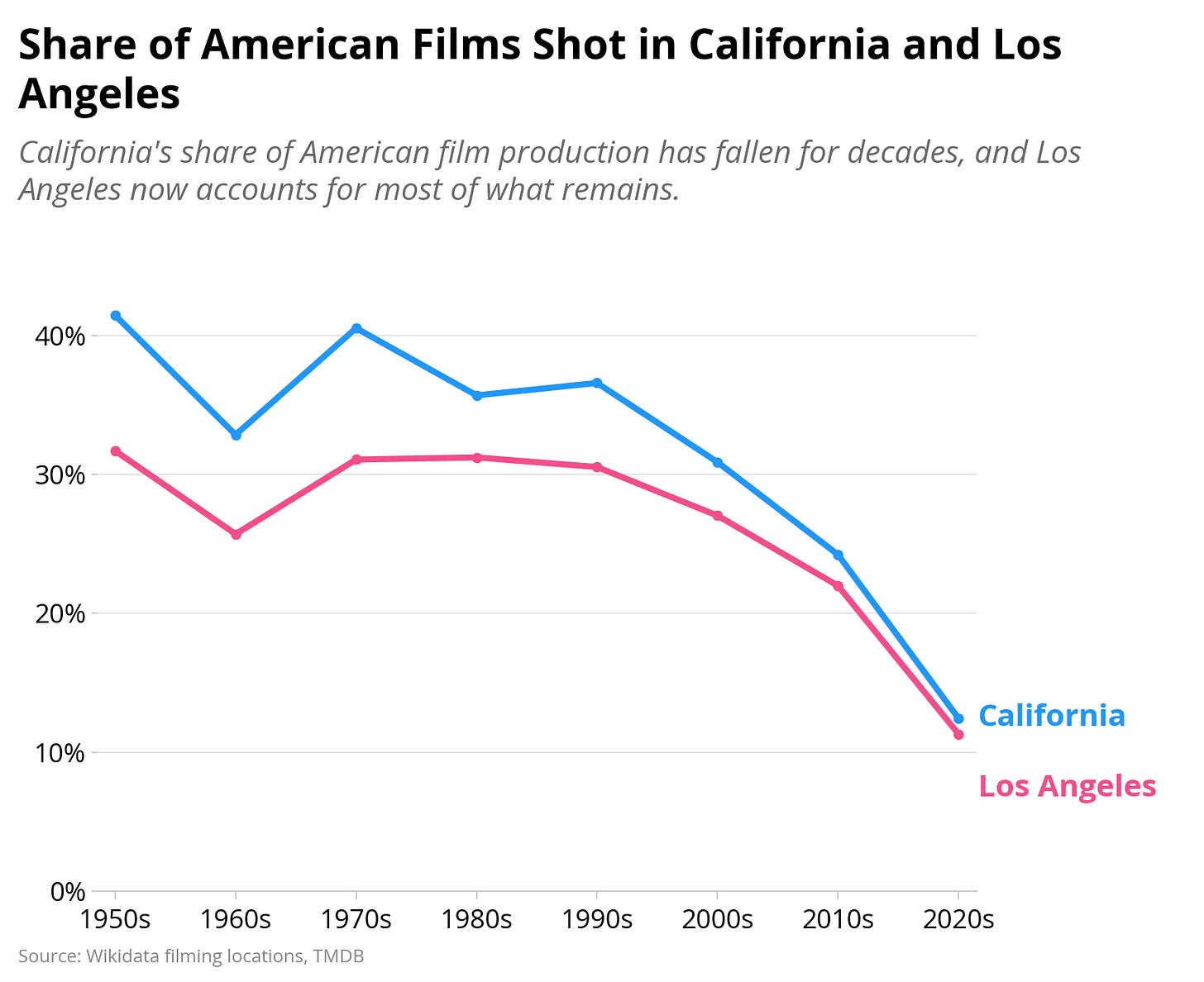
The last decade has been grueling for the Los Angeles entertainment sector. A "perfect storm" of crises—specifically the labor strikes of 2023 and the devastating wildfires of 2025—has amplified a long-standing fear: that the heart of the industry is being ripped out and transplanted overseas. This migration threatens the livelihood of below-the-line workers who form the backbone of the local ecosystem.
In the wake of the fires, writer Alexandra Pechman and filmmaker Sarah Smith mobilized. They created a WhatsApp network for industry professionals, drafted a formal petition, and ignited the grassroots movement known as #StayInLA.
What started as a crisis-response effort to rebuild the city evolved into a significant political force. The campaign achieved:
- Over 20,000 signatures on their petition.
- Public backing from A-list actors and directors.
- A brief moment of recognition from Donald Trump (who, as a former actor, is perhaps most remembered for his cameo in Home Alone 2: Lost in New York).
Having lived in LA and worked within the industry, I felt compelled to investigate this pervasive anxiety. I wanted to move past the vague rumors and actually quantify the "flight" from the city that gave the industry its name.

The Rise and Fall of the Studio System
To understand where we are, we have to look at why we were there in the first place. In the 1910s, filmmakers flocked to Los Angeles for a few specific reasons:
- Climate: Consistent, year-round sunlight.
- Geography: A diverse array of landscapes in close proximity.
- Cost: Land was cheap.
- Legal Strategy: It provided a safe distance from Thomas Edison’s aggressive patent lawsuits on the East Coast.
By the 1920s, Hollywood was the undisputed global epicenter of cinema. It created a self-sustaining loop of studios, specialized technicians, and support vendors.
"For decades, the industry operated like a factory. Studios used backlots to provide turnkey environments, allowing directors to produce four to six films annually. It was the cinematic equivalent of Henry Ford’s Model T assembly line—obsessed with speed, efficiency, and frugality."
The Two Catalysts of Migration
The dominance of LA was eventually eroded by two major shifts in how movies were made and funded.
1. The Era of the Blockbuster
In the 1970s, films like Jaws and The Godfather proved that "event cinema" could generate massive profits. By the 80s, corporate entities (e.g., Paramount-Gulf-Western) began engineering spectacles. To make Raiders of the Lost Ark, First Blood, or Predator feel epic, studios stopped using backlots and started filming in actual jungles and deserts to enhance the scale.
2. The IP and Incentive Boom
The 2000s saw the rise of massive Intellectual Property (IP) franchises, most notably the Marvel Cinematic Universe. These projects required astronomical budgets. To mitigate these costs, studios began chasing tax credits.
The New Production Map
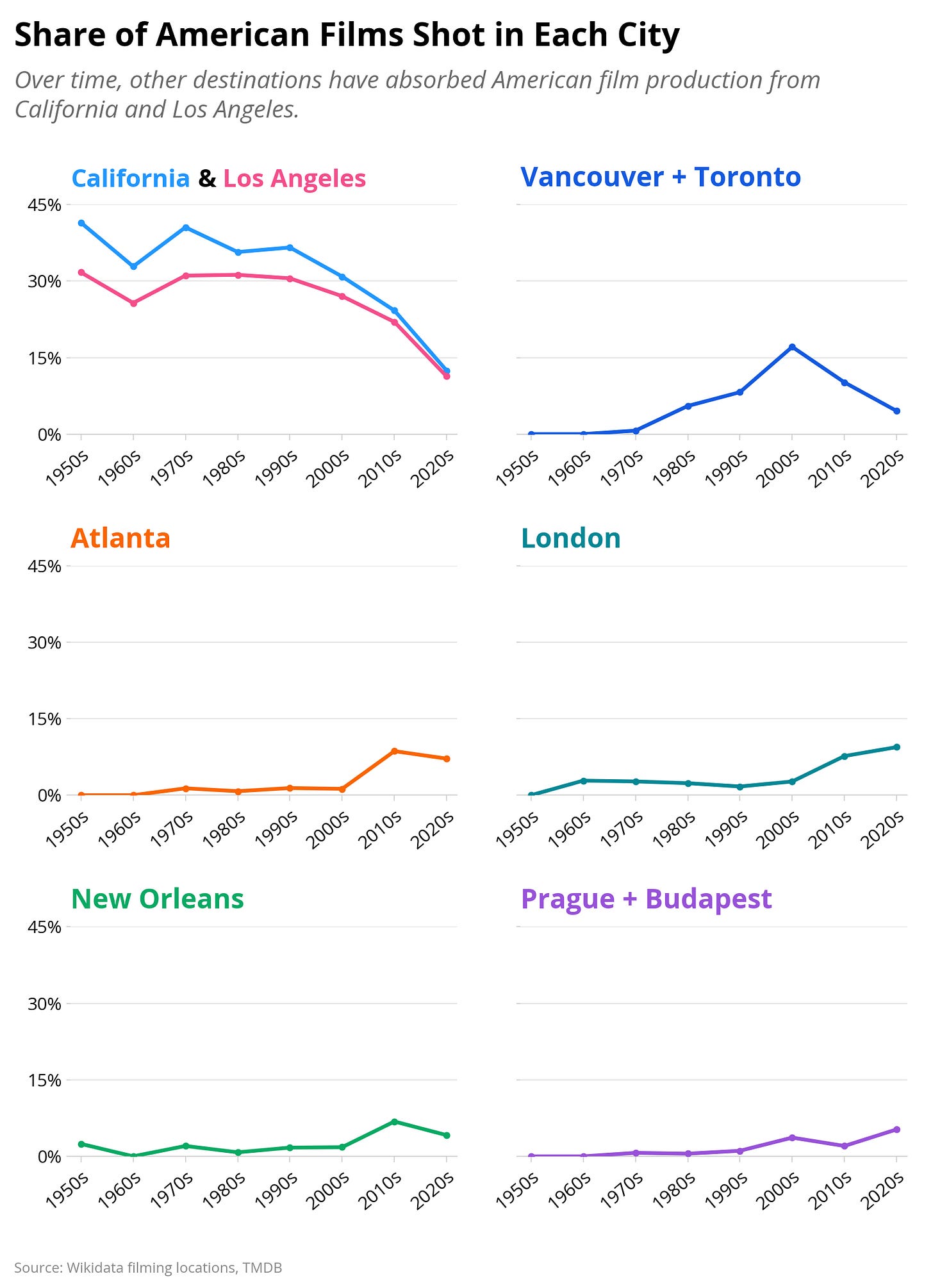
Today, production has shifted to a few key hubs that offer a mix of infrastructure and financial lures.
| Hub | Key Advantage | Example Facility |
|---|---|---|
| London | World-class infrastructure | Pinewood Studios |
| Atlanta | Aggressive tax credits | Various soundstages |
| Vancouver | High rebates / Lower costs | Local production hubs |
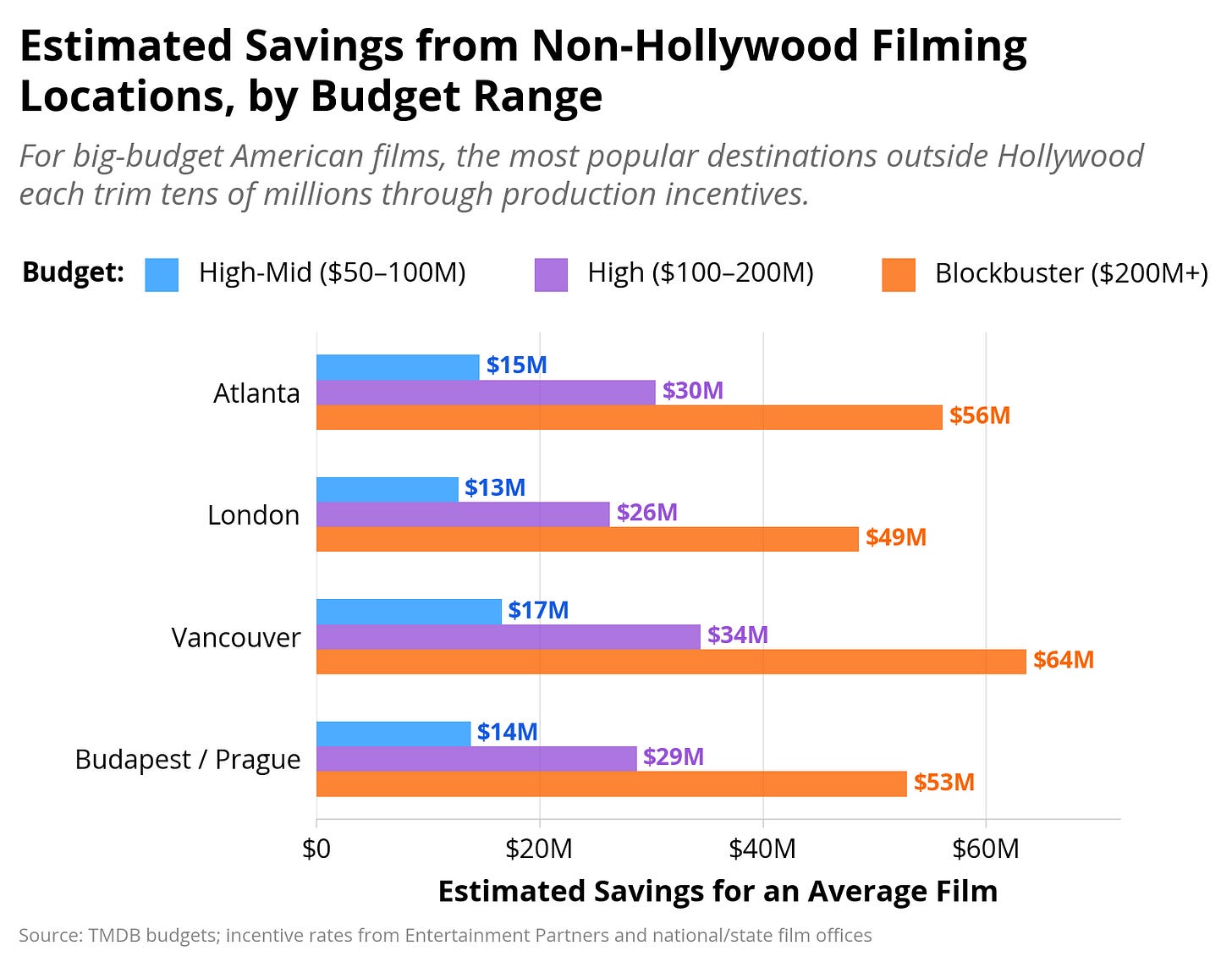
The financial logic is simple. For a massive blockbuster, the tax savings can reach tens of millions of dollars. This is calculated roughly as:
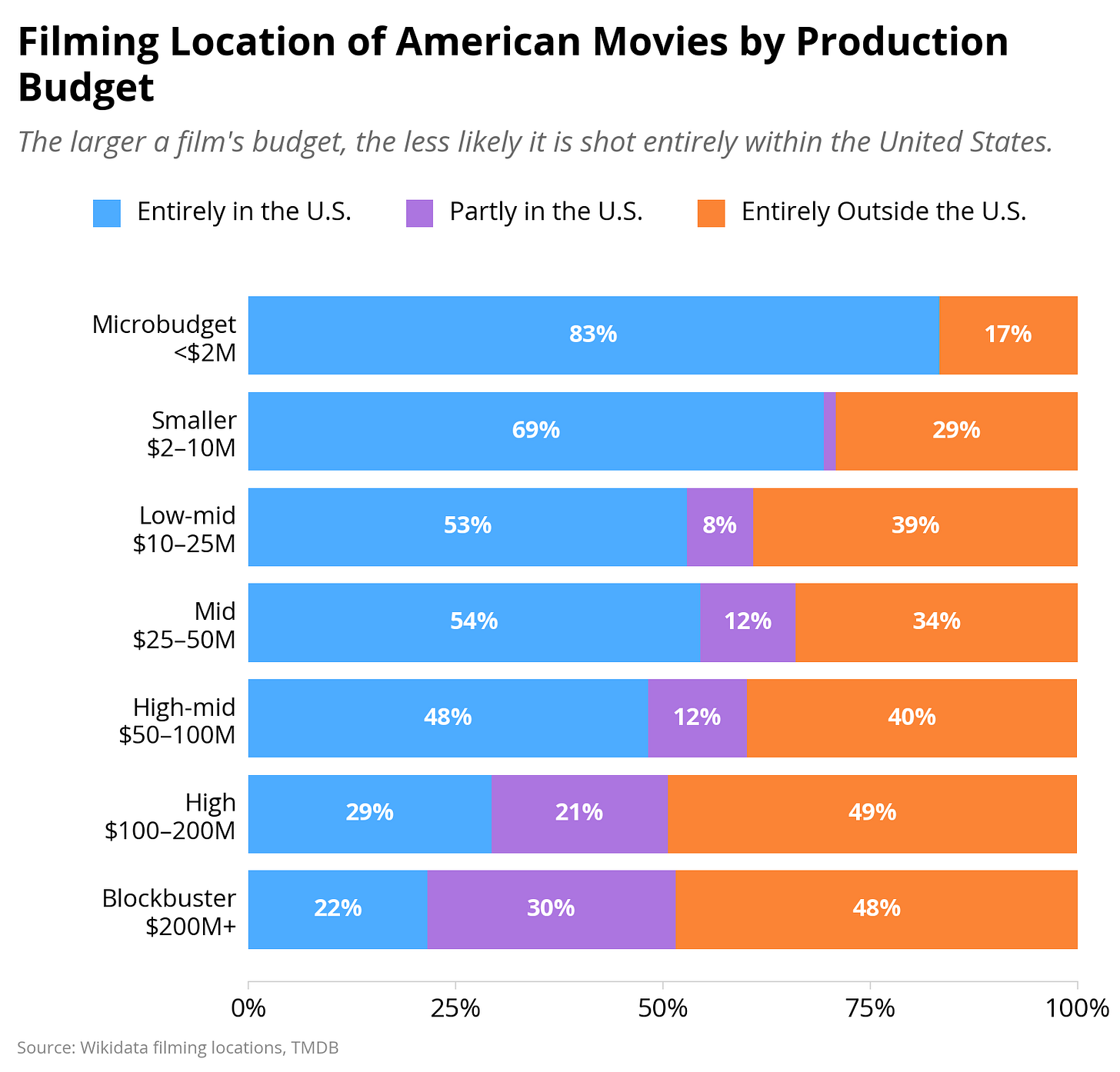
This extra capital is then diverted into A-list salaries, massive set pieces, or high-quality unremarkable CGI. Consequently, the more expensive the movie, the less likely it is to be filmed in the US.
The Narrative Disconnect
We now see two types of location choices:
- Authentic: Mission: Impossible filming a chase in Rome because the story requires Rome.
- Financial: A movie set in New York but filmed in Toronto because the tax credits are better.
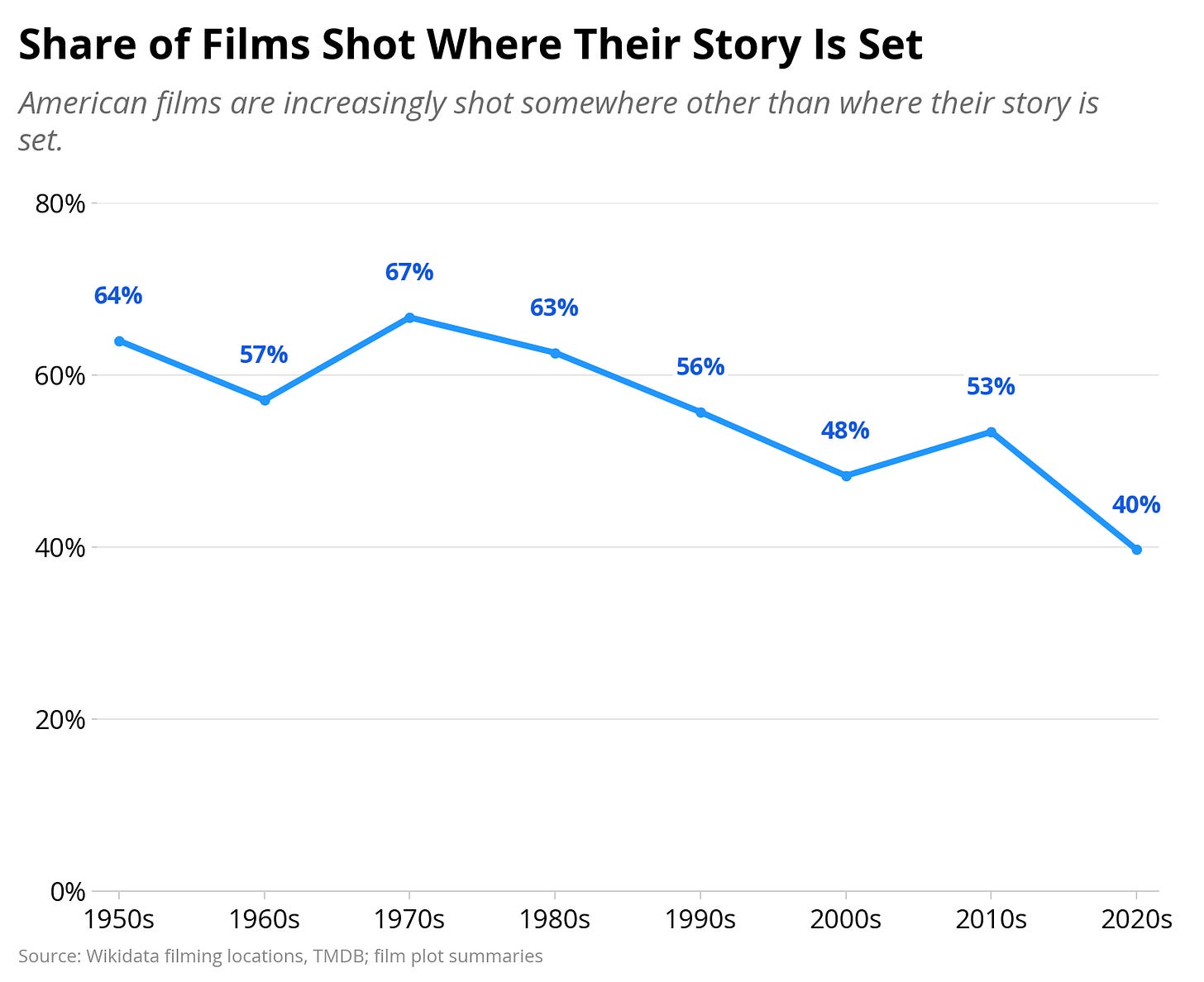
This has led to a strange phenomenon where the visual identity of a city is replaced by a "stand-in."
The Studio Executive's Location Checklist:
- Does the city have a soundstage?
- Is there a tax rebate of 20% or more?
- Can we make this street look like Manhattan?
-
Is this where the story actually takes place?
This "untethering" of setting and location is a major point of contention for critics. I often hear my favorite movie podcast lament the "disposable" Netflix romantic comedies that claim to be in New York but are clearly filmed in New Orleans.
Does it Actually Matter?
As a cinema purist, I believe in the importance of place. Even if a movie is set in a galaxy far, far away, the commitment to the environment should be absolute.
However, there is a harsh reality: most audiences don't care.
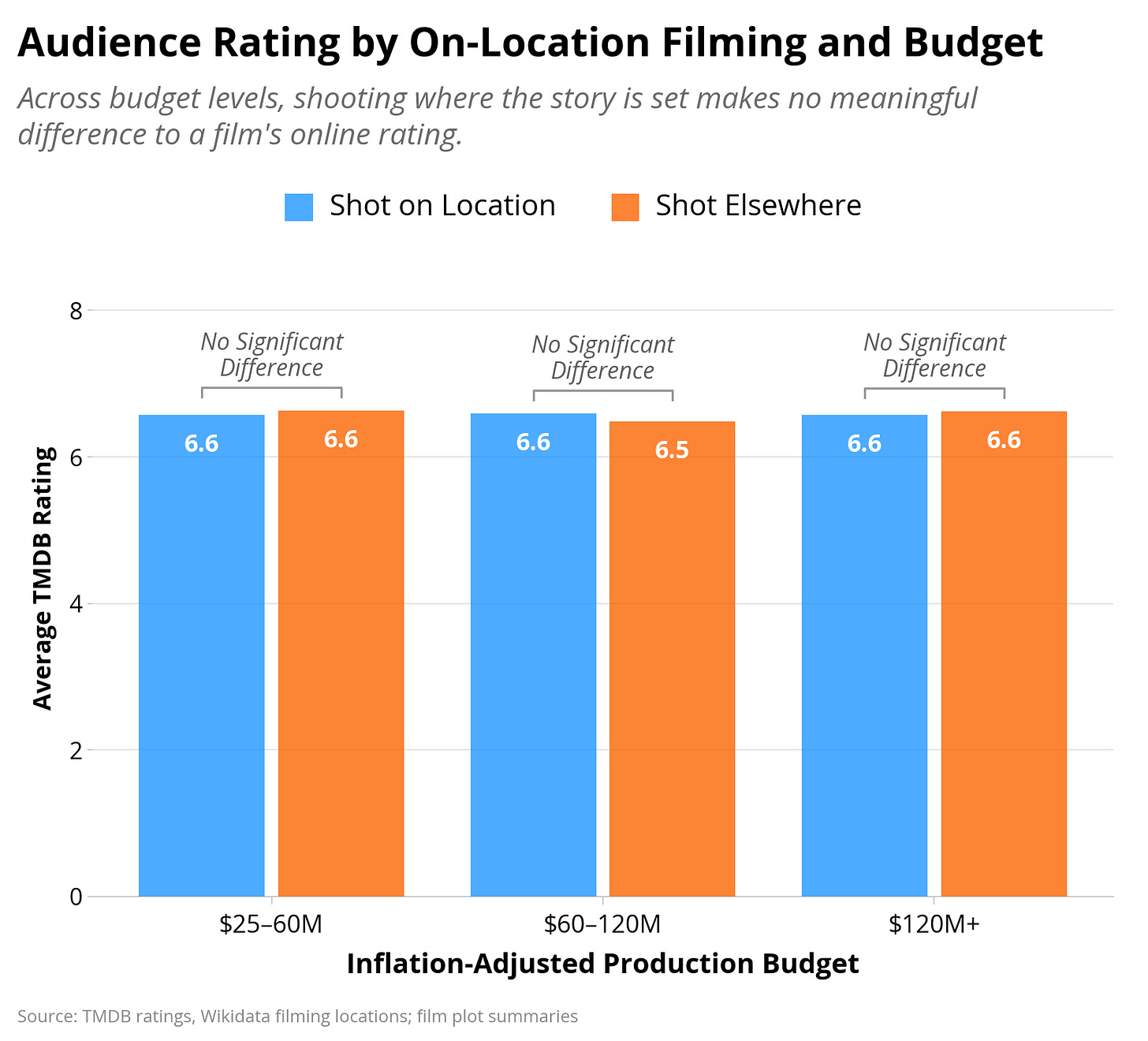
I may have spent a great deal of effort trying to prove a point that studio heads already understand: the average viewer isn't scanning the horizon for the Toronto skyline. They are likely too distracted by their Instagram feeds to notice that the "New York" they are seeing is actually a street in Canada.