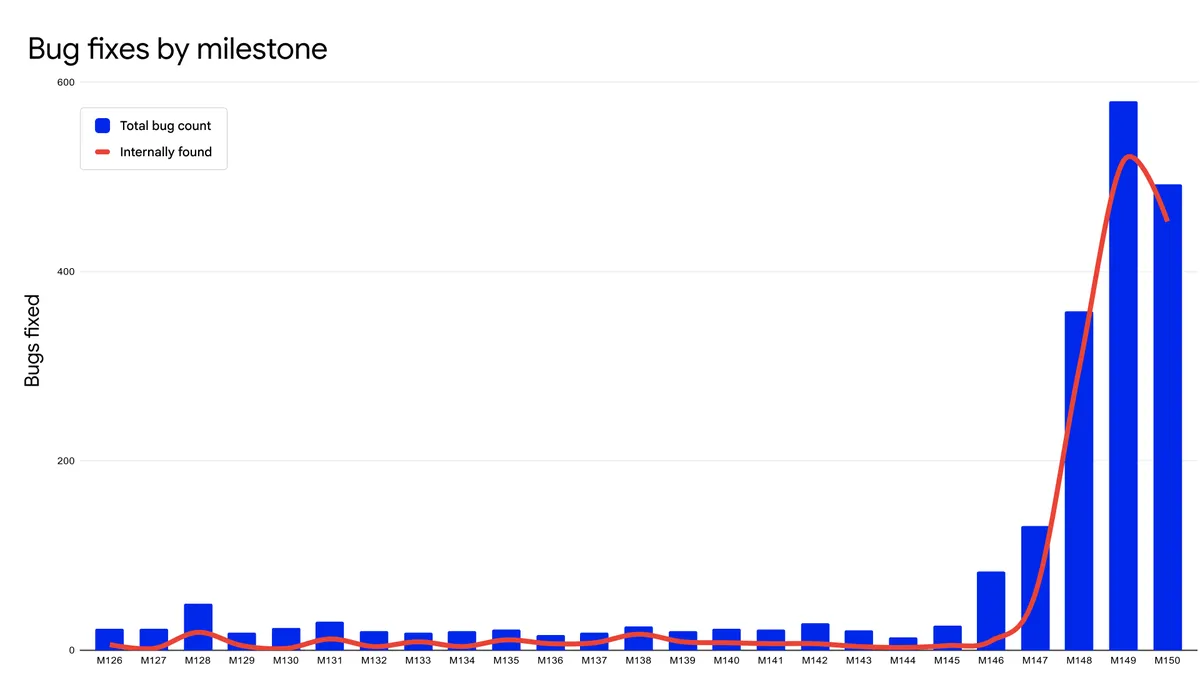
Google fixed more Chrome bugs in June than over the past two years, thanks to AI
Google’s AI Revolution: Fixing More Chrome Bugs in June Than in the Previous Two Years
Stronger with every update: How we’re making Chrome and the web safer in the AI Era Published: July 30, 2026
The landscape of software security is undergoing a seismic shift. The emergence of Large Language Models (LLMs) has provided us with capabilities for automated vulnerability discovery that were previously unthinkable, scaling far beyond the capacity of human experts alone. To keep pace with attackers, we are deploying AI models at scale to identify and remediate hundreds of security flaws faster than ever before.
The Life of a Bug
Not all software glitches are created equal. While a standard functional bug might cause a UI to freeze (annoying, but harmless), a security vulnerability is a flaw that can be weaponized.
Definition: An exploit is a method used by attackers to leverage a security bug to perform unauthorized actions, such as stealing private user data or gaining remote control of a system.
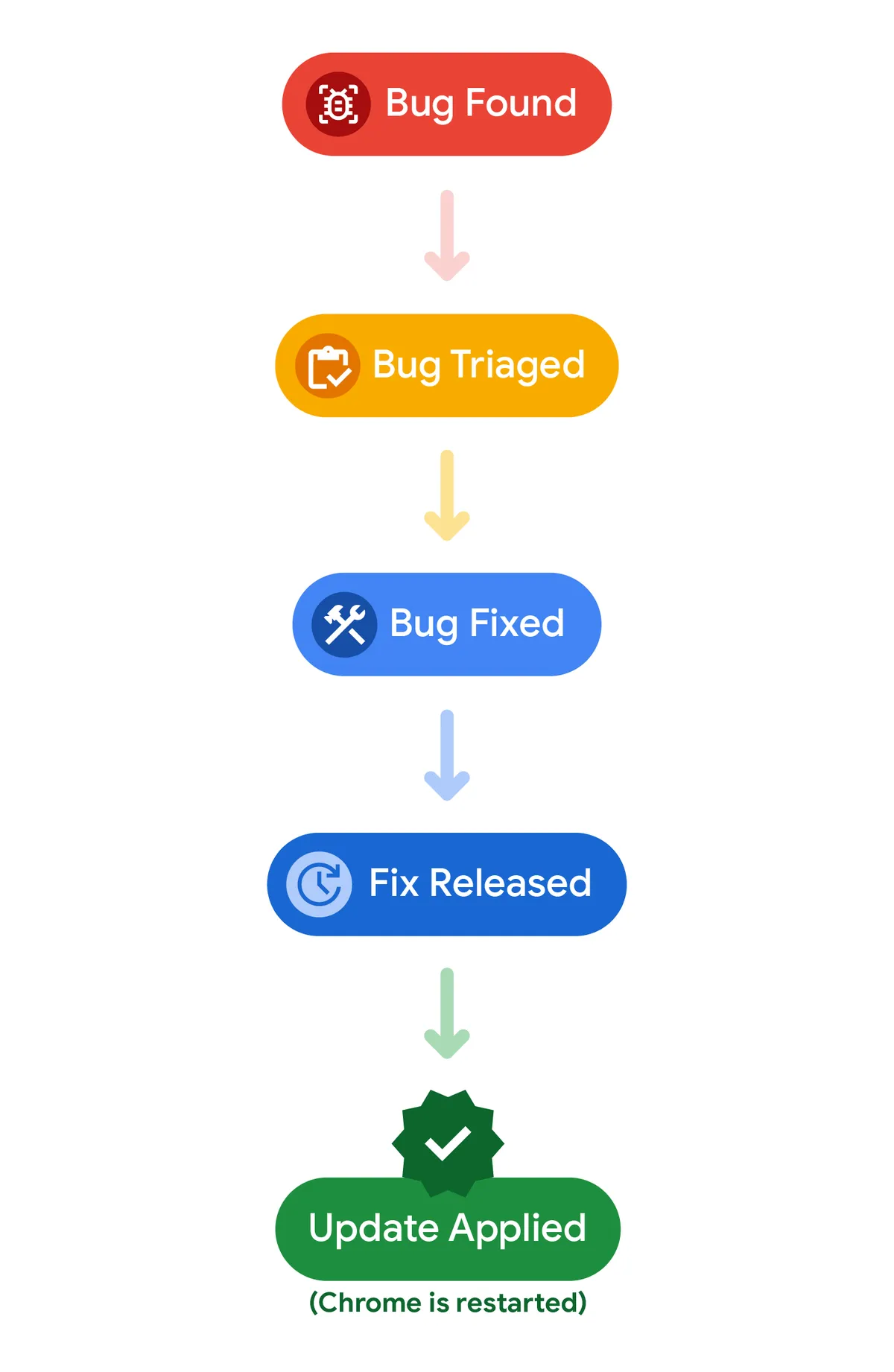
The lifecycle of a vulnerability generally follows a specific path:
Discovery Triage Patching Deployment.
Our primary objective is to minimize the time spent in each of these stages.
Finding Vulnerabilities: The AI Evolution
The Chrome Security team didn't start using LLMs yesterday; it has been a multi-year journey of integration.
Timeline of AI Integration
| Year | Project/Initiative | Key Achievement |
|---|---|---|
| 2023 | LLM Fuzzing | Enhanced the coverage and performance of security fuzzing. |
| 2024 | Naptime | Partnered with Project Zero to give LLMs specialized research tools. |
| 2025 | Big Sleep | Collaboration with DeepMind/Project Zero; found bugs in the graphics stack and V8 engine. |
| 2026 | Gemini Agent Harness | Deployed Gemini across the full Chrome codebase for high-efficiency discovery. |
One standout success from the 2026 harness was the discovery of a sandbox escape. This flaw would have allowed a compromised renderer to trick the browser into reading local files—a critical bug that had remained hidden in the code for years.
Enhancing the AI Agent
To move beyond basic detection, we implemented several sophisticated upgrades:
- Model Interoperability: Combining the strengths of proprietary and open-weights models.
- Chrome Knowledge Base: Feeding the LLM the entire Git history and all previous CVEs to extend its reasoning.
-
SECURITY.mdIntegration: Encouraging developers to document trust boundaries to help the AI understand the threat model. - The "Critic" Agent: A separate agent that reviews findings using the
SECURITY.mdfiles. - Iterative Scanning: Running models multiple times to overcome non-determinism and benefit from model updates.
Safety and Guardrails
We recognize the risks of AI and have implemented strict security protocols:
- Static Analysis: AI analyzes source code at rest.
- Isolated Environments: Models run on locked-down machines with
general internet accessno general internet access. - Network Interception: All requests are intercepted and filtered through strict allowlists.
- Restricted Permissions: Subagents cannot modify the local system or access files outside specific source directories.
Balancing AI with Human Expertise
AI is a powerful tool, but it is not a silver bullet. It complements our existing infrastructure:
- Fuzzing: Still the gold standard for finding bugs caused by complex, long-range interactions between disparate code modules.
- Chrome Vulnerability Reward Program (VRP): We continue to value the creativity of external researchers for the most complex flaws.
Interestingly, by March 2026, we saw a massive surge in bug reports—surpassing the total count for all of 2025. Consequently, we updated the VRP to prioritize submissions that are additive to our internal AI findings and compatible with our automated pipelines.
Triaging Vulnerabilities at Scale
As the volume of discovered bugs increased, the bottleneck shifted to triage. Historically, human-led triage was slow:
We have transitioned to an automated system that blends rule-based logic with AI.
The Four-Phase Triage Pipeline
- Noise Reduction: The system filters out spam, removes duplicates, and ensures the report actually describes a security flaw.
- Reproduction: The bug is automatically tested against the affected OS and browser versions. If reproducible, the system attaches
stack tracesto assist the developer. - Metadata Assignment: The AI determines the severity rating and identifies when the bug was first introduced into the codebase.
- Human Oversight: Developers can still override severity ratings and provide additional context to refine the model's reasoning.
By automating these steps, we have transformed the triage process from a manual hurdle into a high-throughput pipeline, ensuring that the web remains safer for everyone.