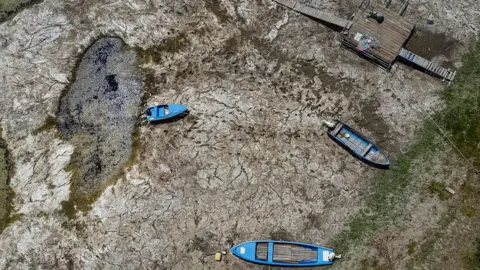
Danube's record low levels force shutdown of Hungary's only nuclear plant
Crisis on the Danube: Record Drought Forces Nuclear Shutdown in Hungary
The Danube River has plummeted to historic lows, triggering an unprecedented energy crisis. For the first time in its history, Hungary's sole nuclear power facility is being forced offline.
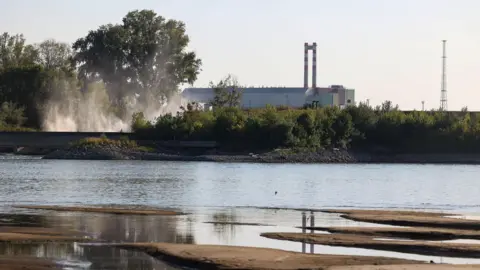
The Paks Power Plant Failure
Prime Minister Péter Magyar announced that the Soviet-era Paks power plant must cease operations entirely. The facility relies on the Danube for essential cooling; however, the water level has dropped so significantly that the suction nozzles can no longer reach the water.
Energy Security Warnings
With a brutal heatwave pushing temperatures toward for a full week, the national energy supply is expected to reach a critical state starting Monday. To prevent a total grid collapse, the government has issued the following guidelines for citizens:
- Avoid high-energy activities between
17:00and22:00. - Limit the use of air conditioning units.
- Postpone charging electric vehicles during peak hours.
If these voluntary measures fail, the government may implement a standard power supply rotational shutdown regime, creating a priority list of consumers whose electricity and water access may be restricted.
Regional Impact: Romania and Beyond
Hungary is not alone. The Danube's decline is a regional catastrophe, with levels hitting 30-year lows across Serbia and Romania.
The Cernavoda Situation
In Romania, the energy landscape is similarly precarious. The Cernavoda plant, which generates roughly 20% of the nation's electricity, has already seen one of its two 706-megawatt reactors go offline.
| Country | Facility | Status | Impact |
|---|---|---|---|
| Hungary | Paks | Total loss of nuclear power | |
| Romania | Cernavoda | 1 of 2 Reactors Offline | 50% reduction in nuclear output |
If the second Romanian reactor fails, the country will join Hungary in a total nuclear energy blackout.
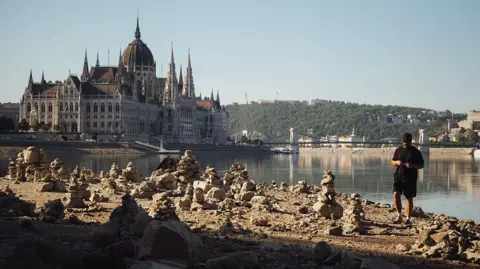
The Science of the Drought
The Copernicus climate service highlights a grim reality: Europe is the fastest-warming continent on Earth, heating up at twice the global average rate. This acceleration manifests as:
- More frequent and intense summer heatwaves.
- Extreme pressure on freshwater systems.
- A rise in devastating wildfires.
Hydrological Data
The National Institute of Hydrology in Romania provided startling figures regarding the river's flow rate:
"The average river flow where the Danube enters the country in July is typically . By Wednesday, this had plummeted to less than a third of that."
Current Flow Metrics:
- Wednesday:
- Tuesday (Forecast):
Geography of the Danube
The river is divided into three primary basins:
- Upper Danube: From Germany to Bratislava (Slovakia).
- Middle Basin: From Bratislava to the Serbian/Romanian border.
- Lower Danube: Through Romania and Bulgaria, ending in the Black Sea delta.
Unexpected Discoveries and Logistics
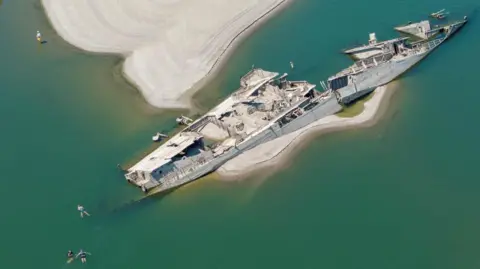
As the water recedes, the riverbed has revealed "ghosts" of the past and prehistoric remains:
- Croatia: A sunken Hungarian cargo vessel.
- Serbia: The remains of a German river flotilla and a World War II German warship at Prahovo.
- Bulgaria: In the city of Ruse, a resident discovered mammoth remains, including:
- A lower jaw
- Two tusks
- A possible rib
Shipping and Rescue Operations
Commercial shipping in Bulgaria has effectively stopped. A notable crisis occurred when the Viking Ullur cruise ship ran aground near Vidin.
INCIDENT REPORT: Viking Ullur
- Passengers: 186
- Status: Evacuated by border police
- Condition: Low food/water supplies
- Cause: Unable to dock due to shallow waters
Ivan Zhekov of Bulgaria's maritime administration agency noted that a situation this severe has not occurred since 1990.

Broader Environmental Context
The crisis extends beyond the main artery of the Danube. In Serbia, the Sava and Tisa rivers (tributaries) are also experiencing critical lows. Hydrologist Dejan Vladiković explained that the current disaster is a "perfect storm" caused by:
- Extreme current temperatures.
- A significant lack of rainfall during the spring season.