A Surveillance Treaty in Disguise: Canada Signs UN Cybercrime Convention
A Surveillance Treaty in Disguise: Canada Signs UN Cybercrime Convention
In mid-July 2026, the Canadian government quietly announced its signature on the United Nations Convention against Cybercrime. While Ministers Anita Anand, Gary Anandasangaree, and Sean Fraser promoted the agreement—highlighting its protections for children and claiming its human rights safeguards are "among the strongest found in an international criminal justice treaty"—the announcement glossed over critical details.
The core issue is that this is not primarily a cybercrime treaty a sweeping cross-border surveillance and electronic evidence-sharing agreement. Despite initial opposition from Canada, warnings from twenty domestic experts and organizations, and the hesitation of several key allies, the government has pivoted its position.
Note: Signing a treaty does not yet create binding legal obligations; that requires ratification. However, the decision to sign now—after refusing to do so at the official ceremony less than a year ago—is deeply concerning.
📜 The Evolution of the Treaty
The convention's origins are rooted in a 2017 Russian initiative intended to replace the Budapest Convention (the established cybercrime framework which Russia avoids).
The Signing Divide
While Canada previously stood with the U.S. and EU in opposing the resolution, the eventual signing list reveals a stark ideological split:
| Signed the Treaty | Declined to Sign (Initially/Still) |
|---|---|
| Russia, China, Iran, North Korea, Belarus, Cuba, Venezuela, Saudi Arabia | United States |
| UK, Australia, France, Germany, European Union | New Zealand, Japan, Netherlands, Italy, Norway, Denmark, Finland |
| Canada (as of July 2026) |
⚠️ The Hidden Risks
The treaty's procedural powers are not limited to "cybercrime." Instead, they apply to electronic evidence for any criminal offense. International cooperation is triggered by any "serious crime," which is defined mathematically as:
Because many authoritarian regimes punish journalism, blasphemy, LGBTQ+ identities, or government criticism with sentences exceeding this threshold, the treaty effectively turns repressive local laws into triggers for global data harvesting.
Key Concerns from Digital Rights Groups
The Electronic Frontier Foundation (EFF) and Human Rights Watch have flagged the following:
- Real-time Interception: Requires states to implement live data collection.
- Lack of Oversight: Judicial authorization is left to domestic discretion.
- Secrecy: Permits the use of
gag orderson cooperation requests. - No Political Exception: Omits protections for political dissidents.
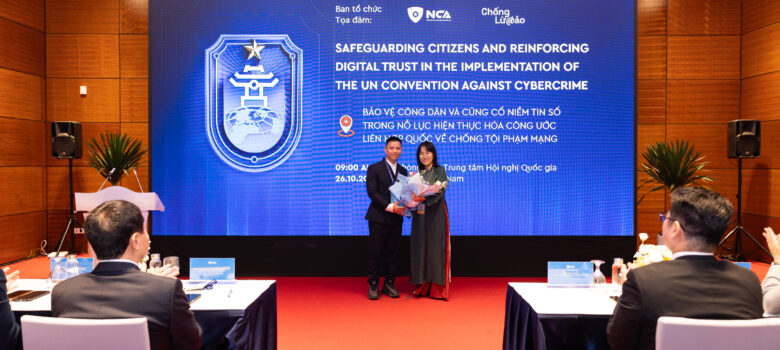
🇨🇦 The Canadian Opposition
In December 2024, a coalition of nearly two dozen experts and organizations—including Amnesty International Canada, PEN Canada, OpenMedia, the Criminal Lawyers’ Association, and Citizen Lab (specifically Ron Deibert and Kate Robertson)—urged the government to reject the treaty.
Their warnings included:
- Transnational Repression: Creating channels for foreign regimes to target diaspora communities within Canada.
- Spyware Complicity: Kate Robertson warned the treaty could facilitate the mercenary spyware trade.
- Criminalizing Research: Over 120 security researchers cautioned that "offences" could be interpreted to target good-faith security auditing.
Unaddressed Concerns
The government has provided no public consultation and has not addressed the following checklist of issues:
- How will Canada prevent the treaty from being used for transnational repression?
- What safeguards prevent the criminalization of security research?
- Why was the decision reversed after nine months of refusal?
⚖️ Connection to "Lawful Access"
The signing of this treaty is not an isolated event; it is mutually reinforcing with Canada's domestic "lawful access" agenda. To ratify the treaty, Canada will need legislation that mirrors the expanded production orders and cross-border data sharing powers found in Bill C-22.
{
  "policy_alignment": {
    "international": "UN Cybercrime Convention",
    "domestic": "Bill C-22",
    "shared_goal": "Expanded electronic evidence gathering"
  }
}
Ultimately, the concerns that prevented Canada from signing in Hanoi remain unresolved. The government's quiet signature suggests a shift toward expanded surveillance powers under the guise of fighting cybercrime.