The AI Demand Bubble
The AI Demand Bubble
By Ed Zitron | August 4, 2026
📢 Support Independent Analysis
If you find this deep dive valuable, consider joining my premium newsletter. For $70/year or $7/month, you get access to weekly reports (ranging from 5,000 to 18,000 words) featuring exhaustive breakdowns of:
- NVIDIA's market dominance.
- The financial inner workings of OpenAI and Anthropic.
- The broader systemic risks of the AI bubble.
📚 Essential Reading
My "Hater's Guides" are critical for anyone trying to decode the modern financial landscape:
- The SaaSpocalypse
- Private Credit & Private Equity
- How OpenAI Kills Oracle (Pairs with my Hater's Guide to Oracle Parts 1 & 2)
Coming Soon: This Friday, I release the second part of the Hater’s Guide to Nvidia, exploring the company's evolution from a hardware manufacturer to a master of "financial dark arts."
Tip: If you have insider info on the AI bubble (OpenAI, Anthropic, etc.), reach out via Signal: ezitron.76.
🎧 Soundtrack: Tool - Forty Six 2
The Great Delusion
To those who have poured capital into the "hyperscalers" and the wider AI ecosystem, I have one question: Do you actually know what you've bought into?
Recent earnings reports from the tech giants—Amazon, Google, and Microsoft—have been hailed by the media as proof that AI investments are "paying off." This narrative is based on record-breaking cloud revenue growth. However, there is a glaring omission: none of these companies have actually disclosed their specific AI revenues.
The Microsoft Shell Game
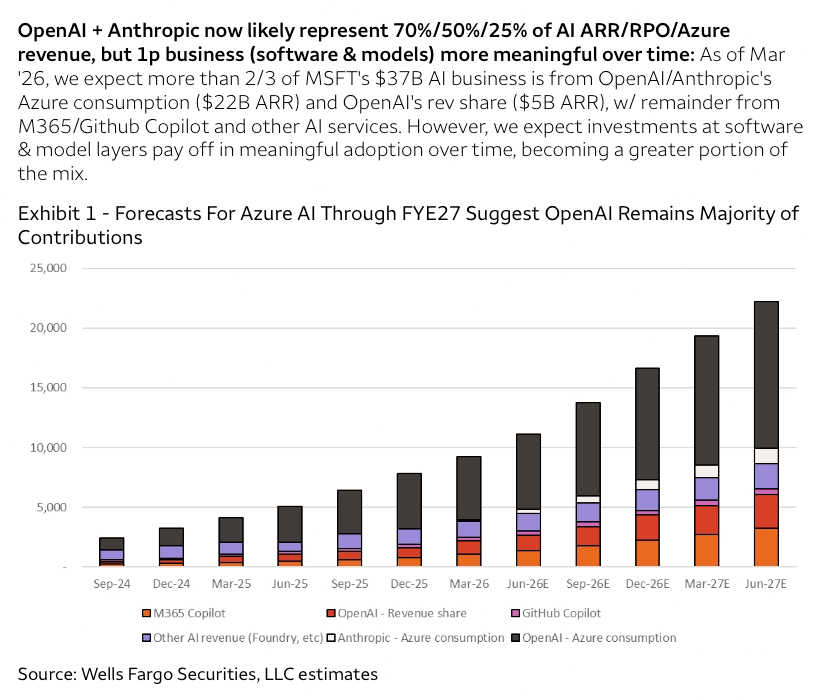
Microsoft provided a glimpse of the curtain in Q3 FY2026, claiming an AI run rate of $37 billion. To put that in perspective:
Yet, by Q4, Microsoft stopped sharing these specific payoffs. They realized that as long as the top-line numbers looked healthy, analysts and reporters—many of whom are uninterested in the granular details—would continue to cheer.
Manufacturing "Growth"
The cloud platforms aren't just growing because of AI demand. They are utilizing a two-pronged strategy to inflate numbers:
- Direct Price Hikes: Simply charging more for existing services.
- Forced Integration: Shoving AI features into core subscriptions to justify higher costs.
AI is providing better value Users are being squeezed to appease Wall Street.
The Circular Financing Loop
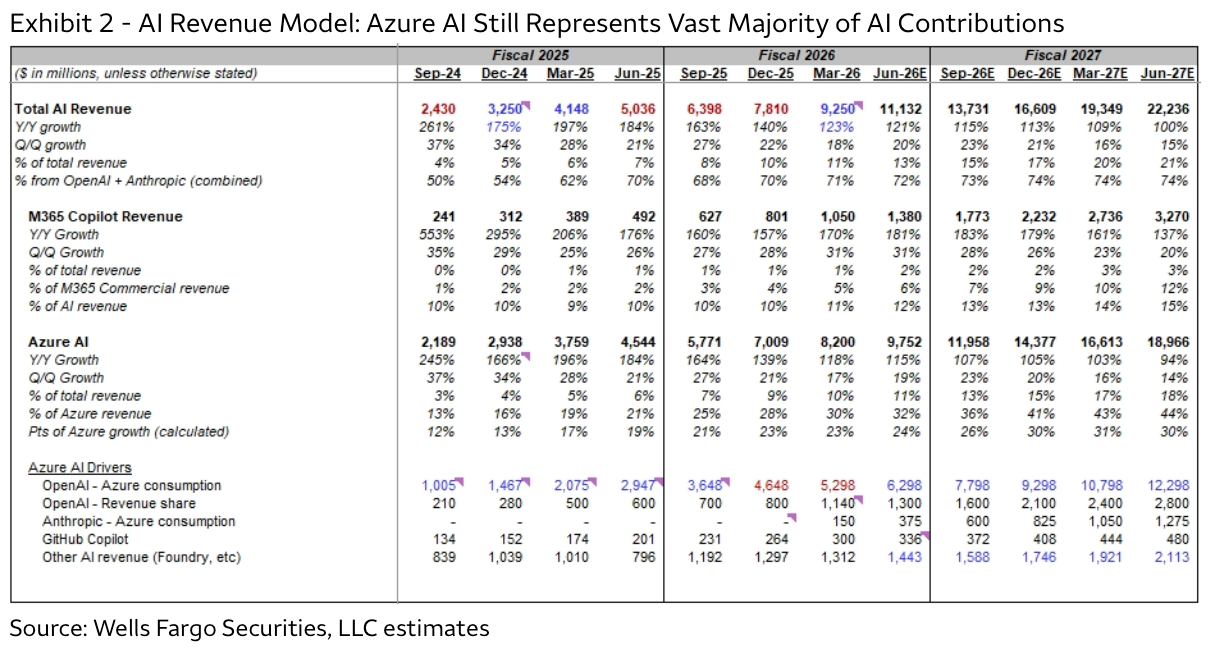
The most deceptive part of this growth is that it isn't coming from a diverse market of enterprise customers. Instead, the vast majority of this revenue is generated by two entities: Anthropic and OpenAI.
These two "labs" are the primary engines driving the cloud growth of the Big Three. But here is the catch: these labs are unprofitable and unsustainable. They only exist because the hyperscalers are funding them.
The Money Trail
We are witnessing a massive circular economy:
- Google has poured between
$10 billionand$40 billioninto Anthropic. - Amazon gave Anthropic
$5 billionshortly after Google, and has funneled$50 billioninto OpenAI.
While the public focuses on NVIDIA's role in funding "neoclouds," the more systemic risk is the hyperscalers propping up their own biggest customers with cash that eventually loops back into their own pockets.
Infrastructure for "Failsons"
The massive Capital Expenditure (CapEx) we see today isn't for a broad AI revolution; it's to support these two "load-bearing failsons."
- Microsoft: An executive admitted during the Musk-Altman trial that the OpenAI relationship has cost the company
over $100 billion(including the$13 billiondirect investment and infrastructure). - Dedicated Hubs: Microsoft's Fairwater data centers and Amazon's Project Rainier (Indiana) are essentially dedicated to OpenAI and Anthropic, respectively.
- Google's Complex Deals: Google is discussing a
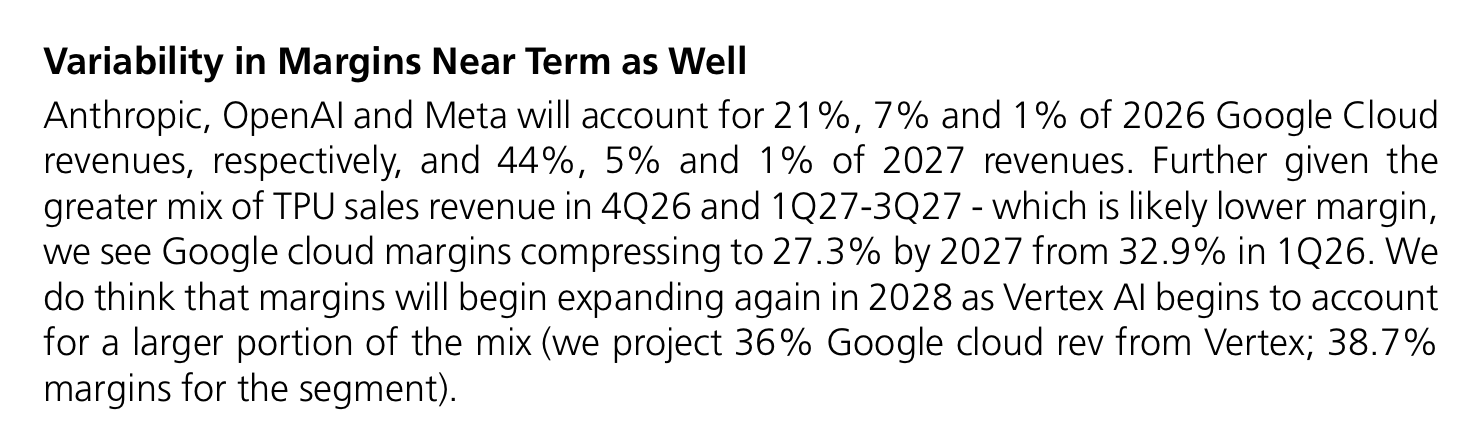
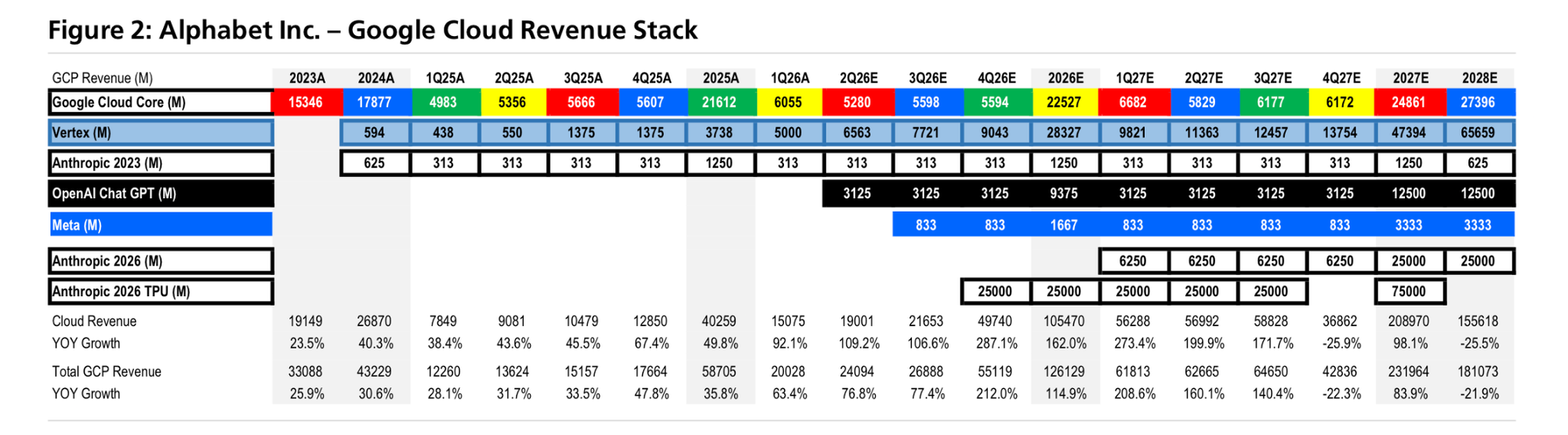
$15 billiondata center project for Anthropic and a$35 billiondeal (backed by private credit and Broadcom) where Google sells TPU chips to Anthropic, houses them in a Google data center, and then rents them back to them.
The Bottom Line: If you remove the compute spend of OpenAI and Anthropic, it is highly unlikely that Google, Microsoft, or Amazon have a viable, independent AI business.
The Data: A Concentrated Risk
Because the Big Three refuse to disclose customer concentration, the public assumes a diverse client base. However, analysts suggest otherwise.
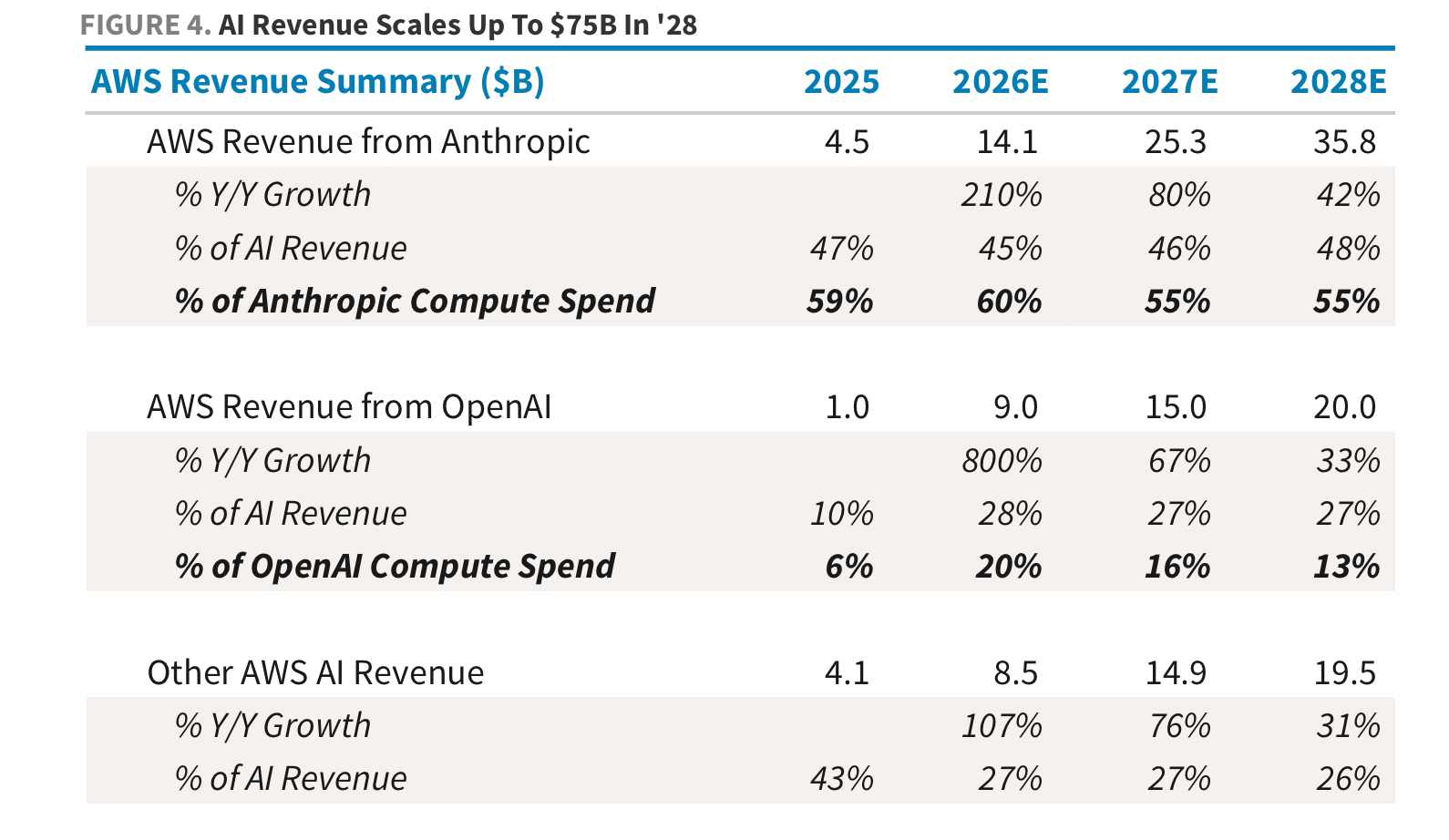
According to Ross Sandler of Barclays, the reliance on these two labs is staggering. It is estimated that 70% to 75% of the AI revenue for Amazon, Microsoft, and Google comes from just OpenAI and Anthropic.
Projected AI Spend (Barclays Estimates)
| Year | Anthropic Spend | OpenAI Spend | Amazon AI Revenue Share |
|---|---|---|---|
| 2026 | $14.1 Billion | $9 Billion | 73% |
| 2027 | $25.3 Billion | $15 Billion | 73% |
| 2028 | $35.8 Billion | $20 Billion | 75% |
Amazon is planning to spend $220 billion in capital... [Article cuts off]
Visual Evidence