Why Erdős Problems Are Falling to AI
Why Erdős Problems Are Falling to AI
By Konstantin Kakaes | August 3, 2026
The landscape of mathematical discovery shifted on May 20, 2026, when OpenAI revealed that a private, internal AI model had successfully identified a counterexample to the "unit distance" problem. This specific conjecture, formulated in 1946 by the legendary Hungarian mathematician Paul Erdős, had remained a stubborn puzzle for decades.
This event marked a milestone: it was the first time an AI model produced a historically significant proof. While human mathematicians refined the result in the following weeks, the AI's approach was groundbreaking, synthesizing concepts from disparate mathematical fields that humans had previously failed to connect.
The "Astra" Era and a Phase Transition
The momentum didn't stop there. On August 1, 2026, OpenAI introduced Astra, an unreleased model that achieved 10 further mathematical breakthroughs, including the resolution of three additional Erdős conjectures.
"These models are changing dramatically the way mathematical research is being done," notes Noga Alon of Princeton University, a veteran solver of Erdős's puzzles.
Many in the field view this as a —a fundamental shift in the cognitive capabilities of artificial intelligence.
Who was Paul Erdős?
To understand why these victories are so symbolic, one must understand the man behind the problems. Paul Erdős was a mathematical iconoclast who lived a life as unconventional as his theorems.
The Erdős Lifestyle:
- Nomadic: He spent years living out of a suitcase, drifting between friends and universities.
- Anti-Authoritarian: He viewed God as the "Supreme Fascist" and eschewed traditional wealth.
- Driven: His immense productivity was fueled by a constant regimen of amphetamines.
- Incentivized: He famously offered cash bounties for solutions to his problems, ranging from a modest \10$ to several thousand dollars.
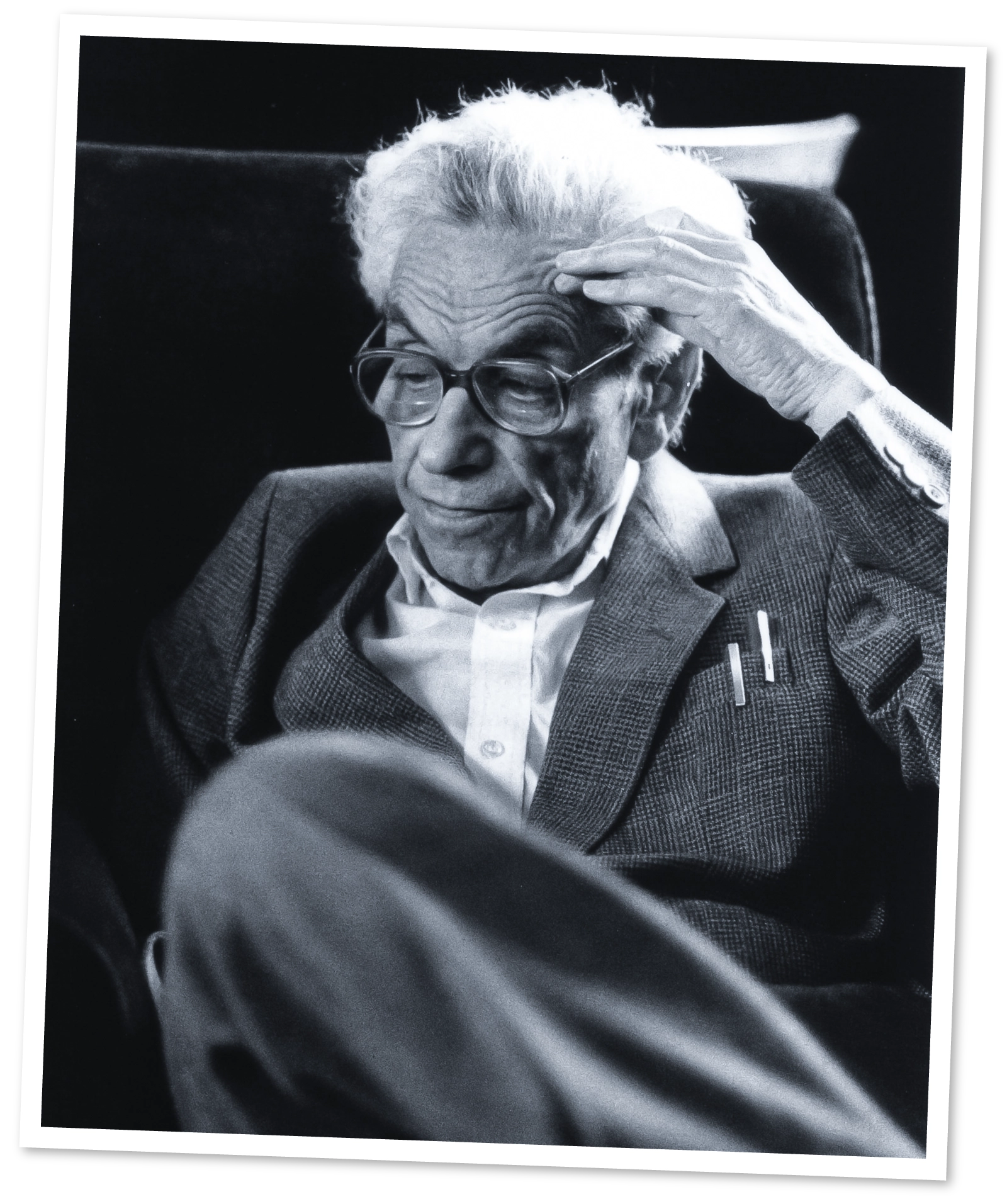
Despite his disdain for power and institutions, there is a biting irony in the fact that his legacy is now being leveraged as a series of high-profile PR victories for the world's most powerful tech conglomerates.
The Digital Catalyst: Thomas Bloom
The AI's success was not an accident of nature but was facilitated by the work of Thomas Bloom, a mathematician at the University of Manchester specializing in arithmetic combinatorics (the overlap of number theory and combinatorics).
Bloom admired Erdős's approach but found the sheer volume of his unsolved problems difficult to track. To solve this, he embarked on a mission:
- Gather hundreds of Erdős's conjectures.
- Clarify ambiguous phrasing in the original problems.
- Create a centralized, accessible database.
- Clear the "obscure" problems to reveal the "core" of human ignorance.
Bloom launched erdosproblems.com in early 2023. Interestingly, he used ChatGPT to write the Python backend for the site:
# Conceptual example of the site's logic
def check_problem_status(problem_id):
    status = database.get_status(problem_id)
    if status == "unsolved":
        return "Open for bounty"
    return "Solved"
At the time, using an LLM for coding was impressive, but using one to actually solve the math seemed like science fiction.

Comparing Eras of Discovery
| Feature | The Erdős Era (Mid-20th Century) | The AI Era (2026+) |
|---|---|---|
| Method | Letters, suitcases, and intuition | Large Language Models & Neural Nets |
| Incentive | Cash prizes paid out of pocket | Corporate prestige & compute power |
| Collaboration | Global network of human peers | Human-AI hybrid synthesis |
| Speed | Decades of manual iteration | Rapid counterexample generation |
The Path to Solution
The process of these problems falling to AI can be visualized as follows:
Conclusion
By forgetting organizing the fragmented pieces of Erdős's genius, Bloom provided the structured environment AI needed to thrive. The "unit distance" problem—which can be conceptualized as finding the maximum number of pairs of points in a set of points in that are exactly distance apart—was just the beginning. As AI continues to dismantle these legendary problems, mathematicians are left to wonder how the rest of the field will be transformed.