The “mechanical miracle” that ruined Mark Twain’s life
The “Mechanical Miracle” that Ruined Mark Twain’s Life
“All the other wonderful inventions of the human brain sink pretty nearly into commonplaces contrasted with this awful mechanical miracle.”
This was the high praise Mark Twain bestowed upon the Paige Compositor. While it stood as one of the most intricate pieces of machinery ever conceived at the time, it ultimately became a catastrophic failure for everyone involved—despite the underlying concept being sound.
Twain viewed the machine as an "immense historical birth," believing it was the progenitor of a new species of mechanical life that would eventually replicate the human intellect.
The Vision of a "Cunning Devil"
In 1889, Twain wrote to his brother Orion, describing the device as a cunning devil that possessed more knowledge than any living human. He believed the Paige machine would render existing marvels—such as locomotives, telephones, and even Babbage’s calculators—as mere complexities simplicities or "toys."
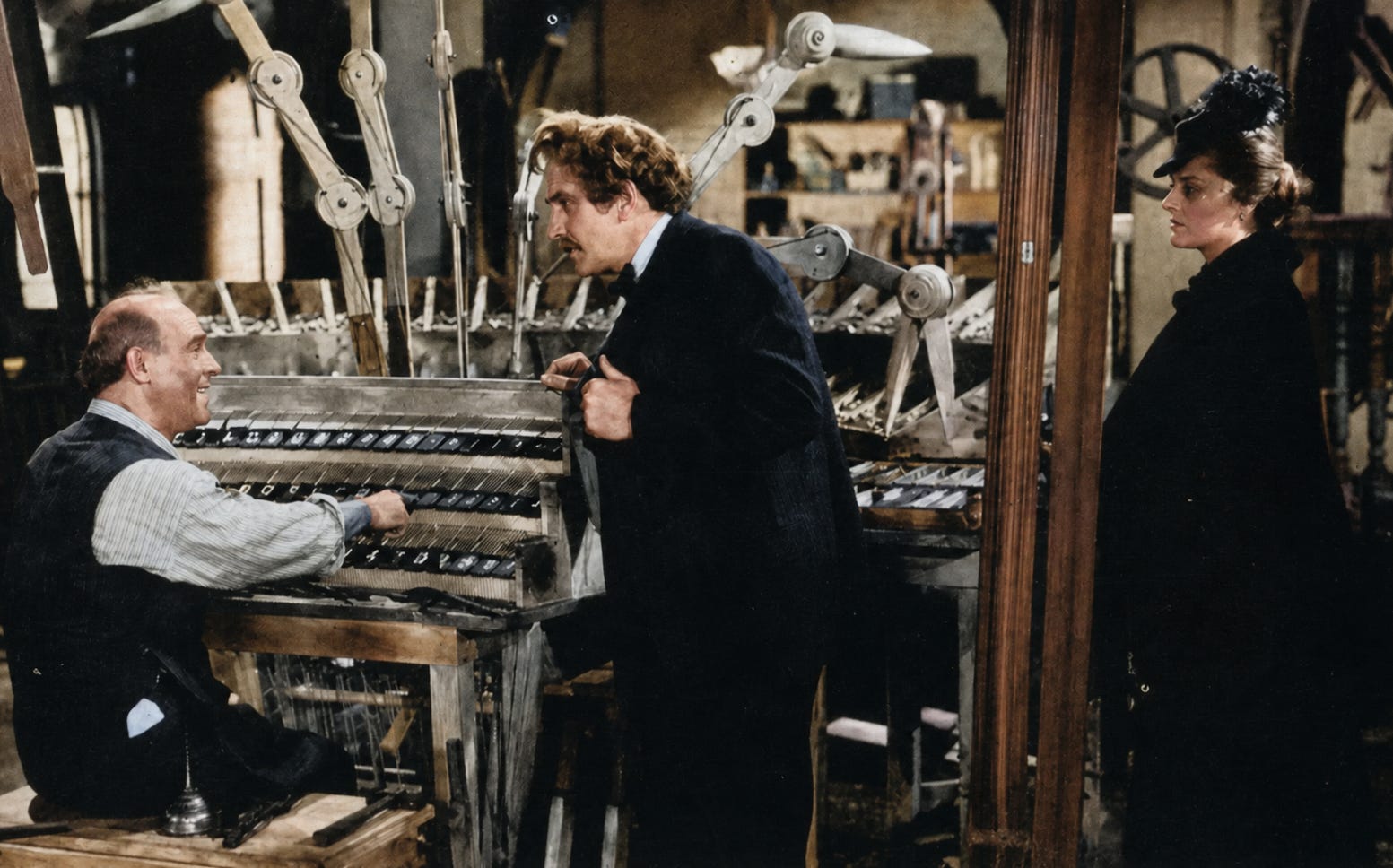
The Path to Obsession
Biographers generally agree that Twain's decade-long fixation on automating the printing industry was the catalyst for his personal downfall.
- Ron Chernow describes this period as a "full-blown monomania."
- Other historians have likened the machine to a "remorseless Frankenstein monster."
This obsession consumed Twain's prime creative years (the era following Huck Finn), leading to profound depression and total financial collapse.
The Man and the Machine
Twain, who had once worked as a printer’s devil, was initially skeptical. However, he was soon won over by James W. Paige, a "bright-eyed" inventor with a talent for persuasion. Twain saw the machine as a guaranteed ticket to wealth because it offered a workforce that:
- Never got intoxicated.
- Refused to join a printer's union.
Twain admitted that Paige was a "most daring and majestic liar," possessing a "reality distortion field" similar to that of Steve Jobs.
The Complexity Gap
The machine's failure was rooted in its staggering complexity. While Twain saw a miracle, the patent attorney saw a nightmare.
| Feature | The Paige Compositor | The Linotype (Competitor) |
|---|---|---|
| Philosophy | Mimic every human movement | Redesign the workflow |
| Mechanism | 18,000+ distinct parts | Cast complete lines of type |
| Outcome | Overwhelmingly complex | Efficient and scalable |
| Status | Market Dominant |
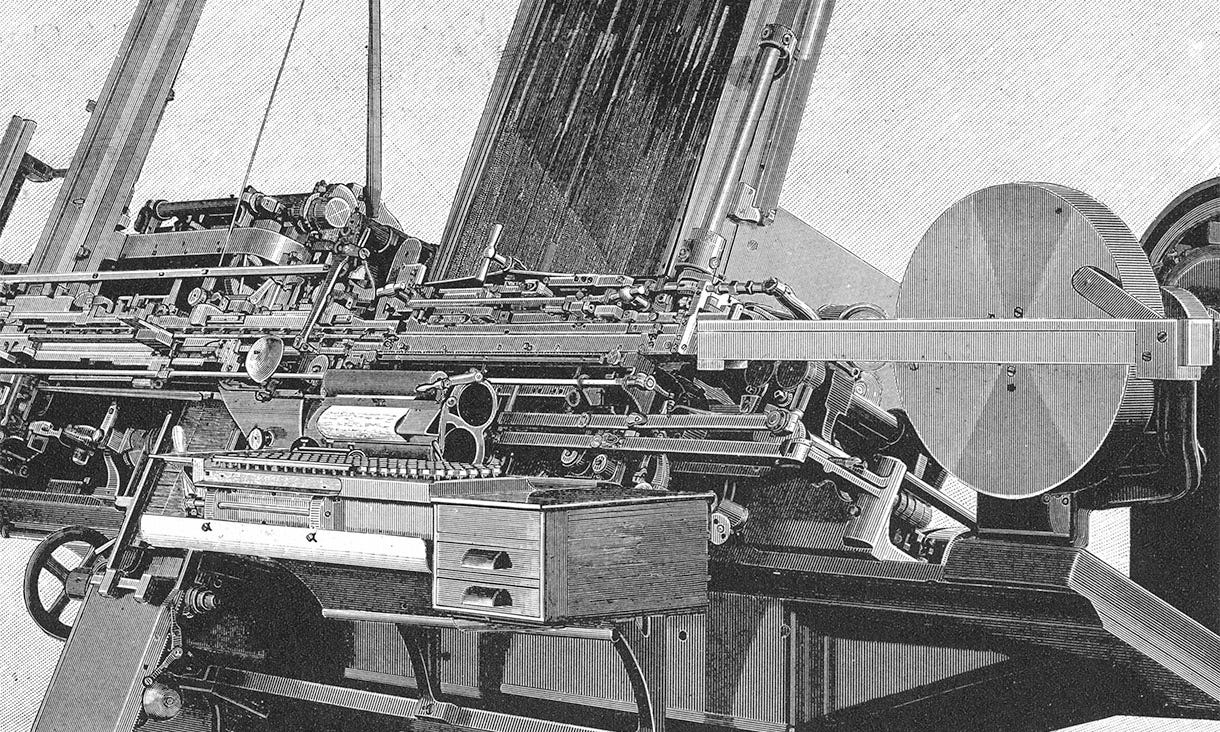
The U.S. Patent Office internally dubbed the application The Whale. It was so dense that examiners spent 30 days just reading the initial filing. When the government finally asked for a working prototype, Paige couldn't produce one.
The Cost of a Dream
Twain's financial loss was staggering. In modern terms, the investment is estimated as:
He poured in not only his own literary earnings but also his wife's inheritance. He believed he was on the verge of owning the world; instead, he ended up bankrupt.
# A simulation of the Paige Compositor's logic
def typesetting_process(input_text):
    parts_count = 18000
    complexity = float('inf')
    if complexity > 100:
        return "System Failure: Lost in the wilderness of details"
    return "Text Set"

print(typesetting_process("The Adventures of Tom Sawyer"))
Legacy and Lessons
The dream of a machine that mimics the human mind didn't die; it just waited. Twain was essentially imagining a 19th-century version of AGI (Artificial General Intelligence). He viewed the compositor as a "creature" that, if perfected, would be as complex as the human brain.

Ultimately, a second model was given to Cornell University, only to be melted down for scrap during World War II.
The Takeaway: While Twain was gullible and Paige was a huxster, they were fundamentally correct about the trajectory of history. There is a direct lineage from the automation of 19th-century typesetting to the birth of computers, the Internet, and modern AI. Their fatal error was the belief that predicting the future is the same as knowing how to build it.