Gateway 2000's hilariously bad ads in the 90s (Part II)
The Hilarious Decline of Gateway 2000’s 90s Advertising (Part II)
From scrappy startup charm to corporate absurdity.
This chronicle explores how Gateway 2000 transitioned from an endearingly "bootstrapped" marketing vibe into a void of soulless, corporate sales tactics.
Note: This retrospective contains zero sponsored content, affiliate links, or advertisements—unless we are actively mocking them.

🐄 The Era of "Barnyard" Absurdity
In the early 90s, Gateway 2000 embraced a style of advertising that can only be described as the "fart jokes" of the industry: putting sunglasses and party hats on animals. It was lazy, shallow, and infectious—perfectly aligned with the personality of the company's wunderkind president, Ted Waitt.
Waitt was a man devoid of restraint. Whether it was bragging about using soap dishes as ashtrays in luxury hotels or purchasing a Porsche Carrera-C4 specifically because it could hit in the snow with the top down, Waitt didn't do "subtle." This lack of inhibition propelled the company to $1 billion in sales within just six years.
The "Party" Strategy
One specific ad in PC Computing (July '93) exemplified this chaos:
- 28 completely unnecessary "Party Reason" subheadings.
- A dozen+ puns involving livestock.
- A massive group photo of all 2,000 staff members posed in front of the cow-spotted Sioux City HQ.
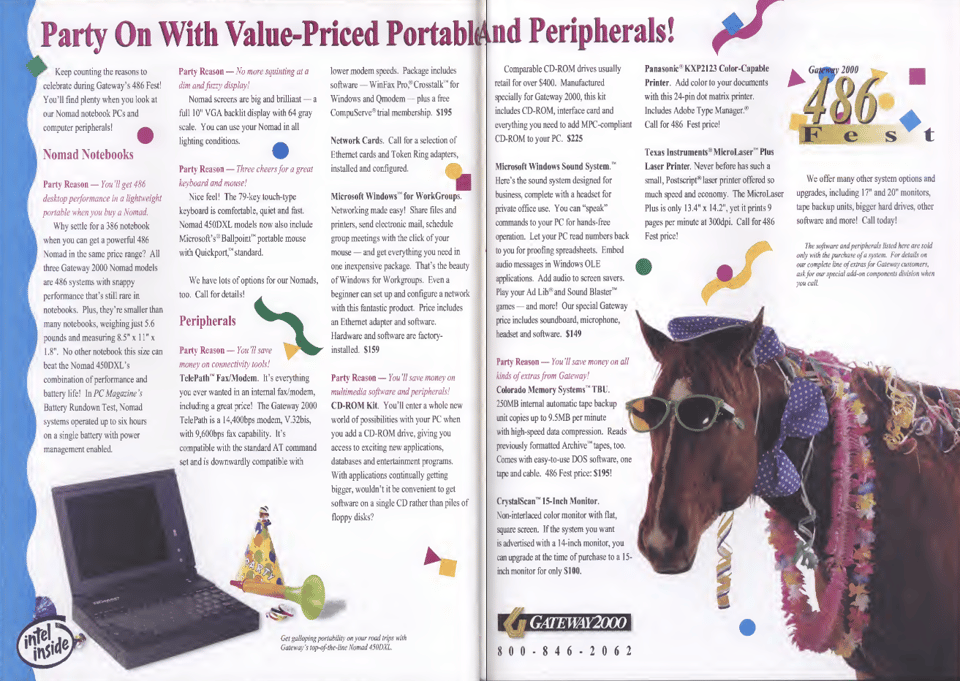
As Lance Ulanoff of PC Magazine recalled:
“Gateway 2000 regularly ran 8-to-12-page ad inserts, often featuring cows, cornball jokes, or both.”
📈 The IPO and Global Ambitions
Following an unexpected IPO, Gateway began an aggressive international push. They established a headquarters in Dublin and targeted the British market via regional magazines.
While Waitt’s "pilgrimage" to Europe had its struggles, his financial prayers were answered. Interestingly, Waitt later used his wealth to fund the expedition that discovered the Gospel of Judas in Egypt.
Financial Trajectory
The IPO was a massive gamble that paid off, creating one of the first tech billionaires in the US. The stock performance can be summarized as:
Despite his wealth, Waitt remained an eccentric. He famously owned only one (poorly fitting) suit, wore blue jeans, and rarely wore socks. However, the investment bankers of Wall Street quickly realized he was no "rube." By late 1993, Gateway had moved from a livestock exchange building to the Nasdaq, while simultaneously running 26-page Christmas ads in Byte.
🌀 The "Spray-and-Pray" Marketing Phase
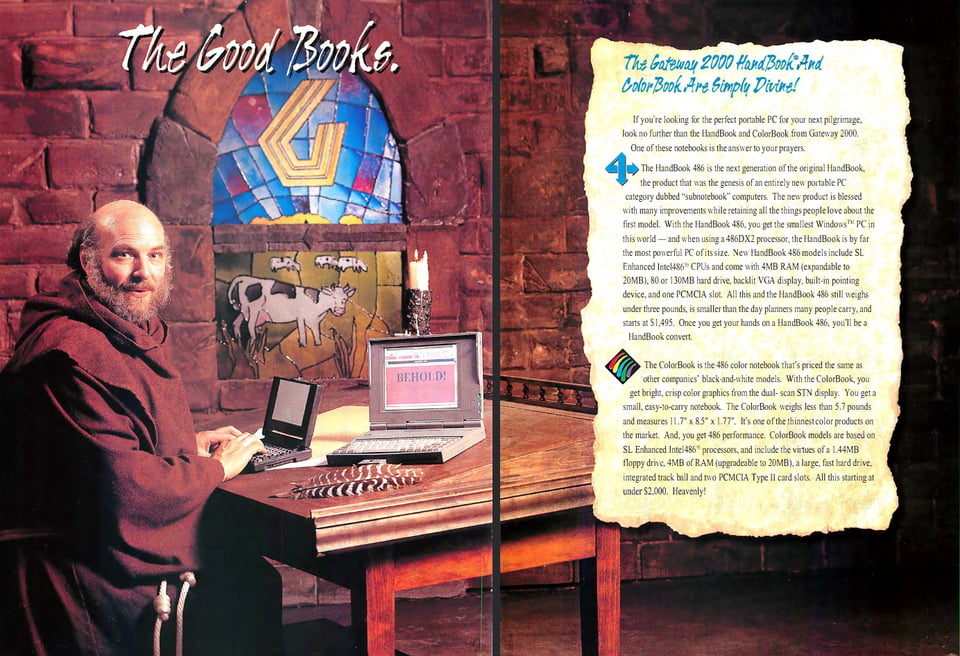
By February 1994, the ads in Byte took a turn for the surreal. The marketing became a bizarre mix of corporate desperation and avant-garde nonsense.
Analysis of the Feb '94 Campaign
| Element | Observation |
|---|---|
| Atmosphere | A palpable sense of "cosmic ennui" from the models. |
| Tone | Bizarrely dedicating page space to a deceased customer. |
| Context | Ran during a period of peak corporate dysfunction and customer complaints. |
Despite the weirdness, the business model relied heavily on word-of-mouth. An SEC filing noted that of business came from repeat buyers or referrals. To protect this base, Gateway:
- Doubled technical support staff.
- Tripled one-year warranties.
- Implemented one-day delivery for parts.
- Opened phone lines 24/7.
Yet, research showed that of potential buyers knew nothing about the brand. This led to the "spray-and-pray" approach, featuring everything from Caesar's betrayal (to discuss "trust") to Italian stereotypes.
The marketing gurus hated it. As Waitt told Inc.: "But it seems to work."
📺 "As The Hard Drive Turns"
By 1995, Gateway was a behemoth with revenues of $3.7 billion and facilities in Virginia, Malaysia, and Australia. However, the ads reached a new nadir in PC World (Feb '95).

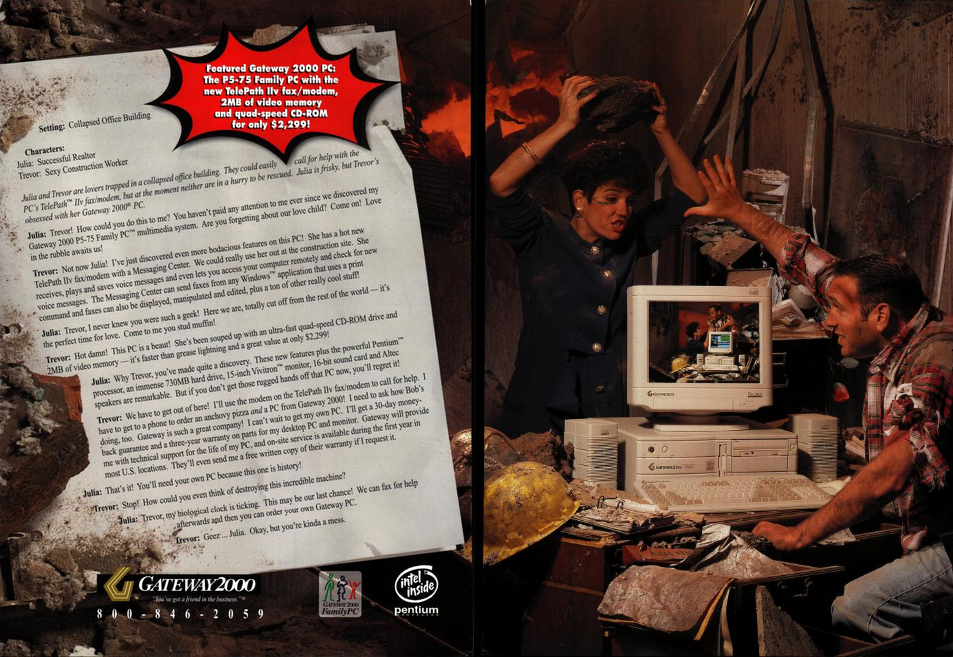
The campaign, titled As The Hard Drive Turns, was a faux soap opera. It failed on multiple levels:
- Irrelevance: 230 words were spent on a character's "bouts of schizophrenia" and public nudity before a single hardware spec was mentioned.
- Poor Design: It featured illegible white-on-yellow text and phone numbers hidden in shadows.
- Wrong Vibe: Soap opera parody felt outdated compared to something like IT Crowd style satire.

The Frugality Paradox
Despite his billions, Waitt was obsessively cheap about production. He once rejected a $3-per-piece quote for a complex "color-changing" direct mail ad. Instead, he:
- Printed the ads locally.
- Hired church groups and temporary workers.
- Used employees on their off-hours to assemble them.
This was made easier by the fact that his personal assistant was the former mayor of the city where his $3-billion company was based.
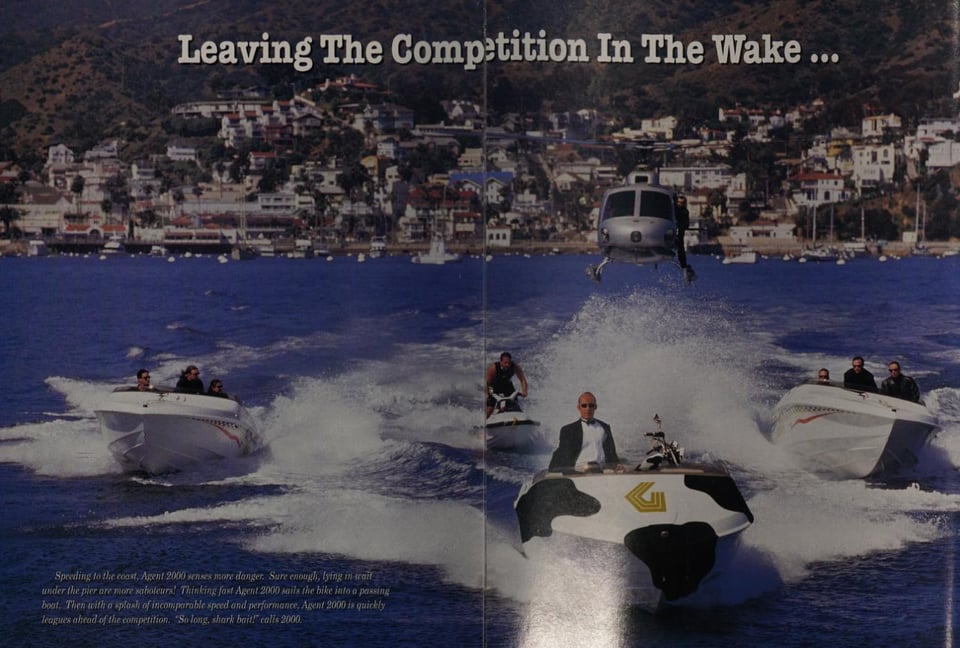
These vignettes would run across Byte, PC World, and Computer Shopper for months, sometimes appearing twice in a row with almost no changes.
def gateway_marketing_logic(budget, creativity):
    if budget == "too_high":
        return "Do it ourselves with church groups"
    elif creativity == "too_low":
        return "Add a cow in a party hat"
    else:
        return "Run 26 pages of soap opera"