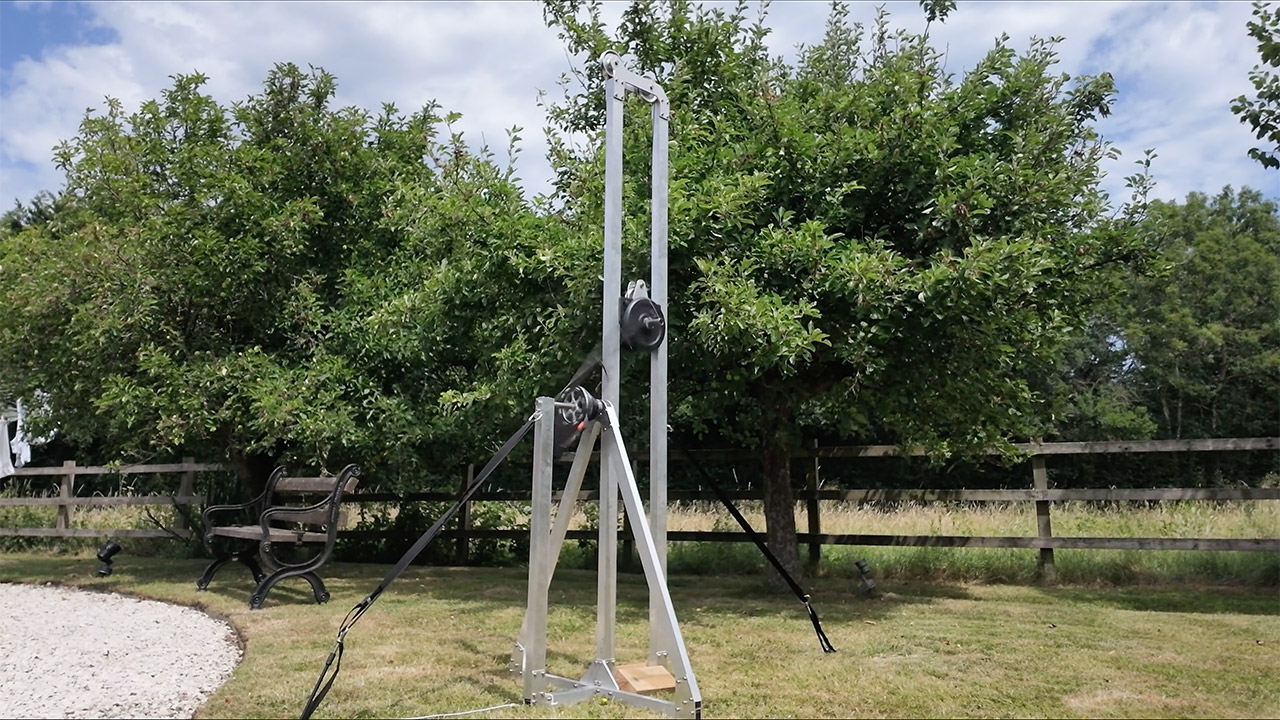
Tom Stanton's supersonic trebuchet breaks sound barrier with gravity alone
Breaking the Sound Barrier with Gravity: Tom Stanton's Supersonic Trebuchet
By Bill Smith | August 9, 2026

For years, Tom Stanton pursued a specific velocity—a number that the laws of gravity seemed designed to prevent. On a secluded field in the United Kingdom, he finally succeeded. By dropping a 40-kilogram mass, he spun a carbon-fiber arm at over 2,300 RPM, launching a tiny 4-gram projectile at a staggering 776 miles per hour.
This marks the first time a trebuchet powered exclusively by gravity has officially crossed the sound barrier.
The Physics of the Fling
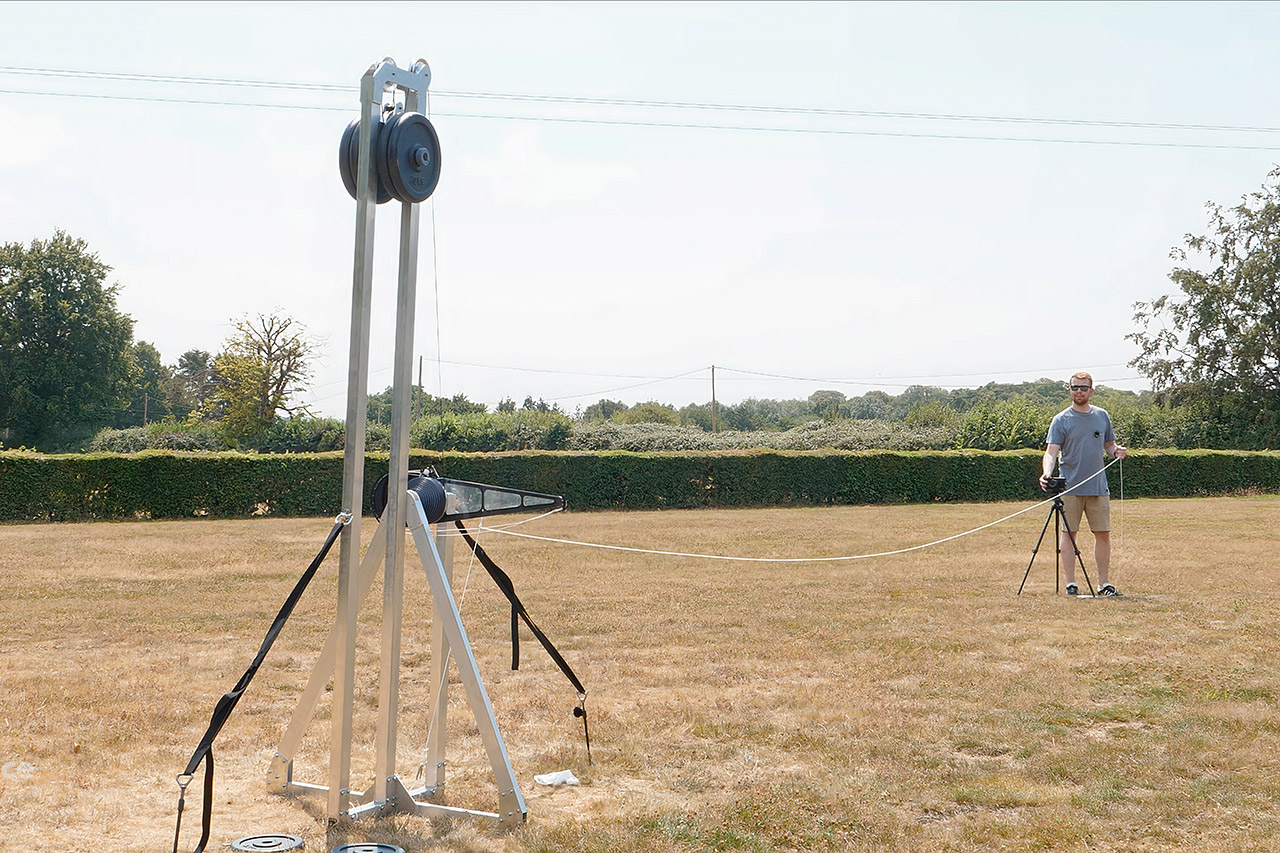
Historically, medieval engineers used trebuchets to demolish castle fortifications. The fundamental mechanism involves hoisting a massive weight and allowing it to fall, transferring that potential energy through a lever and sling into a lighter projectile.
However, gravity imposes a strict speed limit. A mass in free fall accelerates at:
If you drop a weight from a height of 2 meters, it hits the ground at roughly . Increasing the mass doesn't increase this falling speed. Without modification, a standard trebuchet arm behaves like a car stuck in first gear: high torque initially, but insufficient top-end speed.
Energy Flow Diagram
🏰 Medieval Inspiration Sidebar
While Stanton builds for speed, others build for art. LEGO Architecture Neuschwanstein Castle Building Set
- Target: Adult builders (18+)
- Features: Authentic Bavarian architecture, seasonal foliage, ornate gates, and throne rooms.
- Price:
$279.99
Engineering the Solution
To overcome the "first gear" problem, Stanton implemented a 3:1 ratio pulley system. He used a tapered drum: a large diameter at the start provides the necessary force to move the arm, while the smaller diameter at the end drastically increases the rotational velocity.
The Build Process
- Redesign drum to allow a 1.9-meter lift for maximum energy storage.
- Select material: Carbon Fiber (chosen for its high strength-to-weight ratio).
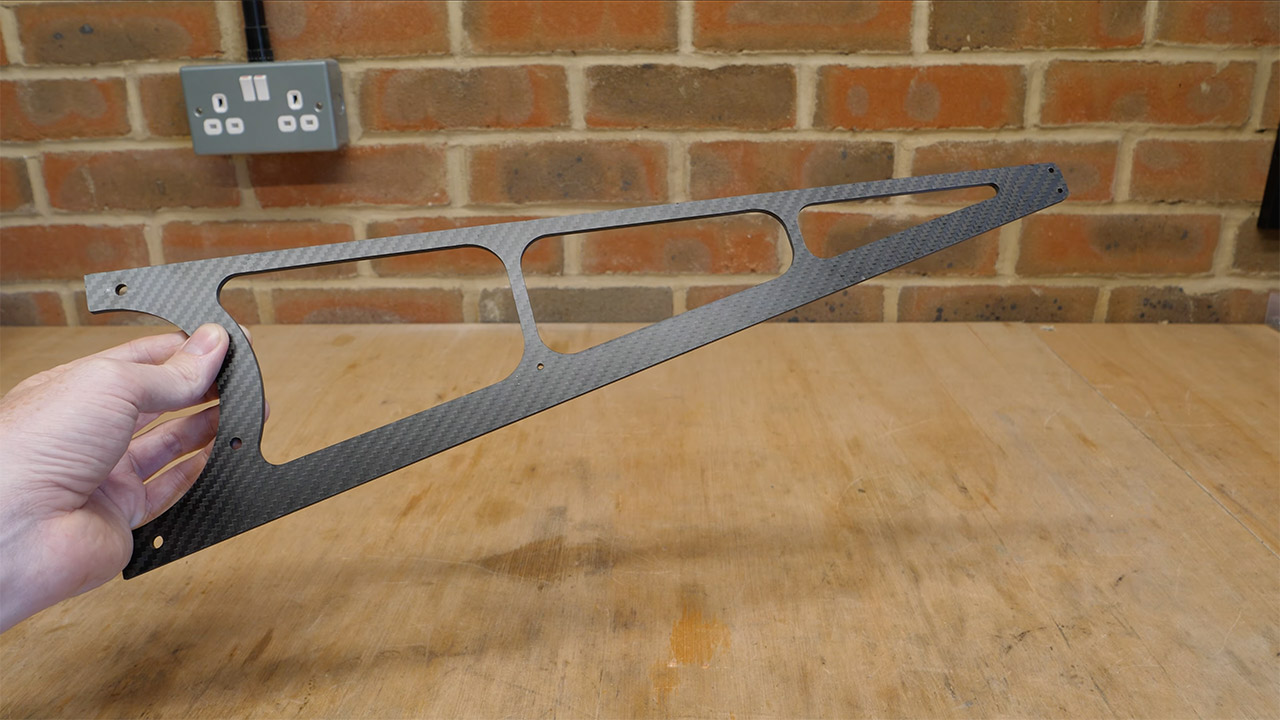
- Fabricate arm using a homemade CNC mill.
- Implement safety/cleanliness: HEPA vacuum and water spray for dust control.
- Iterative prototyping: Replace buckling 3D printed parts with reinforced carbon fiber.
- Optimize arm geometry: Remove material from the tensioned side and add bracing to the opposite side.
Component Specifications
| Component | Material/Detail | Purpose |
|---|---|---|
| Arm | Carbon Fiber | Minimize mass, maximize rigidity |
| Hubs | Aluminum | Balance the spinning assembly |
| Release | Spring-loaded catch | Precise mechanical timing |
| Sling | High-tension wrap | Projectile acceleration |
Testing and Iteration
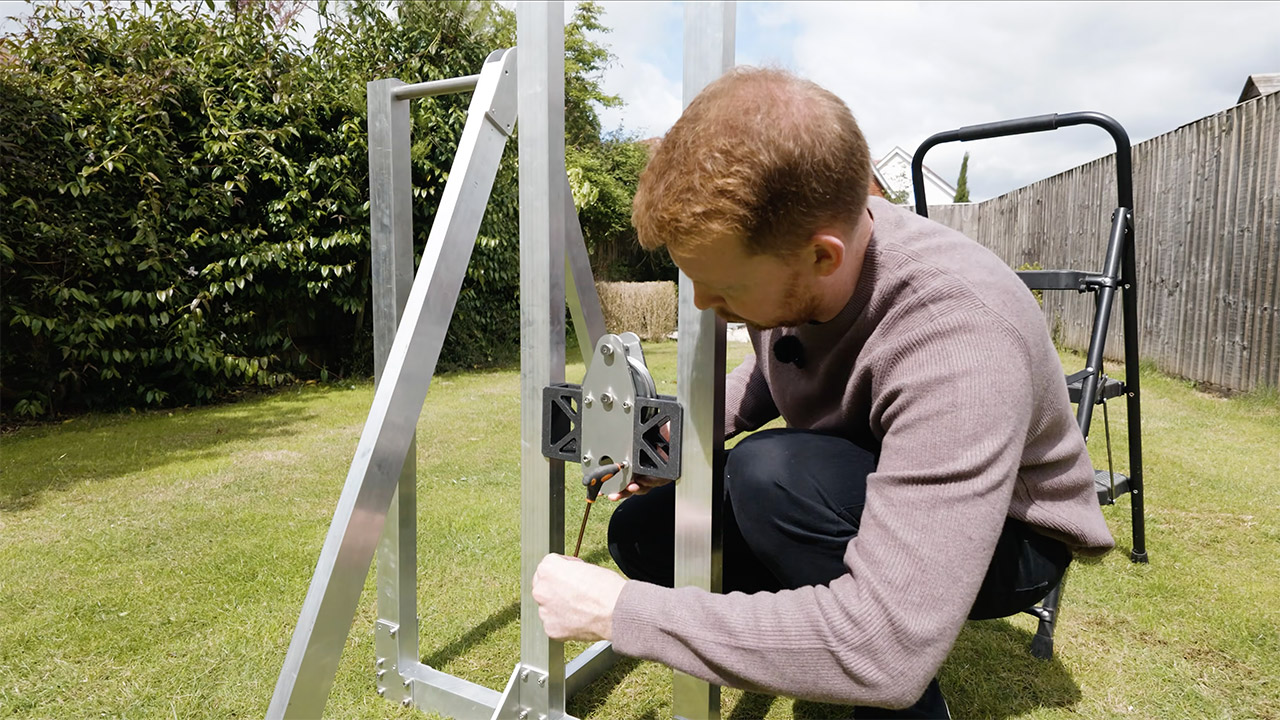
The release window for the projectile is incredibly tight—only a few milliseconds. Stanton spent significant time refining the pin-and-loop structure to ensure it didn't fail under extreme centrifugal force.
Trial Data
The progression of tests showed a clear correlation between weight and velocity:
- 10 kg Weight:
- Arm Speed:
- Launch Speed:
- Efficiency:
- 40 kg Weight (Initial):
- Arm Speed:
- Launch Speed: (Just shy of the barrier)
- 50 kg Weight:
Result: SuccessFailure: The machine snapped and the clasp shattered.
The Final Run: Breaking the Barrier
For the final attempt, Stanton returned to the 40 kg setup but made two critical adjustments: he reduced the projectile mass to and further refined the drum taper.
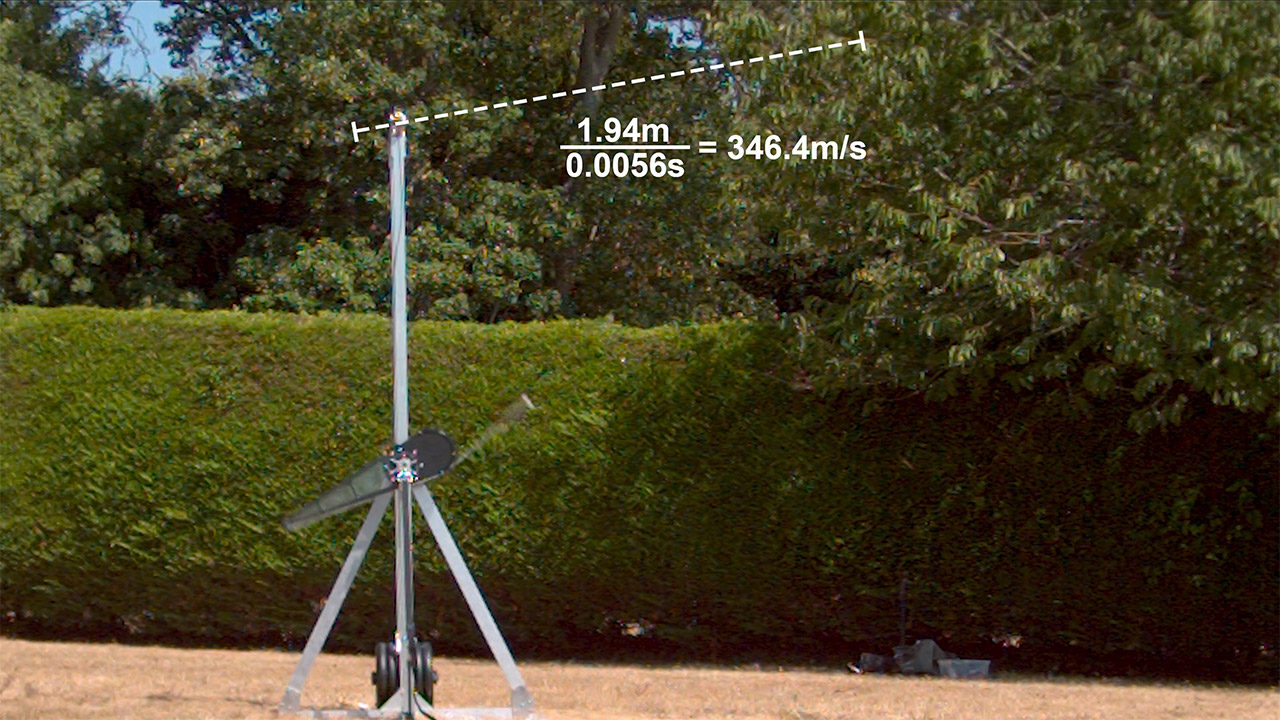
The result was a triumph of engineering. The arm reached 2342 rpm. High-speed cameras captured the projectile traveling in just .
The Calculation:
distance = 1.94 # meters
time = 0.0056 # seconds
velocity = distance / time
# Result: 346.4 m/s
This velocity converts to 776 mph, officially surpassing the speed of sound. The success was punctuated by a distinct crack and a lingering echo—the unmistakable sound of a sonic boom.
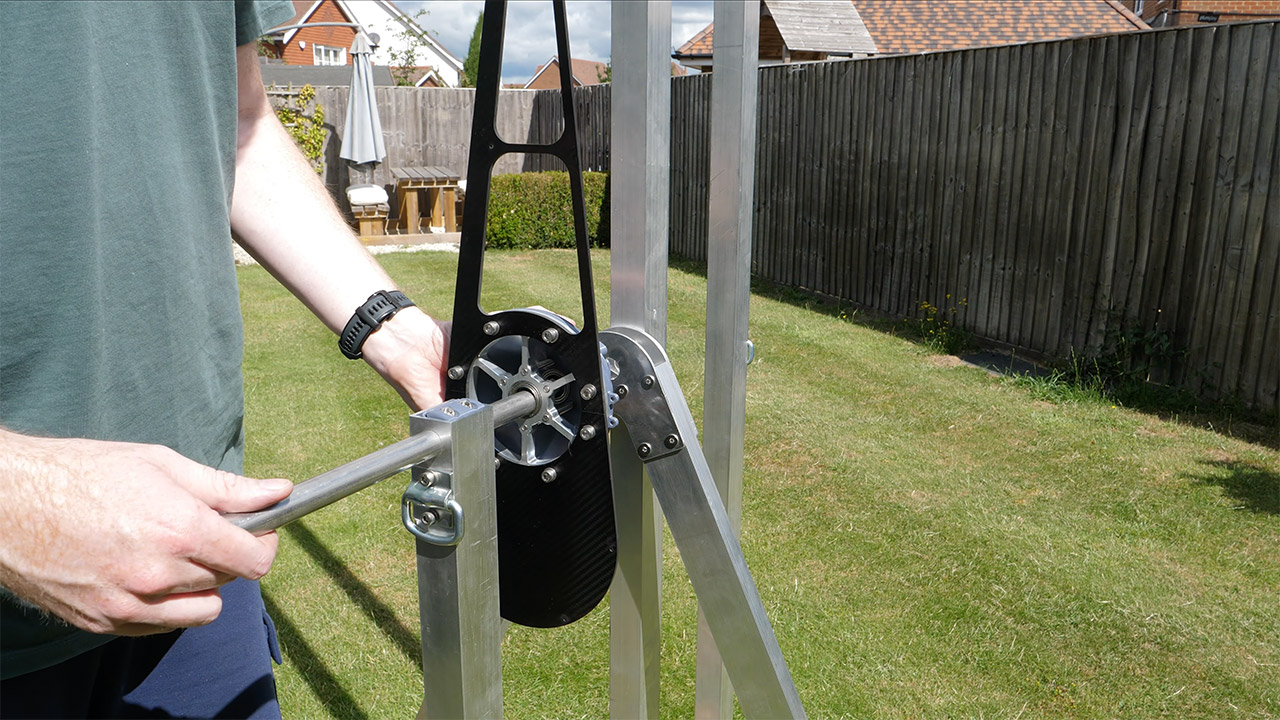
The machine survived the ordeal intact, proving that with enough ingenuity, gravity can indeed be pushed to supersonic limits.