Taxi drivers rarely die of Alzheimer's
Navigating Away from Dementia: How Spatial Intelligence Shields the Brain
Can the act of figuring out a winding path from point A to point B actually fortify your mind? It appears so.

Recent data suggests that individuals in professions requiring intense spatial navigation—specifically taxi and ambulance drivers—face a significantly lower risk of dying from Alzheimer’s disease than almost any other professional group.
The Statistical Surprise
A massive 2024 analysis of nearly 9 million U.S. death certificates revealed a striking trend. When researchers looked at 443 different occupations, the lowest incidence of Alzheimer's-related deaths was found among those who drive taxis and ambulances.
Risk Comparison
| Group | Alzheimer's Mortality Rate |
|---|---|
| General Population | |
| Taxi & Ambulance Drivers |
Note: These figures were adjusted for variables including race, ethnicity, sex, age, and educational background.
The "Navigation" Variable
The researchers discovered that the protective effect wasn't caused by the act of driving itself, but rather by continuous, real-time navigation. This involves a constant cognitive loop:
- Determining current location.
- Tracking the destination.
- Dynamically updating a mental map as traffic or road conditions shift.
Interestingly, this benefit did not extend to drivers on fixed or predetermined routes, such as:
- Commercial aircraft pilots
- Bus drivers
The Biological Engine: The Hippocampus
The center of this phenomenon is the hippocampus, the brain region responsible for spatial orientation and memory. Because this area is often the first to be degraded by Alzheimer's, spatial disorientation is frequently an early warning sign—sometimes appearing even before memory lapses.
Case Study: "The Knowledge"
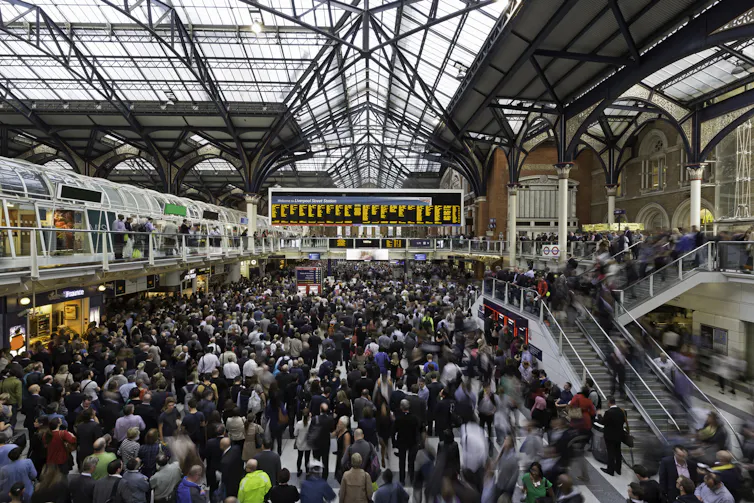
In a seminal 2000 study, scientists looked at London taxi drivers. To get their license, these drivers must master a grueling curriculum known as "The Knowledge."
Requirements for London Cabbies:
- Memorize 25,000+ streets.
- Cover a 6-mile radius from Charing Cross.
- Study for 3 to 4 years.
"The researchers found that London taxi drivers had measurably more gray matter in the posterior hippocampus, the specific area used for storing large-scale spatial maps."
The study noted a direct correlation: the more experience a driver had, the larger that region of their brain became.
Digital Maps and Professional Spatial Reasoning
As a civil and environmental engineer, my daily work revolves around GIS (Geographic Information Systems). I spend my hours manipulating digital layers:
Flood boundariesCensus blocksCrash hotspotsRoad geometryRainfall satellite dataRiver basins
This requires holding multiple spatial relationships in mind across various scales. While a driver experiences the city from the street, a GIS specialist uses allocentric reasoning—viewing space from an external, "bird's-eye" perspective.
Does digital mapping count?
Evidence suggests that the hippocampus processes both internal (egocentric) and external (allocentric) maps. Therefore, professional spatial reasoning via a screen may offer similar benefits to physical navigation.
Environmental Complexity and Brain Health
A 2023 study utilized a machine learning model on a dataset of 22,500 individuals. The model could predict Alzheimer's rates based on the complexity of a person's ZIP code with an accuracy of:
People living in "spatially complex" areas—characterized by:
- Dense street networks
- Numerous intersections
- A high variety of landmarks and points of interest
- Multiple routing options
...were less likely to develop the disease.
Conclusion
The synthesis of these studies suggests a powerful conclusion: the brain is plastic. By routinely challenging the circuitry used for cognitive mapping, we may be able to reshape the hippocampus and build a defense against the ravages of aging.
def brain_health_check(environment_complexity, navigation_frequency):
    if environment_complexity == "High" and navigation_frequency == "Constant":
        return "Increased Hippocampal Volume -> Lower Alzheimer's Risk"
    else:
        return "Standard Risk Profile"

# Result for a London Taxi Driver
print(brain_health_check("High", "Constant"))
