Parametron: 50s Japanese computer that uses neither transistors nor vacuum tubes
Parametron: The 1950s Japanese Computing Marvel Without Tubes or Transistors
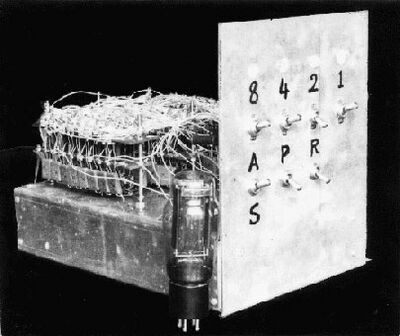
Citation: The Parametron, a logic element using ferrite cores and parametric oscillation, was invented in 1954 by Eiichi Goto at the University of Tokyo. 4,200 parametrons went into the
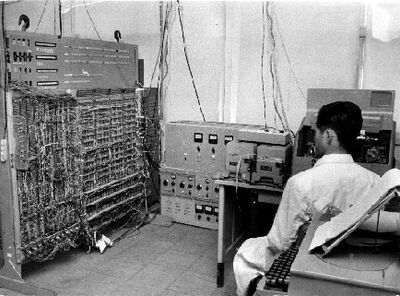
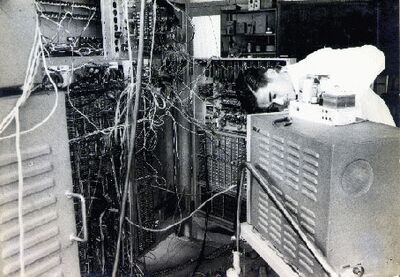
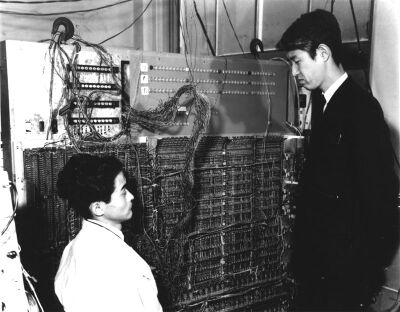
PC-1, Japan’s first university-built stored-program computer which became the nation's then-fastest in 1958. The parametron’s low cost and electrical stability shaped Japan’s early computer development and scientific research, and nurtured the country's first generation of computer engineers.
📍 Milestone Location & Recognition
The historical significance of this invention is commemorated by a plaque located at:
- Site: Science Gallery, 1st floor (ground floor), Building 1, Faculty of Science, The University of Tokyo.
- Address: 7-3-1 Hongo, Bunkyo-ku, Tokyo 113-0033 Japan.
- Coordinates:
35.7137465, 139.7608399
The plaque is situated within the Science Gallery, an area featuring various scientific exhibits. The site is open to the public without the need for security clearances.
🎓 The Visionary: Eiichi Goto
Eiichi Goto (1931–2005) was a pivotal figure in the dawn of Japanese computing. While still a graduate student in 1954, Goto developed the parametron. He later spearheaded the creation of the PC-1 (completed in 1958), which was the first fully programmable, stored-program computer developed at a Japanese university.
The Genesis of the Invention
Goto's work was born out of necessity. Working in the Takahasi laboratory at the University of Tokyo, he and his mentor, Professor Takahasi, faced severe budget constraints. They needed a way to build an electronic computer without the exorbitant costs of the era's primary components.
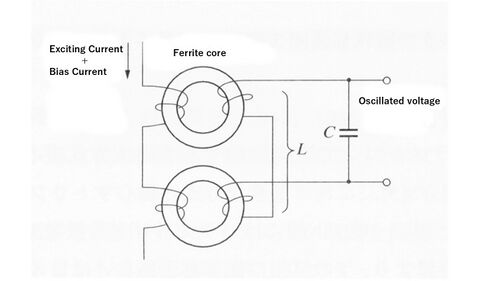
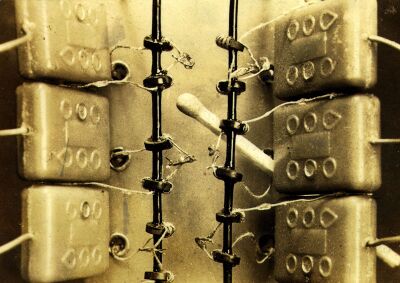
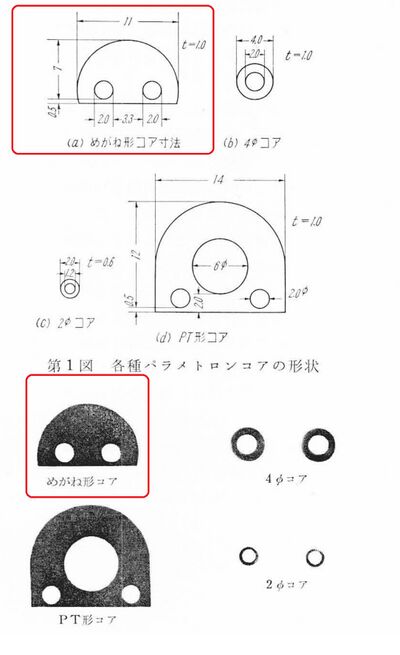
The resulting Parametron utilized nonlinear parametric oscillation involving two ferrite cores. This provided a stable, low-cost alternative to:
Vacuum tubes(which had short lifespans and required constant maintenance).Electromechanical relays(which were far too slow).Point-contact transistors(which were unstable in their early stages).
⚙️ Technical Architecture & Principles
How it Works
The Parametron operates on the principle of parametric excitation. In mathematical terms, the oscillation is driven by varying a parameter of the system (like inductance) at a frequency , typically twice the natural resonant frequency :
This allows the device to store a binary state (0 or 1) based on the phase of the oscillation.
Logic Flow
The following diagram illustrates the conceptual flow of a Parametron-based system:
The PC-1 Computer
The PC-1 was the first major implementation of this technology.
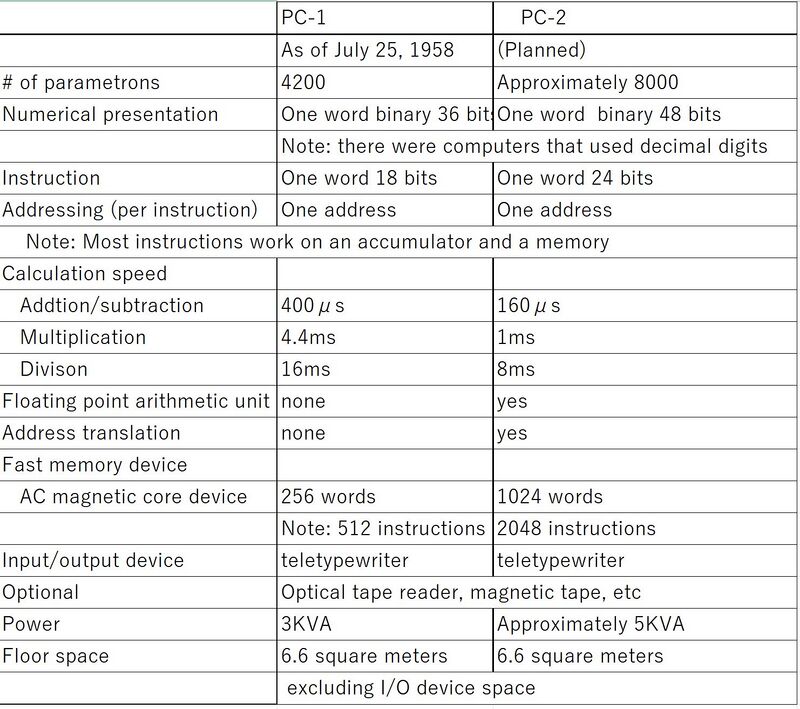
- Component Count: 4,200 parametrons.
- Status: Japan's fastest computer as of 1958.
- Key Features:
- Memory: Utilized high-speed AC magnetic core memory.
- Capabilities: Included an arithmetic circuit and interrupt capabilities.
- Purpose: Widely used for academic training and scientific research.
📊 Comparative Analysis
The Parametron occupied a unique niche between the vacuum tube and the modern transistor.
| Feature | Vacuum Tubes | Early Transistors | Parametrons |
|---|---|---|---|
| Cost | High | Very High | Low |
| Stability | Poor (Burn out) | Unstable | Very High |
| Maintenance | Frequent | Moderate | Minimal |
| Speed | Fast | Fast | Moderate |
| Reliability | Low | Moderate | High |
🚧 Overcoming Obstacles
The path to the PC-1 was fraught with challenges that Goto and his team had to navigate:
Technical Hurdles
- Material Limitations: Sourcing high-quality ferrite cores.
- Design Complexity: Managing the phase-based logic.
- Thermal Management: Handling heat dissipation in dense arrays.
- Integration: Making the new logic work with existing hardware.
- Miniaturization: Reducing the footprint of the core arrays.
Political & Geographic Hurdles
- Funding: Operating within the strict limits of university budgets.
- IP & Collaboration: Balancing open research with industrial application.
- Infrastructure: Limited post-war research facilities in Japan.
- Knowledge Gap: Restricted access to global cutting-edge data.
- Market Acceptance: Convincing industry to adopt a non-tube/non-transistor approach.
🚀 Legacy and Impact
Industrial Proliferation
The success of the PC-1 led to a wave of commercial Parametron computers developed by major Japanese firms:
- Electronics & Telecom:
- Japan Electronics Instruments
- Nippon Telegraph and Telephone Corporation (NTT)
- KDDI (formerly KDD)
- Industrial Giants:
- Hitachi
- NEC
- Fujitsu
- Mitsubishi Electric
- Oki Electric
- Koden Electronics Co., Ltd.
- Academic: The University of Tokyo (Takahasi Laboratory)
Beyond the Computer
The Parametron's influence extended into other realms:
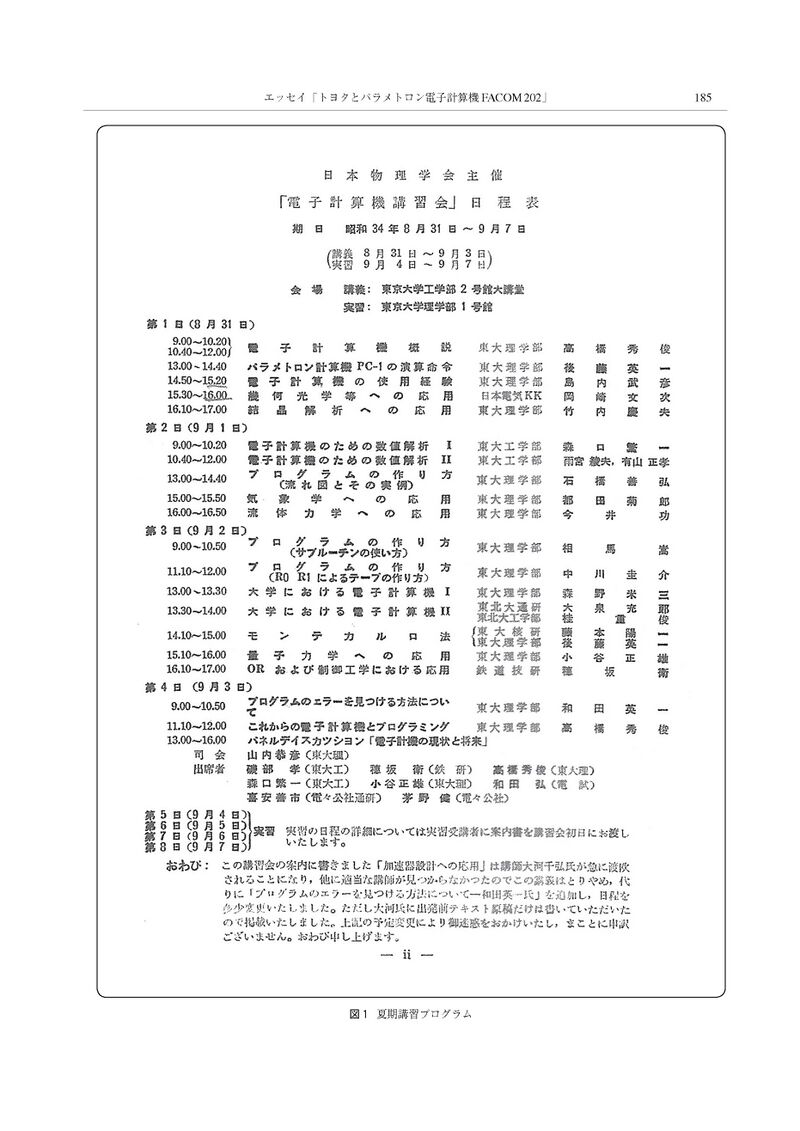
- Engineering Education: It trained the first generation of Japanese computer scientists.
- Evolution of Logic: It paved the way for the
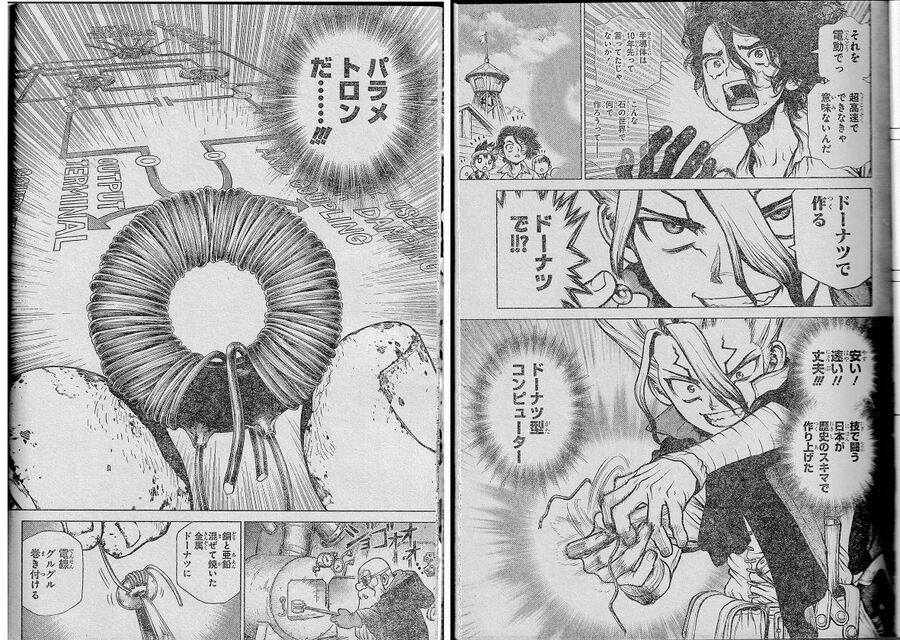
Goto Pairand the modern Quantum Flux Parametron. - Popular Culture: The technology is referenced in modern media, such as the manga/anime Dr. Stone.
Logic Representation
If we were to represent a simple Parametron state transition in pseudo-code, it might look like this:
def parametron_state(input_phase, excitation_freq):
    # Phase 0 = Binary 0, Phase PI = Binary 1
    if input_phase == 0:
        return "State 0"
    elif input_phase == 3.14159:
        return "State 1"
    else:
        return "Unstable/Transitioning"
🖼️ Gallery of the Parametron Era
| Component View | System View | Training & Culture |
|---|---|---|
 |  |  |
 |  |  |
 |  |