Why Go Is an Ideal Language for AI-Assisted Software Engineering
Why Go Is an Ideal Language for AI-Assisted Software Engineering
By Cameron Balahan & Richard Seroter August 11, 2026

Software engineering is currently experiencing a seismic shift. We have moved away from a world where the majority of source code was typed manually by humans. Instead, we now rely on AI agents and coding assistants to produce massive volumes of code on our behalf.
However, AI is not a "set it and forget it" tool. It requires human oversight. We are the ones who must:
- Audit the generated output.
- Refine the logic.
- Validate that the code fulfills the actual requirements.
Because AI lacks a holistic understanding of the broader system context, the human role has evolved. We are now the architects who define service boundaries and ensure the safety and stability of production environments.
From Writing to Reviewing
Historically, the "best" language was often judged by how quickly a developer could write code. Writing speed was the primary metric of productivity. In the modern era, where an agent can generate hundreds of lines of syntactically correct code in a heartbeat, the speed of typing is irrelevant.
The new bottleneck is the speed of reviewing, verifying, and maintaining.
| Old Paradigm | AI-Assisted Paradigm |
|---|---|
| Focus on Writability | Focus on Readability |
| Human as the primary author | Human as the supervisor/editor |
| Productivity = Lines of code per hour | Productivity = Quality of verification |
In this new landscape, AI is essentially a teammate—albeit a maverick one.
Go is for Software Engineering
This shift toward team-centric development is exactly why Rob Pike, Robert Griesemer, and Ken Thompson designed Go at Google over two decades ago. While other languages chased feature bloat and complex ways to express logic, Go pursued a different goal: language design in the service of software engineering.
"Programming is about solving a problem by writing code and then running it, but software engineering is the act of collaborating with others to design and implement a durable system that evolves over time."
To support true software engineering, a language needs more than just syntax; it needs a comprehensive platform. This includes:
- Opinionated Simplicity: Ensuring every team member formats and structures code identically.
- Strong Compatibility: Guaranteeing that code written today remains functional and "clean" a decade from now.
- Scalable Ecosystem: A global dependency management system that grows with the organization.
- Integrated Security: Robust tools woven into the very fabric of the development process.

Go as a Comprehensive Platform
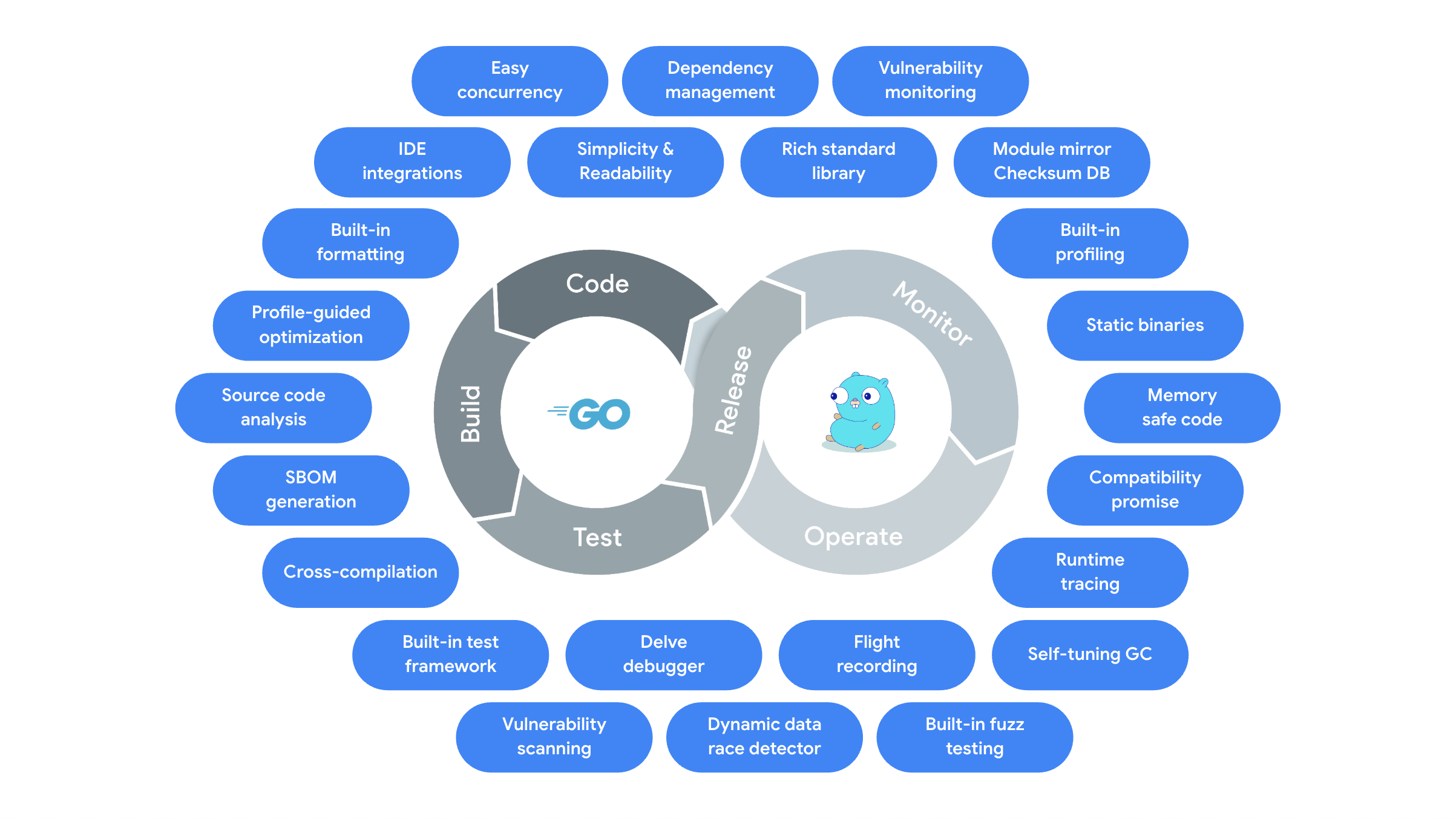
Go is not merely a language; it is a full-scale platform. It provides an end-to-end toolchain that touches every phase of the software development life cycle (SDLC).
Out of the box, Go includes a built-in formatter, a testing framework, and advanced security utilities. By relying on a powerful standard library, Go minimizes the need for fragmented external frameworks, creating a baseline of extreme consistency.
The AI Synergy
It turns out that AI agents share many of the same needs as human developers. When an AI refactors code iteratively without a feedback loop, its accuracy tends to decay. If the first pass is correct, the cumulative error rate over iterations can be modeled as:
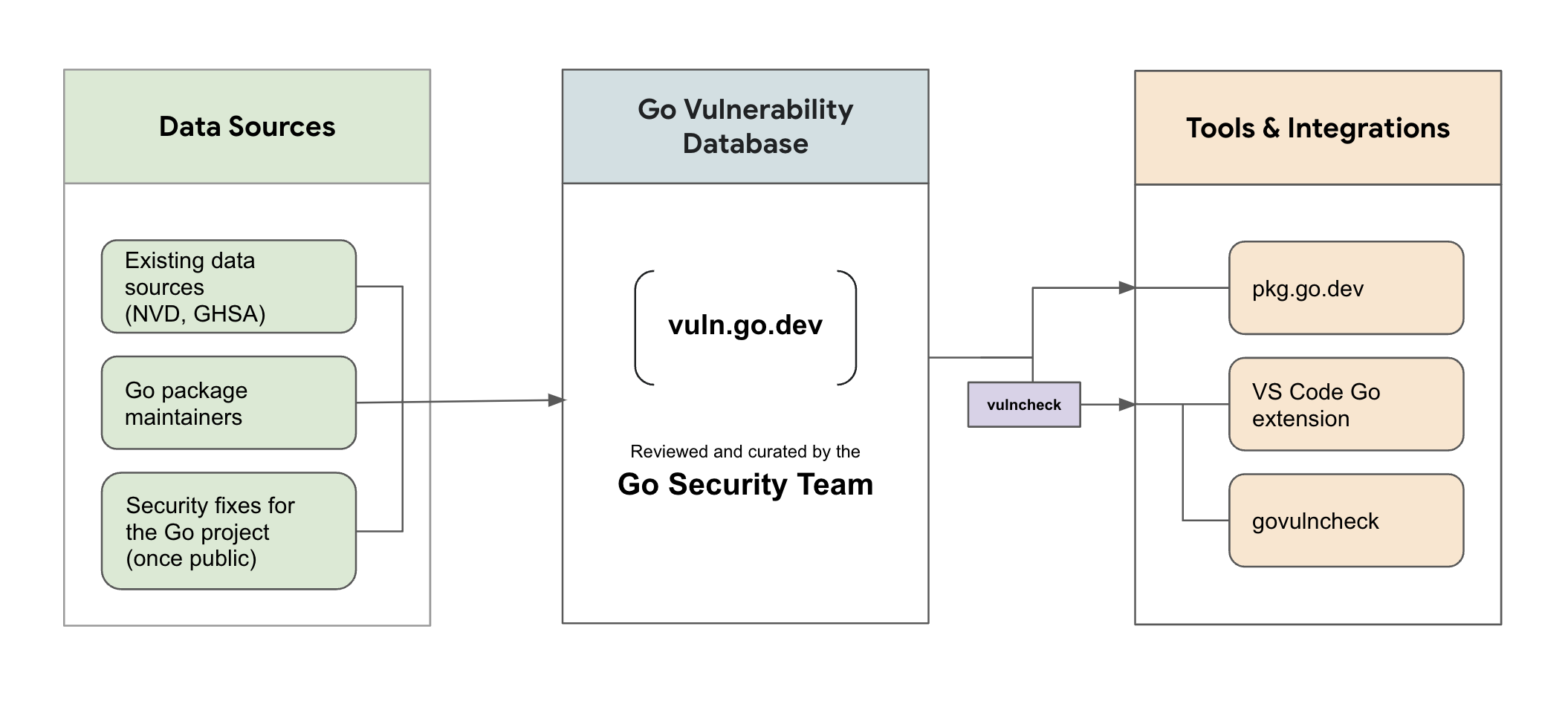
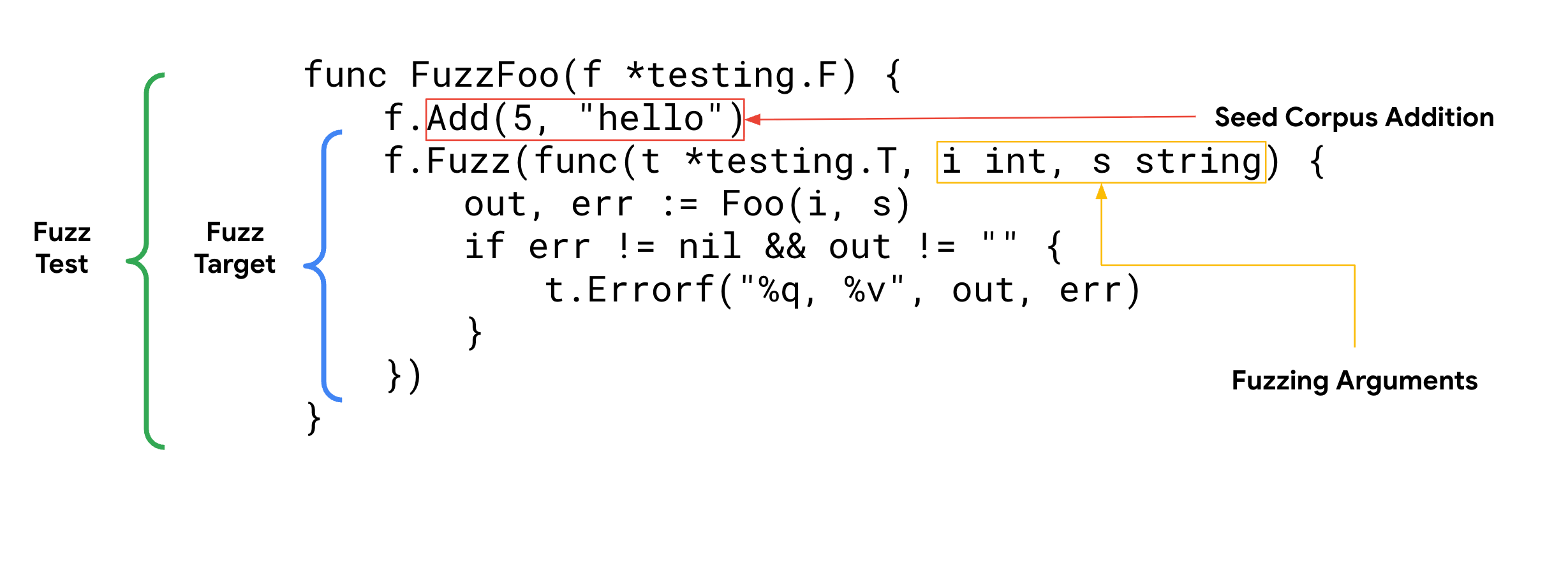
As increases, the probability of correctness drops, the context window becomes polluted, and token costs rise. However, because Go provides a built-in toolchain, AI can use go fmt or go test to validate its own work in real-time. This makes the AI's output faster, cheaper, and more reliable.
Furthermore, this uniformity creates ecosystem-wide coherence. Because most Gophers use the same tools and idioms, the training data for Large Language Models (LLMs) is cleaner and more standardized, allowing AI to understand Go code more effectively.
The Power of Readability
Go prioritizes readability over writability. The creators recognized that developers spend significantly more time reading code than typing it.
In a human-only environment, this means rejecting "syntactic magic" in favor of simplicity. A common sentiment among Gophers is that they cannot tell who wrote a specific block of code because it all follows the same predictable pattern.
// Example of Go's explicit simplicity
if err != nil {
    return fmt.Errorf("failed to process: %w", err)
}
In the age of AI, this "read-first" philosophy is a force multiplier. While some developers might prefer implicit typing or clever shortcuts, Go's explicit nature makes it easier for both humans and AI to verify logic without guessing the hidden state of the program.