Woman Pulled over at Gunpoint Twice After Flock Camera Glitch
"Y'all Failed Me": A Technical Glitch Leads to Two High-Risk Police Stops
By Olivia Richman | Updated: August 11, 2026
Modern technology is marketed as a way to streamline law enforcement and enhance public safety. However, when these systems malfunction, the consequences can be terrifying for innocent civilians.
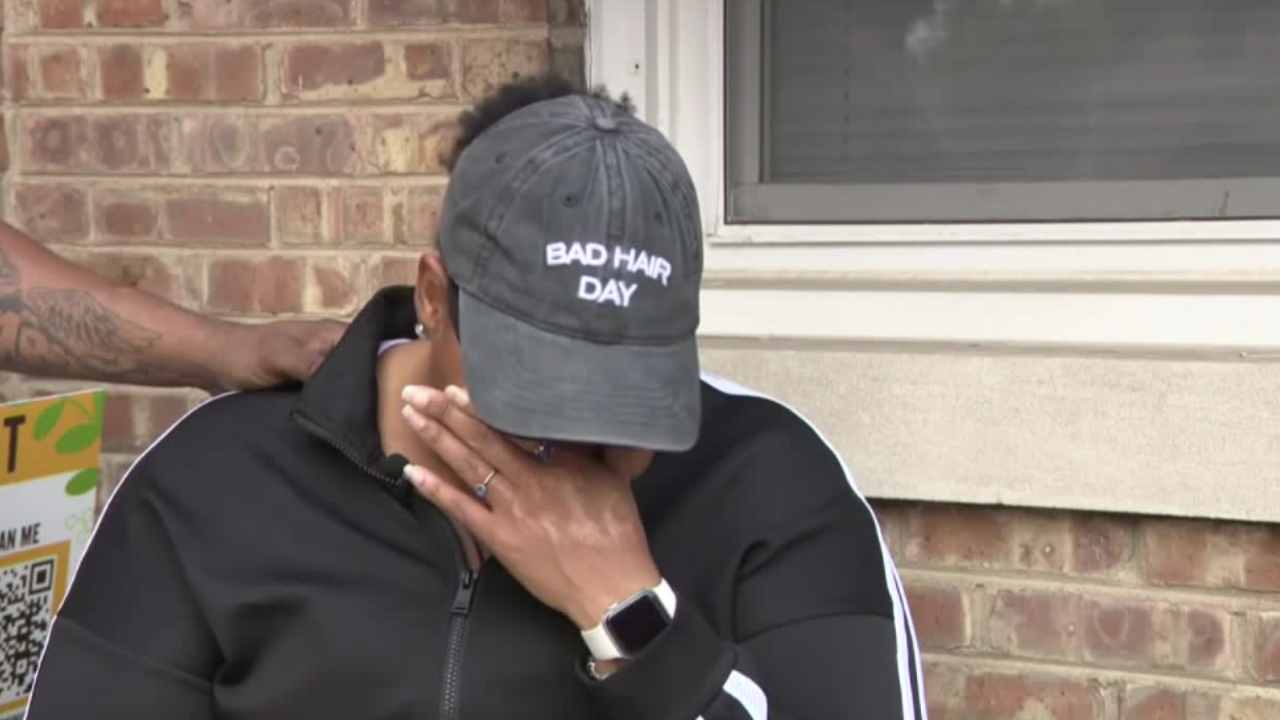
For Amber Newell, a resident of Brookfield, Wisconsin, a computer error resulted in her staring down the barrels of police weapons—not once, but twice—within a single week.
The Incident Timeline
The ordeal took place on I-94 near Milwaukee. The catalyst was a Flock camera—an automated license plate recognition (ALPR) system—which incorrectly flagged Newell's vehicle as being involved in a homicide investigation.
Summary of Events
| Day | Location | Action | Outcome |
|---|---|---|---|
| Monday | I-94 Corridor | High-risk stop | Guns drawn; vehicle detained |
| Thursday | I-94 Corridor | High-risk stop | Guns drawn; passenger hands visible to public |
During the second encounter on Thursday, Brookfield officers surrounded the car with weapons drawn. The scene was highly visible to other motorists, with a passenger forced to keep their hands out the window while onlookers recorded the event on their phones.
The Root of the Error
The failure was not a software "bug" in the traditional sense, but rather a human administrative failure. Milwaukee police later confessed that the alert associated with Newell's plate should have been purged from the system days prior.
Essentially, the logic of the system followed this path:
Because an employee forgot to perform the simple act of deletion, the "Active Alert" remained TRUE.
The Workflow Failure
The Human Cost
While the police may view this as a clerical error, the emotional toll on the Newell family is significant. Newell reports feeling shaken and anxious whenever she is behind the wheel. More heartbreakingly, her young daughter now suffers from anxiety regarding law enforcement.
"My daughter has asked if the police are going to 'get us' again every time we get in the car."
It is a devastating psychological burden for a child to carry, all because someone failed to hit the delete button manage a database.
Systemic Implications
The Flock system operates by comparing scanned plates against a database of active alerts. When a match occurs—particularly one linked to violent felonies—officers are trained to treat the situation as an immediate threat.
The Chief of Police in Brookfield has defended the officers' actions, arguing that they responded correctly based on the data provided. From a tactical standpoint, an officer cannot simply ignore a homicide alert. However, this highlights a dangerous gap in oversight:
- Reliability: The system is only as accurate as the humans updating it.
- Risk: Outdated alerts can turn a routine drive into a life-threatening encounter.
- Accountability: Who is responsible when "following protocol" leads to the traumatization of innocent citizens?
Necessary Next Steps
- Provide a formal apology to Amber Newell.
- Verify that the license plate has been permanently scrubbed from all watchlists.
- Implement a mandatory audit for outdated alerts.
- Establish a protocol for notifying citizens when they are wrongly flagged.
Final Thoughts
The tools designed to protect our communities only function if the administrative "paperwork" is handled with precision. In this instance, a basic failure in data management put a family in the crosshairs twice. This serves as a stark reminder that as surveillance technology expands, so must the oversight governing it.
About the Author
Olivia Richman has spent a decade in journalism, focusing on the intersection of technology, cars, and esports. When she isn't reporting on tech, she enjoys:
- Racing her cars on the track.
- Eating pho.
- Playing the Pokemon TCG.