Superconducting monolayer cuprate with a single CuO2 plane
Exploring Superconductivity in a Single-Plane 2D Cuprate
Overview
The pursuit of atomically thin van der Waals crystals represents the pinnacle of material science in the two-dimensional (2D) limit. As seen in the evolution of graphene, reducing dimensionality often unlocks novel physical phenomena that can be precisely manipulated via gating.
Core Objective: To extend this top-down dimensionality reduction to high-temperature superconductors, specifically targeting the absolute limit of a single plane.
While previous research indicated that the fundamental physics of cuprate superconductivity persists with two planes, this study pushes the boundary further by analyzing a monolayer of Bi-2201 ().
Experimental Goals & Methodology
The research team aimed to achieve the following:
- Isolate a single monolayer of .
- Measure the impact of dimensionality on the superconducting transition temperature.
- Explore the phase diagram through precise oxygenation.
- Analyze the quantum phase transition between insulating and superconducting states.
The Process of Dimensionality Reduction
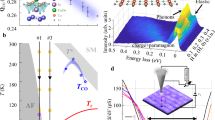
The transition from bulk materials to the 2D limit can be visualized as follows:
Key Findings and Observations
1. The Dimensionality Effect
The reduction to a single plane creates a measurable impact on the material's properties. Specifically, the researchers observed a robust dimensionality effect, resulting in:
- An approximate 10% decrease in the optimal superconducting transition temperature ().
2. Unprecedented Tunability
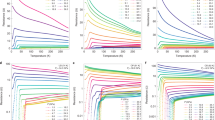
By employing finely controlled oxygenation on these single-monolayer samples, the team was able to push the phase diagram into previously unexplored regions.
3. Discovery of the Anomalous Metal State
As the temperature approaches absolute zero (), a surprising state emerges. Instead of a direct jump from insulator to superconductor, an anomalous metal state appears.
| State | Characteristic | Condition |
|---|---|---|
| Insulating | High resistance | Low oxygenation / Low |
| Anomalous Metal | Non-standard metallic behavior | Intermediate / |
| Superconducting | Zero resistance | Optimal oxygenation / Low |
4. Quantum Phase Transition (SIT)
The study focused on the Superconductor-to-Insulator Transition (SIT). They observed an anomalous scaling behavior, which is mathematically characterized by a divergent critical exponent.
Technical Summary & Data
The experimental logic can be summarized in the following conceptual pseudocode:
def analyze_superconductivity(layer_count, oxygen_level):
    if layer_count == 1:
        T_c = bulk_T_c * 0.90  # 10% reduction
        if oxygen_level == "controlled":
            return "Extended Phase Diagram"
        if temperature -> 0:
            return "Anomalous Metal State"
    return "Standard Cuprate Behavior"
Visual Evidence
The following figures from the study highlight the tunable nature of the superconductivity and the scaling analysis of the SIT:

Conclusion: By isolating a single plane, the researchers have provided new insights into the nature of quantum phase transitions in cuprates, demonstrating that the 2D limit offers a unique playground for tuning electronic states.