Graduate student proves a quantum uncertainty principle for fractals
Breaking the Dimensional Barrier: A New Quantum Uncertainty Principle for Fractals
At the smallest scales of existence, the universe behaves in ways that defy intuition. Central to this strangeness is the uncertainty principle, which dictates a fundamental trade-off: the more precisely you determine a quantum particle's position, the less you can know about its velocity (and vice versa).
Recently, a breakthrough has expanded this concept into the realm of fractals—those infinitely complex structures that maintain their detail regardless of the magnification level.
The Quest for Fractal Certainty
About a decade ago, Semyon Dyatlov, a mathematician at MIT, began investigating a specific question: Do quantum particles react differently than classical particles when subjected to chaotic environments?
In classical physics, an object moving chaotically can occasionally become "trapped," following a path that mirrors a fractal structure indefinitely. However, quantum particles are not points; they behave like waves, which naturally "blurs" their location. Dyatlov realized that to determine if quantum particles are too blurred to follow these intricate, trapped paths, he needed a specialized mathematical tool: a fractal uncertainty principle.
The Road to the Proof
The journey toward this discovery was a multi-year effort involving some of the world's most brilliant minds:
- 2016: Dyatlov, utilizing insights from the late, legendary mathematician Jean Bourgain, successfully proved the principle for one-dimensional fractals (essentially jagged lines).
- The New Jersey Workshop: That same autumn, Dyatlov and Bourgain hosted a global gathering of mathematicians to attempt to scale this proof to higher dimensions.
- The Wall: Despite the collective brainpower, the goal remained elusive.
Many believed the extension was possibleby the end of the session, attendees like Frédéric Naud noted that "nobody really believed that it could be done."

The Breakthrough
The deadlock was finally broken by Alex Cohen. While pursuing his doctorate at MIT, Cohen developed the proof that extended the fractal uncertainty principle to all higher dimensions.
His findings were published in 2025 in the Annals of Mathematics, the most prestigious journal in the field. This achievement served as the cornerstone of his thesis and propelled him to an assistant professorship at New York University by the age of 25.
"A foundational result," remarked Peter Sarnak of the Institute for Advanced Study, describing the work as "a pretty remarkable achievement for a guy in his thesis."
Comparison of Classical vs. Quantum Chaos
| Feature | Classical Particles | Quantum Particles |
|---|---|---|
| Trajectory | Can be trapped in precise fractal paths | Spread out as waves (blurring) |
| Predictability | Deterministic but chaotic | Governed by uncertainty principles |
| Dimensionality | Simple paths in 2D/3D | Complex wave-function interactions |
The Mathematical Engine: The Fourier Transform
While "quantum uncertainty" sounds exotic, the underlying math appears in everyday technology. For example:
- Audio: A very short sound makes it difficult to identify the specific tones (frequencies) involved.
- Sonar: A brief radar pulse can pinpoint a submarine's location, but a longer signal is required to calculate its speed.
These are all manifestations of the same mathematical phenomenon rooted in the Fourier transform, an equation from the 19th century.
How it Works
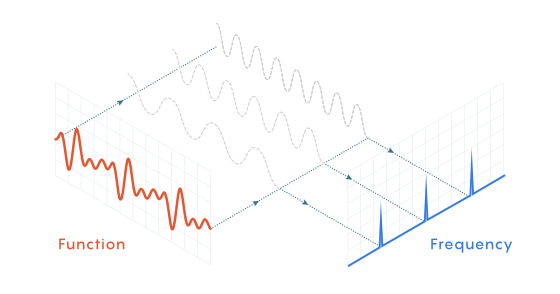
The Fourier transform allows us to decompose any complex function into a collection of simple sine waves of varying frequencies.
The Inverse Relationship:
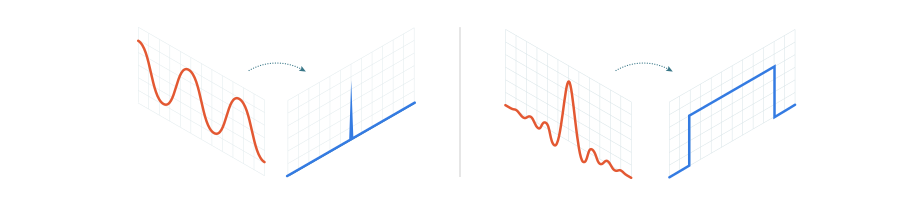
- A pure sine wave: Spans all space results in a single, sharp frequency peak.
- A snare drum snap: A sharp pulse in space results in a wide spectrum of frequencies (no single pitch).
In quantum terms, a particle's position is represented by a wave; the Fourier transform of that wave represents its momentum. Because they are linked by this transform, you cannot sharpen one without blurring the other.
Visualizing the Fractal Challenge
To understand why this is difficult, consider the construction of a basic fractal (like the Cantor set):
- Start with a solid line segment.
- Divide the line into three equal parts.
- Remove the middle segment.
- Repeat this process infinitely for every remaining segment.
The resulting set is infinitely fragmented. Cohen's work allows mathematicians to apply the uncertainty principle to these "holey," infinitely complex structures across any number of dimensions, providing a new lens through which to view the divergence between the classical and quantum worlds.