The Lost Treasure of Sid Meier's Pirates
The Lost Treasure of Sid Meier's Pirates
Featured Retrospective | By Bruno Dias | August 20th, 2026
When Microprose gave the green light to Sid Meier's Pirates! in 1986, the studio—established in 1982 by Meier and Bill Stealey—was primarily recognized for its dry rigorous strategic wargames (such as Crusade in Europe) and high-fidelity vehicle simulations:
- Gunship
- Spitfire Ace
- F-15 Strike Eagle
Even by today's standards, the game defies easy categorization. While it was the first title to bear the "Sid Meier's [Title]" branding, it bore little resemblance to his previous work.
A Genre Untethered
Upon its 1987 release, the industry labeled it an "action adventure." However, this term is accurate misleading when viewed through a modern lens. It shares virtually no DNA with the era's other giants like The Legend of Zelda, Metroid, or Castlevania.
There is no platforming to be found. Direct control of the avatar is limited exclusively to the fencing sequences, which utilize mechanics unlike any other combat system of the time. Meier sought to replicate the cinematic flair of an Errol Flynn duel via a complex control scheme—essentially a hybrid fighting game.
The Mechanics of the Blade
The combat required players to balance speed and power across three vertical planes.
| Action | Characteristic | Target Area |
|---|---|---|
| Thrust | Fast / Low Damage | High, Middle, or Low |
| Slash | Slow / High Damage | High, Middle, or Low |
| Parry | Defensive | High, Middle, or Low |
These inputs were mapped to the standard eight-direction joysticks of the Commodore 64 or the keyboard's numpad. Later ports attempted to integrate the mouse, often resulting in clumsy input combinations.
While the original swordfighting is difficult to defend today—and the 2004 remake simplified it into something resembling a quasi-rhythm game—it never felt like a concession to standard design.
The "Rift" in the Brain
Whether you played the 1987 original, the 1988 ports, the 256-color Pirates! Gold (1993), or the 2004 modernization, the experience creates a unique cognitive shift. Designer Nic Tringali describes it thus:
"Pirates! feels unstuck in genre, not quite an open-world game or a role-playing game, not only economic strategy or resource management. It has a goal for a clear thematic position for the player to inhabit and uses the systems and friction to reach that."
Tringali notes that the game's quirks—such as the constant eastward wind or the ability to win a naval engagement instantly by defeating the enemy captain in a duel—weren't based on genre tropes, but on internal logic.
First Principles of Piracy
In his 2020 autobiography, Sid Meier's Memoir!, Meier reflected on the creative vacuum of the 1980s:
"The good news was there were very few preconceived notions back then about what a game was supposed to be. The bad news was there were no tried-and-true conventions, either."
Pirates! was an exercise in extracting the essence of pirate mythology—Treasure Island, Peter Pan, and the "Black Legend"—and turning them into the clockwork rules of a living world.
Systems of the Caribbean
The game didn't just use a pirate theme as window dressing; it simulated the actual logistics of the era:
- The Silver Flow: The game modeled the economic pipeline of Spanish wealth.
- Biological Decay: The grueling nature of piracy was simulated through the player's aging process. As time passed, your sword arm grew slower, and enemies seemed faster.
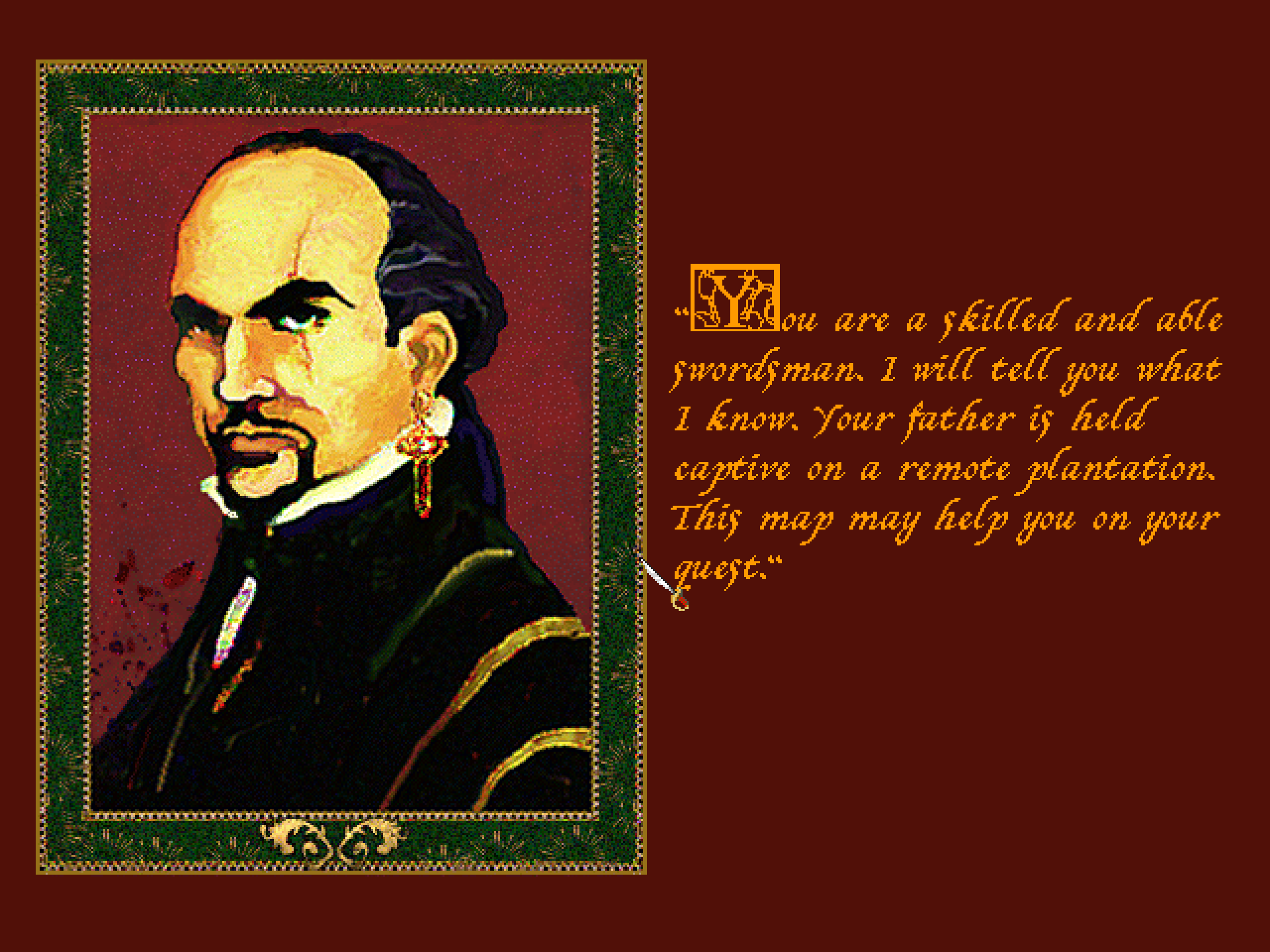
- The Family Quest: A randomized narrative drove the player to locate lost kin.
Current Objectives:
- Track down villainous aristocrats
- Rescue relatives from indentured servitude
- Search obscure plantations
The "Minigame" Misconception
A modern critic might dismiss Pirates! as "a bunch of minigames in a trenchcoat." However, this ignores a raw philosophy of design that has since been smoothed over by industry conventions.
Other studios, like Cinemaware, thrived on this eclectic approach. Their 1989 title It Came from the Desert shifted seamlessly between a first-person gallery, a top-down shooter, and a visual novel. Similarly, the original Dune (not Dune II) attempted to capture the scope of the David Lynch film by oscillating between spice-extraction strategy and plot-driven narrative.
Legacy
The success of Pirates! fundamentally altered Microprose's identity, paving the way for other genre-bending classics like Covert Action and Sword of the Samurai. It represents an era of gaming that feels like a missing piece of history—a time when the rules were written as the game was being played.
def check_pirate_status(age, skill):
    if age > 50:
        return "Sword arm is slowing down..."
    elif skill == "Master":
        return "The Caribbean fears you!"
    else:
        return "Keep raiding the Treasure Fleet."