Hook, hold, harvest and hide: Meta's alleged strategy laid out in first week
The "Four H's": Unpacking Meta's Alleged Blueprint for Youth Addiction
In the opening week of a high-stakes legal battle, a devastating framework has been proposed to describe the operational philosophy of the world's largest social media conglomerate. According to prosecutors, Meta's approach to user acquisition and retention can be distilled into a four-stage cycle: Hook, Hold, Harvest, and Hide.
The Alleged Strategy
The prosecution argues that Meta employs a predatory loop designed to maximize profit at the expense of psychological well-being, particularly for minors.
Megan O’Neill, representing the state of California, asserted that this specific business model was especially effective when applied to children.
The Legal Framework
The lawsuit, filed in Oakland, California, is a massive joint effort involving California and 28 other US states. The core of the litigation rests on two primary legal pillars:
- Federal Child Privacy Laws: Allegations that Meta collected data from users under 13 without obtaining parental consent.
- State Consumer Protection Laws: Claims that the company intentionally engineered addictive interfaces that caused tangible harm to youth.
The Stakes: Financial and Operational
The potential fallout for Meta is staggering. If the company is found liable, the financial penalties could reach:
This figure is roughly equivalent to the company's projected annual revenue for 2025. Beyond the money, the states are seeking a court-mandated overhaul of product design to prioritize child safety, which would fundamentally disrupt alter Meta's current revenue engine.
Conflicting Perspectives
| The States' Position | Meta's Defense |
|---|---|
| Products are designed to be addictive. | Tools have been created to manage usage. |
| Privacy laws for children were ignored. | Users under 13 are prohibited from joining. |
| The company hides the harm caused. | The states are chasing an "outlandish payout." |
"Rather than sticking to the facts or the law, the states have instead decided to chase an outlandish payout." — Liza Crenshaw, Meta Spokesperson
Trial Logistics and Precedents
The trial is slated to run for six to eight weeks. While eight jurors are listening to the evidence, their role is advisory. The final verdict and the determination of damages will be decided by Judge Yvonne Gonzalez Rogers.
Trial Roadmap
- Opening statements from both parties.
- Testimony from former employees and psychologists.
- Testimony from Meta CEO Mark Zuckerberg.
- Testimony from Instagram CEO Adam Mosseri.
- Final judge's verdict.
Meta is not starting from a clean slate. It has already suffered significant losses in two previous cases:
- New Mexico: Ordered to pay nearly
$1 billionfor facilitating child sexual exploitation. - Individual Suit: Ordered to pay over
$4 millionto a woman who was "hooked" by addictive design.
 Lennon Torres and others holding a banner for victims of social media harm.
The Insider's Testimony: Arturo Béjar
The first week's most pivotal witness was Arturo Béjar, a former Meta safety engineer (employed across two stints between 2009 and 2021). Béjar's testimony was deeply personal; he revealed that his drive to fix these systems stemmed from his own daughter's experiences on Instagram, which included:
- Misogynistic harassment.
- Unsolicited sexual advances.
- The receipt of explicit images (male genitals).
Béjar testified that Instagram's reporting mechanisms were either non-functional or impossible to use. He characterized Meta's internal culture regarding child safety as a "don't ask, don't tell" strategy.
Direct Access to Leadership
Béjar claimed to have briefed Mark Zuckerberg over 100 times. As evidence, the prosecution presented a 2021 email sent to the CEO detailing a survey of teenage users. The data indicated that 51% of users responded "yes" to... (the testimony on this specific point remains a focal point of the ongoing trial).
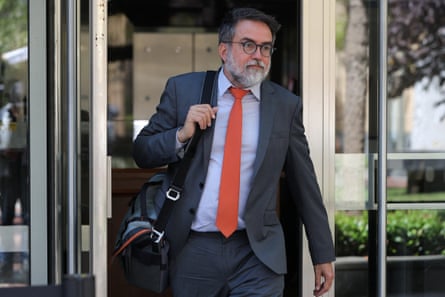 Former safety engineer Arturo Béjar, who has become a vocal critic of the company.
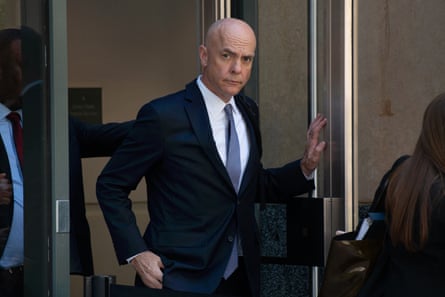 Lead attorney Paul Schmidt, who maintains that Meta has disabled over 1 million underage accounts.