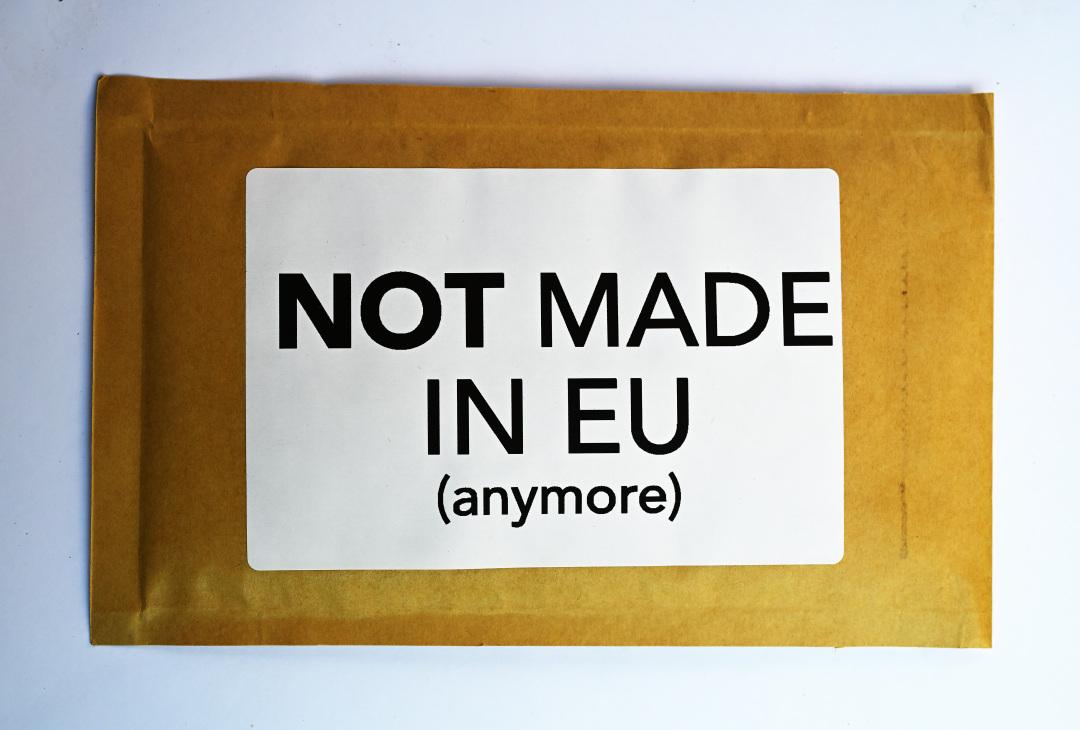
How Europe is killing makers and micro-entrepreneurs
How Europe is Killing Makers and Micro-Entrepreneurs
By Alain Pannetrat | August 24, 2026
Lectronz serves as a dedicated marketplace for the DIY electronics community and creators of open-source hardware. The vast majority of our vendors aren't massive factories or venture-backed startups; rather, they are:
- Independent designers
- Hardware enthusiasts
- Engineers operating out of garages, spare bedrooms, or modest workshops
Some of these individuals produce a mere ten units of a product simply because they've solved a problem and wish to share the solution with others. While some of these passion projects eventually evolve into legitimate businesses, a new wave of European Union legislation now threatens to extinguish this entire ecosystem of innovation.
A Noble Goal, a Disastrous Execution
For years, the EU has utilized Extended Producer Responsibility (EPR) schemes to ensure producers manage packaging waste. The latest iteration, the Packaging and Packaging Waste Regulation (PPWR)—which generally takes effect on August 12, 2026—seeks to standardize these rules and minimize environmental impact.
What is EPR? The fundamental premise is simple: any business that introduces packaging into the market should contribute financially to the collection and recycling of that waste.
For a maker, this means being responsible for every cardboard box, plastic mailer, or envelope used for shipping. However, the PPWR fails to implement a unified European system, instead maintaining a fragmented national model.
The Administrative Nightmare
If a micro-business sells to customers across various EU borders, they must register and comply with the specific laws of every single Member State where their packaging ends up. While this is a negligible "cost of doing business" for a corporation, it is a crushing burden for a micro-entrepreneur.
Case Study: The Greek Engineer
Consider an engineer in Greece selling an open-source sensor board priced at €25. In his first year, his sales are:
- Germany: 5 units
- France: 2 units
- Austria: 2 units
- Belgium: 1 unit
Total packaging generated: (50g per shipment). Despite the tiny volume, he is now a "packaging waste producer" in four different nations.
| Country | Admin/Registration Fees | Authorised Representative | Total Estimated Annual Cost |
|---|---|---|---|
| France | €110 | €190 – €300 | ~€300 - €410 |
| Belgium | €50 – €100 | Required (Approx. cost) | ~€200+ |
| Germany | Free (Registration) | ~€190 (Rep) + €10 (Scheme) | ~€200 |
| Austria | €250 | Required (Approx. cost) | ~€400+ |
| TOTAL |
The mathematical absurdity is clear:
To make this viable, our engineer cannot start by selling 10 or 100 boards; he would need to sell thousands from day one just to break even on compliance.
The Slow Death of Innovation
Innovation rarely begins in a corporate boardroom; it starts with small-scale experimentation. The typical trajectory of a successful hardware company looks like this:
- Create a prototype
- Sell 10 units to early adopters
- Scale to 100 units
- Expand to 1,000+ units
- Become a market leader
On Lectronz, this is the norm. In the last year, half of our sellers received fewer than 10 orders. This isn't a failure of the platform; it's the essence of a maker marketplace. When creators share small batches of hardware, they provide the building blocks for others to innovate.
By creating a disproportionate barrier to entry, EU policymakers are effectively encouraging innovation killing it. They claim to worry about Europe's lack of competitiveness, yet they create an environment where only giants like Amazon, Temu, or eBay can survive.
The Impact on Lectronz
Lectronz is itself a micro-enterprise. We operate on a 5% transaction fee, which we even waive for the first five sales to help new makers get started. After years of development, the platform currently generates the equivalent of one modest salary.
I built this because independent creators need a space designed for them. If these regulations force our sellers to flee the European market, Lectronz may become unviable. That would be a heartbreaking conclusion to everything we've built.
Current Status & Advice
For the moment, sellers should not panic. It is still unclear how strictly national authorities will pursue micro-entrepreneurs. We are monitoring the situation. However, if strict enforcement begins, the logical path for makers is simple:
# Recommended strategy for EU micro-entrepreneurs:
stop_selling --to EU_Market
start_shipping --to Non_EU_Markets (e.g., USA)
For a French creator, it is becoming more economically rational to ship a package to the United States than to a neighboring EU country.