Where Did All the Public Bathrooms Go?
The Vanishing Act of the Public Latrine
A Visual Riddle
Take a look at this structure:
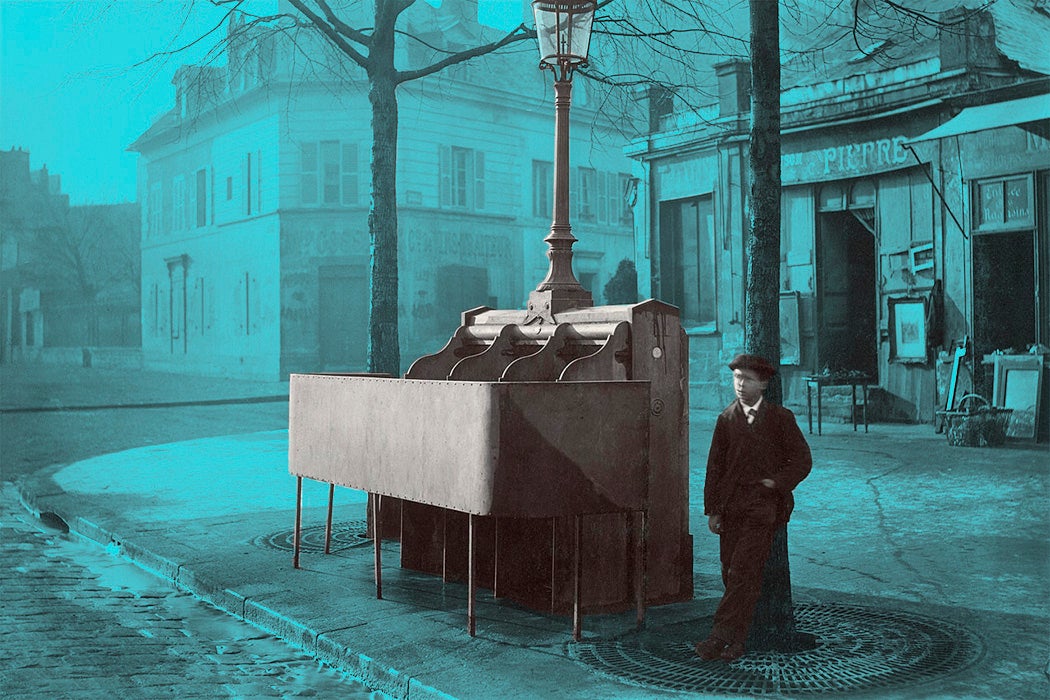
It is an aesthetically pleasing kiosk, featuring intricate grilles, etched glass, and a roof adorned with metallic floral arrangements. However, there is one sensory detail the photo cannot convey: the stench.
This is a pissoir (or, if you prefer the more refined term, a vespasienne), a staple of 19th-century Parisian streets.
The Parisian Approach: From Nuisance to Health Crisis
In the mid-1800s, Paris shifted its perspective on public urination. It was no longer viewed as a mere nuisance but as a critical public health emergency. This shift was driven by a series of catastrophic cholera epidemics, which taught the city that human waste was a dangerous vector for disease.
The Evolution of "Anti-Pee" Design
Before the ornate kiosks arrived, the city employed empeche pipi—an early form of hostile architecture. These interventions included:
- Iron spikes strategically placed in tempting corners.
- Bullnose masonry designed to reflect the stream back onto the user's footwear.
These methods were largely ineffective, simply shifting the problem from one alley to another.
The "Palaces" of Relief
The pissoirs that followed were far more ambitious. They were designed as miniature palaces, decorated with:
- Iron flowers and scrolls.
- Decorative shells.
- Tiny lion heads that seemed to watch over the user's back.
While they looked luxurious, privacy was minimal—usually just a small iron screen. Many were topped with lamps to ensure they were visible at night and to illuminate the advertisements for wine and perfume pasted on the sides.
Social Dynamics and Unintended Consequences
These structures were exclusively for men. The prevailing social logic was that women did not participate in public life and therefore had no need for public facilities—a logic that effectively kept women out of the public sphere.
However, the pissoirs developed a secondary, unplanned function. They became clandestine hubs for men seeking other men. Because they offered a degree of seclusion and a place to leave anonymous graffiti, they became a vital "release valve" for a marginalized population.
"[T]he case of the public urinals ultimately shows that the meaning of modern urban life emerged in a constantly shifting dialogue between those who conceived and built the city and those who ultimately used it." — Andrew Israel Ross, sociologist
Of course, this anonymity also attracted predators; blackmailers would often target men simply for entering a urinal.
The American Context: Toilets and Temperance
Across the Atlantic, the struggle for public restrooms took a different turn, becoming entwined with the Temperance Movement.
In many American cities, the only available "public" bathrooms were located inside saloons. This created a moral dilemma for reformers: to relieve one's bladder, a citizen had to walk through a den of alcohol.
Comparison of Urban Bathroom Motivations
| Region | Primary Driver | Key Conflict | Result |
|---|---|---|---|
| Paris | Public Health | Disease vs. Aesthetics | Ornate pissoirs |
| USA | Moral Reform | Sobriety vs. Saloons | Temperance-led advocacy |
Historian Peter C. Baldwin notes that temperance advocates viewed public toilets as a necessity for a sober society. If the saloons were to be closed, the public still needed a place to go. A 1913 Chicago Tribune piece highlighted the frustration:
"Why are we compelled to run the gauntlet past the beer bar, the bartender, and subject to the searching glance of this white-aproned gentleman..."
Summary Checklist for the 19th Century Urban Planner
- Combat cholera outbreaks.
- Replace spikes with ornate cast iron.
- Install streetlamps for advertising.
- Provide facilities for women (Ignored).
- Prevent blackmail/clandestine meetings (Failed).
The Math of Urban Privacy
If we consider the level of privacy as a function of the screen height and the street traffic : In the case of the pissoir, was low and was high, resulting in a very low .
Further Reading:
- Early Doctors Diagnosed Disease by Looking at Urine (Morgan Godvin, 2023)
- Public Privacy: Restrooms in American Cities, 1869–1932 (Peter C. Baldwin)
