Bomb fishing is wreaking havoc on Indonesia's coral reefs
Devastation Beneath the Waves: The Crisis of Bomb Fishing in Indonesia
The vibrant marine landscapes of Sulawesi, Indonesia, are under siege. In a region known as the "Amazon of the Seas"—the Coral Triangle—the world's most biologically diverse marine environment is being systematically dismantled.
The Sound of Destruction
Imagine diving into a thriving reef: you hear a symphony of snapping shrimp and feeding fish. Suddenly, that harmony is shattered by a violent, plosive boom.
Researchers from the Zoological Society of London utilized underwater microphones in the Spermonde Archipelago to quantify this chaos. Their findings were staggering: over 3,500 explosions were recorded in just 3,600 hours of audio.
What is "Blast Fishing"?
Blast fishing is a globally prohibited method where fishers use plastic bottles filled with explosives to kill marine life.
- Impact Radius: Approximately 90 feet.
- Target: Any fish within the blast zone (identifiable by burst swim bladders and ruptured organs).
- Collateral Damage: Total destruction of the coral architecture.
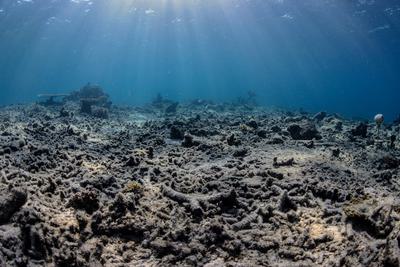
"Bomb fishing is quite likely the leading cause of reef loss in this area," explains lead author Ben Williams. He describes the aftermath as a "landscape that looks like the moon," where colorful reefs are replaced by sterile rubble.
The Research Methodology
In 2023, a joint team from Indonesia and Britain deployed an innovative monitoring system.
| Component | Detail |
|---|---|
| Hardware | $150 audio recorders anchored to the seafloor |
| Duration | 16 months of audio data |
| Detection Range | Over 10 miles (due to sound speed in water) |
| Verification | Manual review to distinguish bombs from boat engines |
Data Processing Workflow
The team developed a specialized software tool to analyze the massive audio files. The process followed this logic:
Quantifying the Havoc
The scale of the destruction is immense. In an area of only 350 square miles, the team estimates that more than 8,500 blasts occur annually.
Using basic math, we can see the scale of the loss:
This is equivalent to destroying three football fields of reef every single year.
Key Findings:
- Temporal Patterns: Blasting happens year-round.
- Daily Peaks: Activity is highest in the mornings.
- Cultural Influence: There is a significant in activity on Fridays (the local day of prayer).
- Long-term Loss: Since 1990, of the coral in the Spermonde Archipelago has vanished due to a combination of warming waters, bleaching, and human activity.
The Socio-Economic Driver
It is a common misconception that this practice is driven solely by extreme poverty. Because the equipment—boats, detonators, and explosives—requires an initial investment, experts suggest it is more often practiced by middle-income fishers.
The root cause is often a failure of governance:
Lack of equipmentIneffective enforcementLack of knowledgePoor management
The Challenge of Enforcement
Indonesia manages over 70 million acres of marine protected areas (an area larger than the UK). Patrolling this vast expanse is nearly impossible. While Malaysia recently seized 1,250 lbs of ammonia fertilizer (a bomb precursor), real-time detection remains the "holy grail" of conservation.
Requirements for a Sustainable Solution:
- Equitable enforcement of laws
- Consistent patrolling
- Legitimate legal consequences
- Real-time detection technology
A Path Toward Recovery
Despite the grim statistics, there is a glimmer of hope. Unlike global warming or coral bleaching, bomb fishing is a local stressor.
# Conceptual logic for the proposed sensor network
def detect_and_report(audio_stream, gps_location):
    if audio_stream.contains_blast_signature():
        alert_authorities(location=gps_location, timestamp="Real-Time")
        return "Dispatch Patrol"
Williams hopes that by sharing their open-source code globally—from Turkey to Zanzibar—authorities can build GPS-synced audio networks to stop the bombing in real-time.
The Bottom Line: If the explosions stop, the reefs can be restored. Because this is an acute human-driven crisis, it is a problem that humans have the power to fix.