Taylor Farms: How One Company's Reach Became a National Risk
Taylor Farms: A Case Study in Systemic Food Risk
Report Date: August 2026
Research Team: Sarah Carden, Colleen Fulton, Angela Huffman, and Caroline Nodus
Author: Jessica Cusworth
Organization: Farm Action
The 2026 Cyclospora outbreak serves as a grim reminder of the vulnerabilities in the American food system. With thousands of infections and at least two confirmed deaths, the FDA traced the source to shredded iceberg lettuce supplied by Taylor Farms and served at Taco Bell. While the name Taylor Farms is rarely recognized by the average consumer, its operational footprint is massive.
The Invisible Giant: Company Profile
Founded in 1995, Taylor Farms has evolved from a modest operation into a global powerhouse. It functions as a "hidden" intermediary, providing produce to a vast array of outlets under various labels.
Key Corporate Metrics
| Metric | Detail |
|---|---|
| Annual Revenue | $7 Billion |
| Workforce | 25,000+ Employees |
| Infrastructure | 30 Processing Facilities (US, Canada, Mexico, Europe) |
| Weekly Output | 265 Million+ servings of fresh food |
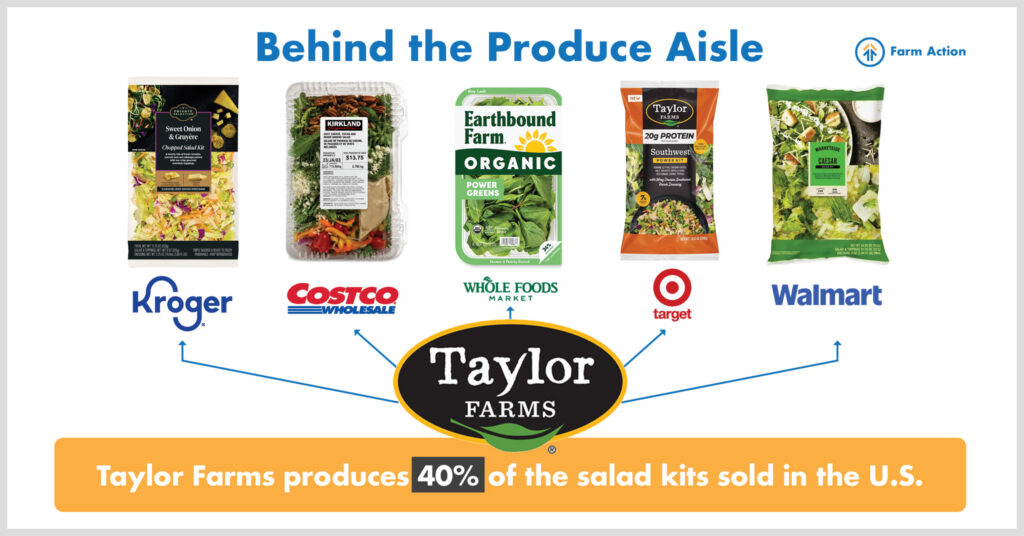
| Market Share | ~40% of all US salad kits |
| Sourcing Model | 25% self-grown / 75% partner-sourced |
"When a single entity controls such a significant portion of the food supply, a localized failure can rapidly transform into a national crisis."
The Mechanics of Market Dominance
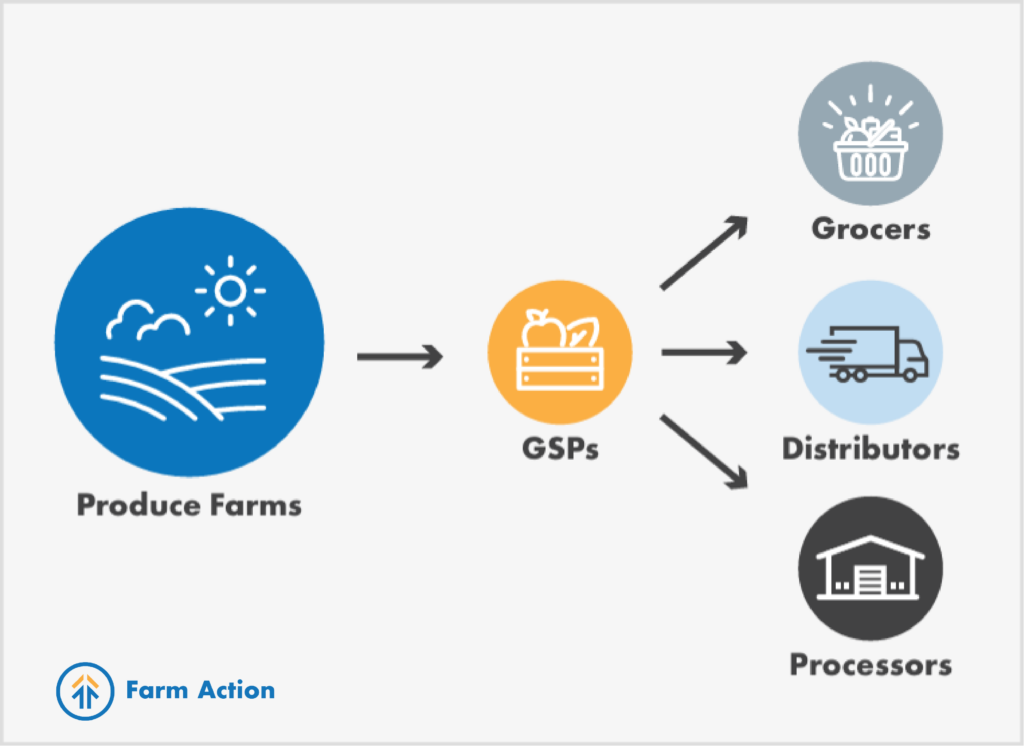
Taylor Farms operates as a Grower-Shipper-Packer (GSP). This role is critical because GSPs act as the primary gateway between the soil and the store.
The GSP Supply Chain Flow
The rise of this model was driven by industry consolidation. Large buyers (like national grocery chains and restaurant conglomerates) demanded:
- High Volume: Year-round availability.
- Consistency: Uniform quality standards.
- Logistics: A single point of contact for national delivery.
- Private Labeling: The ability to sell products under the retailer's own brand.
Currently, it is estimated that .
Hidden Reach and Retail Partners
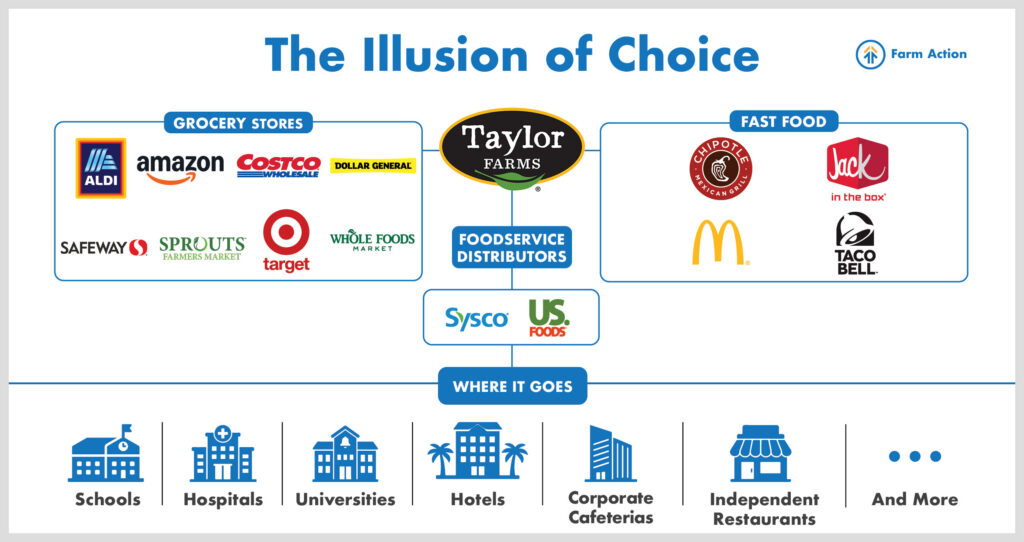
Because Taylor Farms is privately held, it does not disclose its full client list. However, recall data and public records link them to:
- Retailers:
Walmart,Kroger,Trader Joe’s,Albertsons,Meijer, andH-E-B. - Distributors:
SyscoandUS Foods(which supply hospitals, schools, and hotels).
When Scale Becomes a Liability
The mathematical reality of food safety in a consolidated system can be viewed as:
When a company's footprint is invisible to the public, the risk is compounded. Consumers cannot avoid a supplier they don't know exists. This "invisibility" shields the company from market pressure and complicates the work of journalists and regulators during an outbreak.
A History of Safety Incidents
Taylor Farms has been implicated in several high-profile events:
- 2026:
Cyclosporaoutbreak (Iceberg lettuce) - 2026:
Salmonellaoutbreak (Jalapeño products) - 2024:
E. colicluster (Romaine lettuce) - Various: Recalls for labeling errors, allergens, and processing defects.
While these may be viewed as isolated events, the frequency suggests a potential systemic weakness.
Industry Implications and Policy Needs
The consolidation that allowed Taylor Farms to thrive has created a bottleneck. By sourcing internationally (e.g., tracing 2026 lettuce to Mexico during the US summer), the company prioritizes scale over regional resilience.
To mitigate these risks, the report suggests we must move:
From a system of opaque, consolidated power Toward a system of transparency and diversified competition.
Recommended Policy Shifts:
- Enhanced Transparency: Require disclosure of GSP sources on consumer packaging.
- Stricter Oversight: Increase government auditing of large-scale processors.
- Anti-Consolidation Measures: Support smaller, regional food hubs to reduce national reliance on a few "mega-suppliers."
- Public Accountability: Strengthen the legal frameworks for food safety failures.