An ongoing 3D-printer AGPL violation
A Persistent Breach of the AGPL in the 3D-Printing World

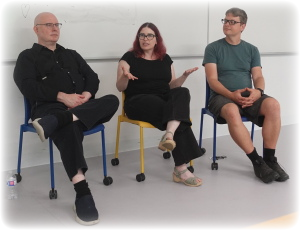
At the FOSSY 2026 conference, representatives from the Software Freedom Conservancy (SFC)—the organization behind the event—delivered a detailed presentation regarding a current violation of the Affero General Public License version 3 (AGPLv3).
The presentation was led by a trio of experts:
- Bradley Kühn
- Karen Sandler
- Denver Gingerich
They focused their analysis on software produced by Bambu Lab, a 3D-printer manufacturer, and discussed the ongoing efforts to provide the community with viable, free alternatives. A particularly striking point of the discussion was that Bambu Lab is utilizing a method of circumvention that the AGPL was specifically designed to prohibit.
The State of Modern Activism
Bradley Kühn opened the session by reflecting on his three-decade tenure as a FOSS activist. He noted that the current era provides more opportunities for meaningful action than any other time in his career.
"this moment in history [...] has more activism opportunities than I have seen in my career"
In the past, the SFC's work often felt like triaging disasters. However, over the last six to eight months, the focus has shifted toward triaging opportunities. Karen Sandler clarified that these opportunities aren't simple financial windfalls:
"it's not like people are saying 'would you like this money or that money?'"
According to Kühn, the goal isn't monetary gain but rather creating pathways for activists to achieve tangible results and mobilize the public. The SFC has successfully reached a broad community of enthusiasts who previously had only a superficial understanding of FOSS, introducing them to:
- Free Software
- Free Culture
- Free Creation
Context: The Evolution of 3D Printing
To understand the current conflict, Kühn provided a historical overview of the 3D-printing landscape. (Interestingly, Kühn admits he avoids the hardware side of the hobby because a breadboard fire during his college years convinced him to stick strictly to software).
From Hobby to Industry
The field began as a niche curiosity where enthusiasts had to build their own machines from scratch. This grassroots foundation allowed a "hobby culture" to take root, which acted as a buffer against immediate takeover by venture capitalists.
The Role of the "Slicer"
A critical component of the 3D-printing workflow is the slicer. This software translates a 3D model into a series of 2D layers (slices) that the printer can execute. Kühn describes this output as being conceptually similar to assembly language.
The Slic3r Legacy
Alessandro Ranellucci developed a prominent slicer called Slic3r. To prevent corporate exploitation, Ranellucci specifically chose the AGPLv3 license. He explicitly wanted to avoid a scenario where a company offered Slic3r as a proprietary service.
While various slicers exist, most modern versions are forks of Slic3r. There are approximately 18 active forks, the most famous being PrusaSlicer.
| Entity | Approach to Business | Software Philosophy |
|---|---|---|
| Josef Prusa | Free-software business model | Open plans, free firmware, open software |
| Bambu Lab | Market dominance/Proprietary lean | Closed-loop ecosystem |
The Arrival of Bambu Lab
The market shifted around 2019 and the start of the COVID-19 pandemic. As more people sought home hobbies, a Chinese firm called Bambu Lab entered the fray. While unconfirmed, there are rumors that the company maintains ties to the Chinese government.
Bambu Lab didn't just iterate; they built their ecosystem from the ground up. By 2025, they had captured a massive portion of the mid-range market.
Market Share Analysis: According to various analyst reports, Bambu Lab's control of the \500$3000$ printer segment is estimated as:
Current SFC Objectives
The SFC is now working to ensure that the community is not locked into a proprietary ecosystem. Their current "to-do" list includes:
- Documenting specific AGPLv3 breaches.
- Promoting the use of
PrusaSlicerand other open forks. - Educating new users on the importance of software freedom.



Technical Note: The AGPLv3 is designed to close the "ASP loophole," ensuring that if software is modified and run on a server for users to interact with, the source code must still be made available.
# Conceptual check for license compliance
if [[ $SOFTWARE_LICENSE == "AGPLv3" ]] && [[ $DEPLOYMENT == "NetworkService" ]]; then
    echo "Source code must be provided to users."
fi