I think the military commissary's freezers were hacked
Hypothesis: A Cyberattack on Military Commissary Freezers
By M. Elizabeth | Published August 28, 2026
The frozen pizza aisle has unexpectedly become the latest focal point of national security concerns. While it may sound like a conspiracy theory, the evidence suggests something far more systemic than a few broken compressors.
Update: Since the initial publication, major outlets including Military Times, Navy Times, and Stars and Stripes have reported on widespread refrigeration failures. The Pentagon has since admitted to a "possible refrigeration disruption" affecting various DeCA commissaries.
The Pattern of Failure
At first glance, a few broken freezers are a nuisance. But when refrigeration systems fail nearly simultaneously across at least six different military installations—with further independent reports suggesting more—the situation shifts from "unfortunate" to "suspicious."
I'll be the first to admit: this sounds insane. However, I believe there is a non-zero probability that these systems were targeted by a malicious actor. We aren't talking about a single unit or a lone store; we are talking about a coordinated failure across the Defense Commissary Agency (DeCA) network.
The Investigation Process
My curiosity was piqued by a series of social media posts. What started as scattered complaints about spoiled food evolved into a chorus of "Wait, it's happening here too." This prompted a deep dive into:
- Military social media chatter.
- Defense procurement contracts.
- Commercial refrigeration specifications.
- A refresher on my old cybersecurity degree (which I once wondered I'd ever actually use).
The "Starting Lineup" of Outages
Between August 26 and 27, I tracked 14 reports of freezer failures across 11 states.
| Installation | Status | Notes |
|---|---|---|
| Warren AFB | Confirmed | |
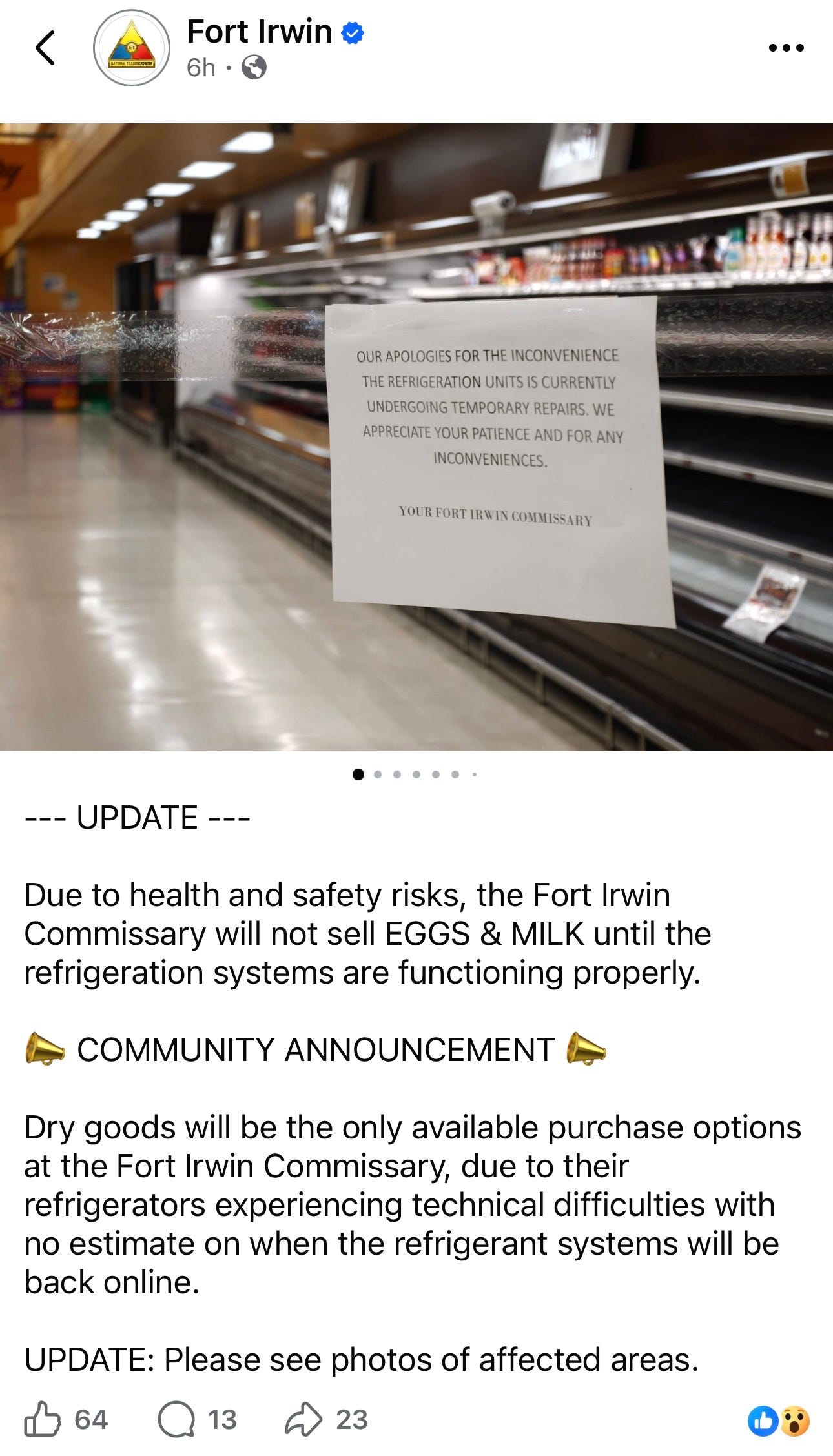
| Fort Irwin | Confirmed | |
| Columbus AFB | Confirmed | |
| Naval Station Newport | Confirmed | Added Aug 29 |
| Travis AFB | Confirmed | |
| NAS Lemoore | Confirmed | Restored Aug 28 |
| Port Hueneme | Confirmed | |
| Dyess AFB | Confirmed | Restored Aug 29 |
| Little Rock AFB | Unconfirmed | |
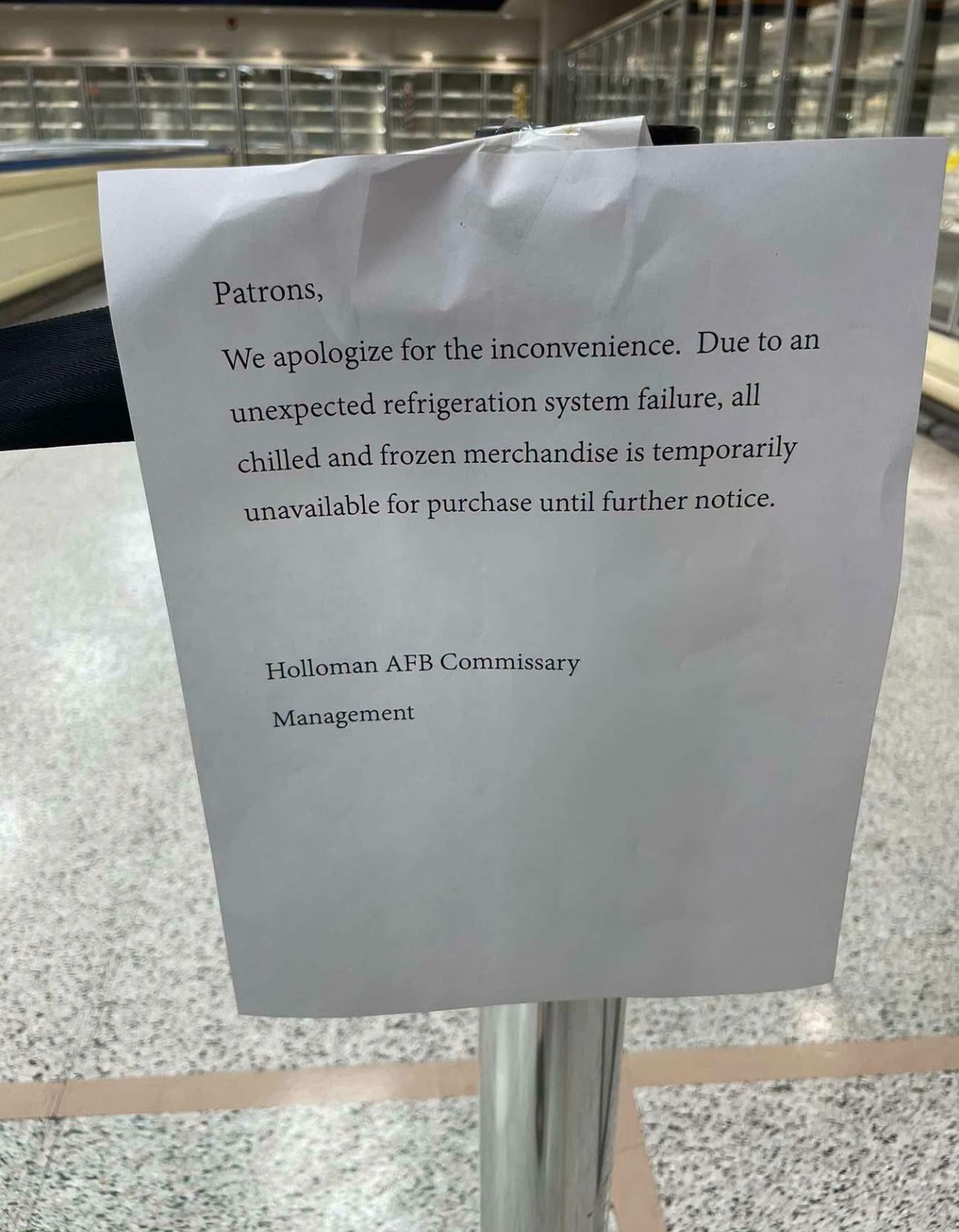
| Holloman AFB | Unconfirmed | |
| Robins AFB | Unconfirmed | |
| McConnell AFB | Unconfirmed | |
| Cannon AFB | Unconfirmed | |
| Removed | Operating normally as of Aug 28 | |
| Removed | Notice was actually from 2025 |
The Smoking Gun: Fort Huachuca
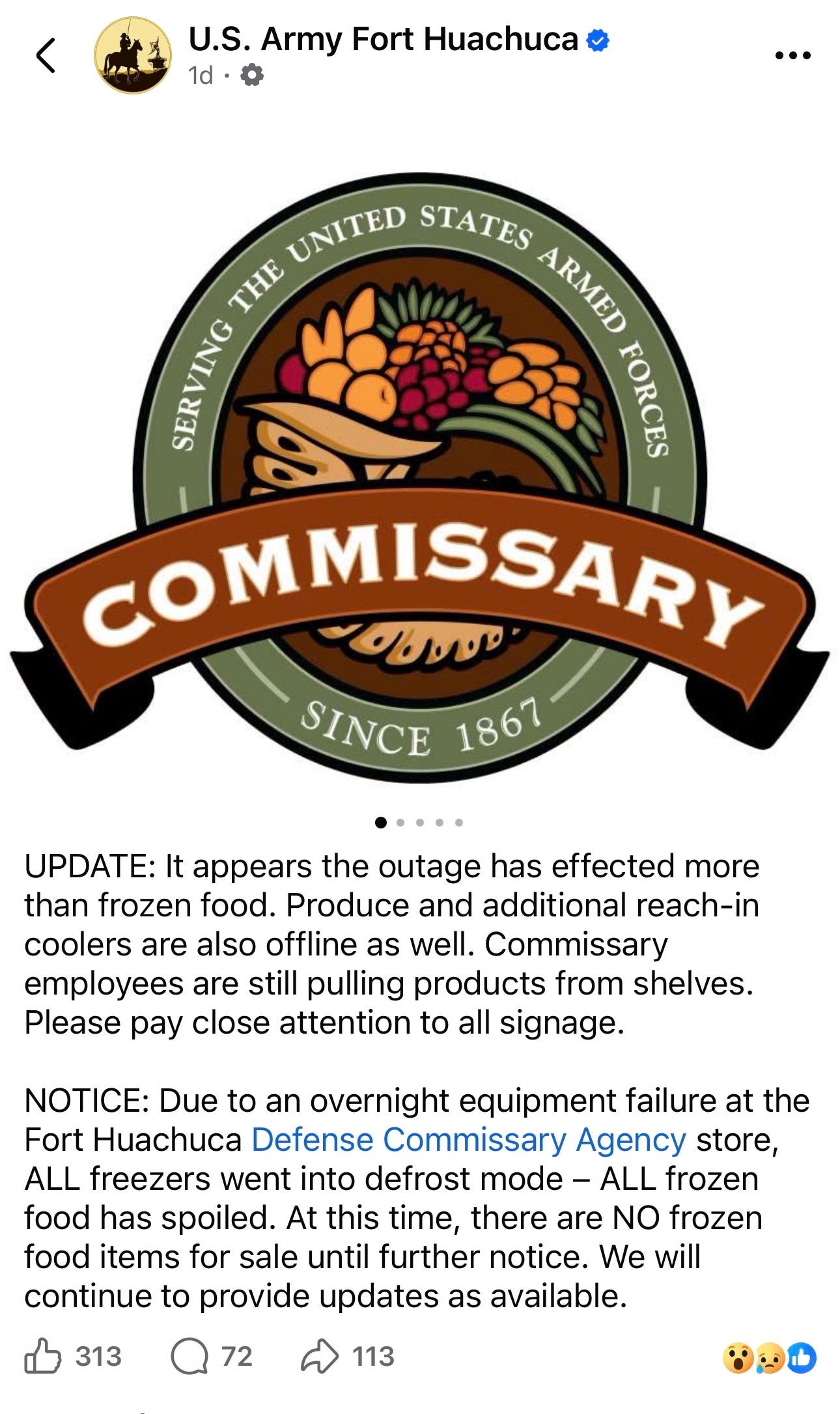
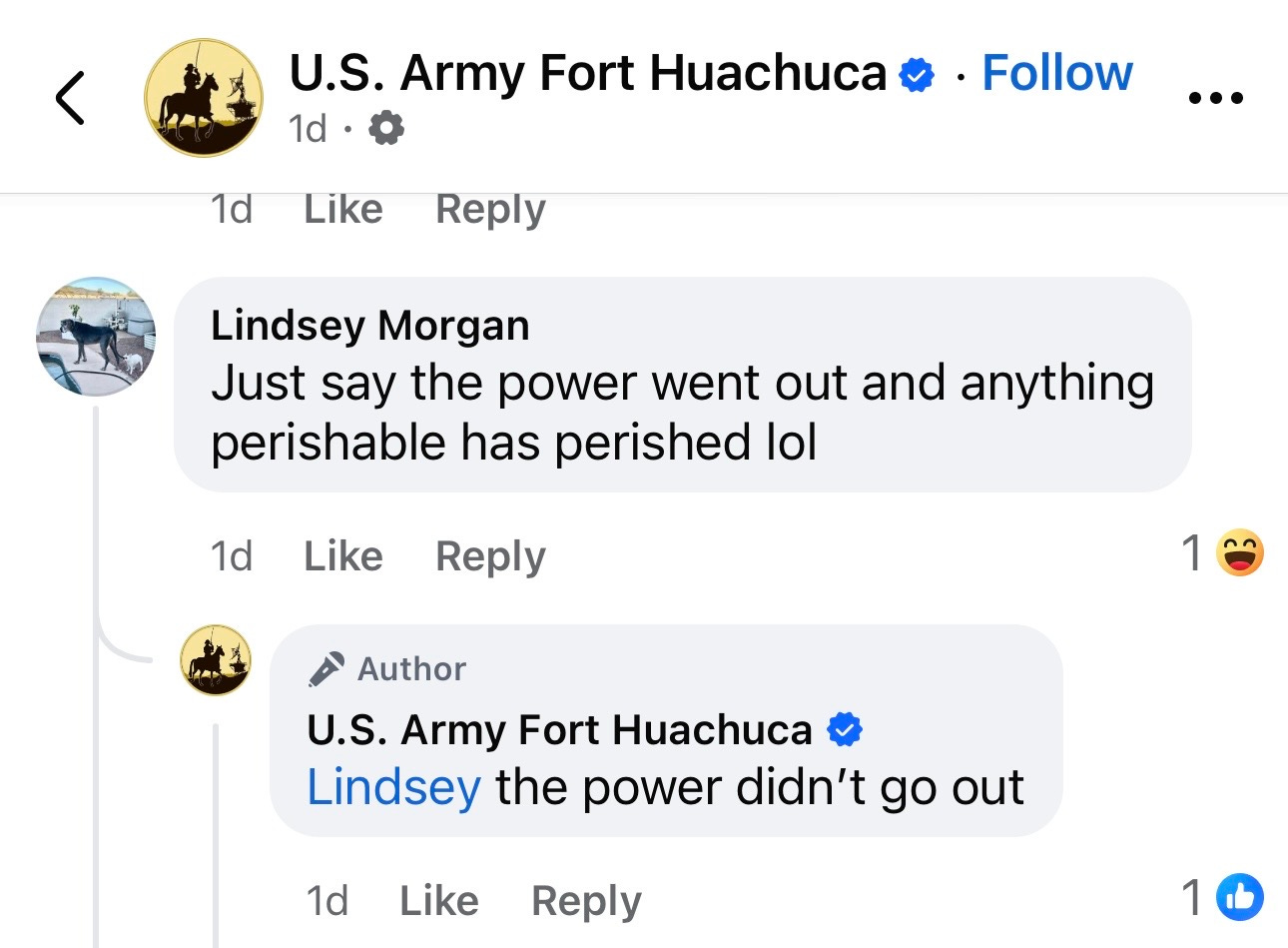
The turning point in my research was Fort Huachuca in Arizona. The base's official Facebook account announced that an overnight equipment failure had forced all commissary freezers into defrost mode, resulting in total food spoilage.
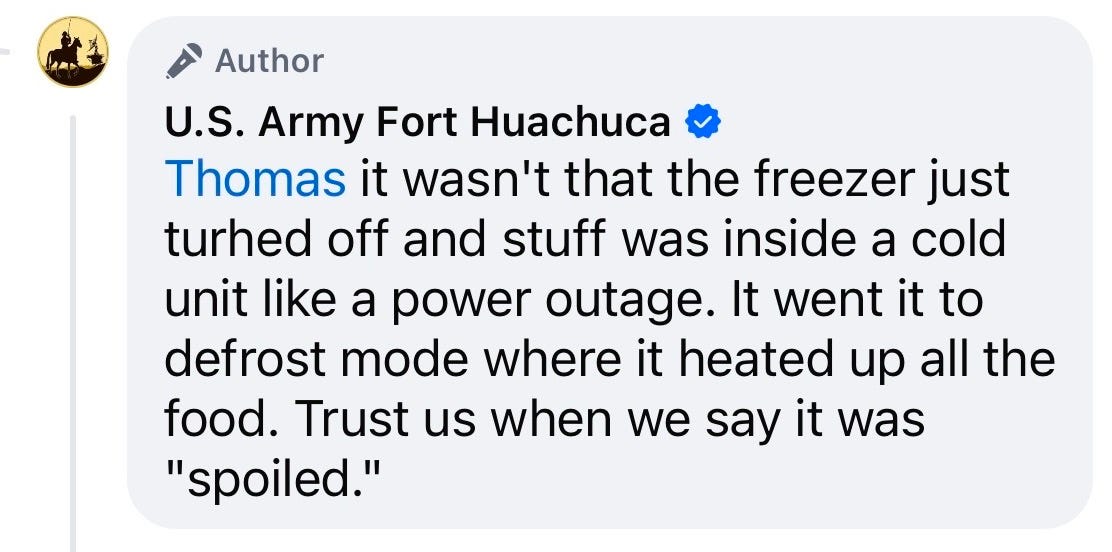
Crucially, the installation clarified two points:
- The power did not go out.
- The freezers didn't just stop; they actively entered a defrost cycle.
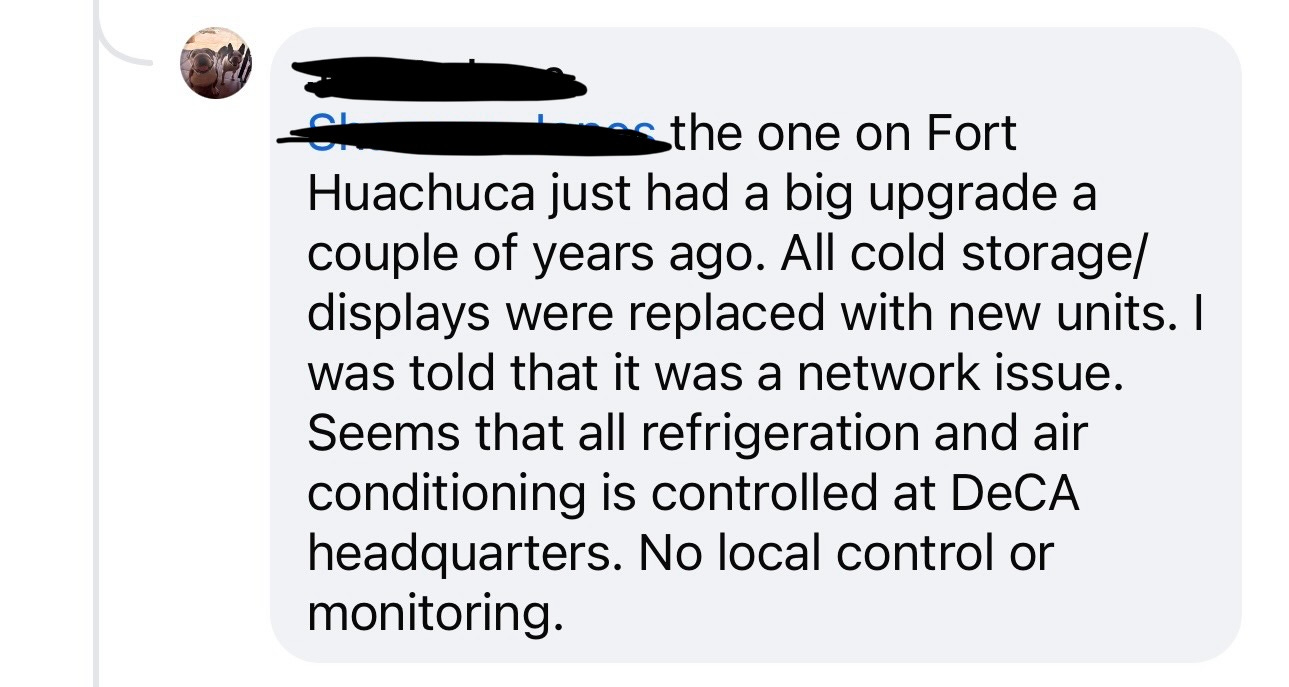
In the comments, one unverified user provided a critical lead:
"I was told that it was a network issue."
This user claimed that the refrigeration and HVAC systems were relatively new and managed remotely via DeCA. This led me to investigate the technical infrastructure of the agency.
Mapping the Logic
Enter the RMCS
The Defense Commissary Agency (DeCA) manages approximately 235 stores globally. They don't operate as independent entities; they are governed by a centralized agency within the DoD.
In March 2026, DeCA released procurement documents for: "Facilities Maintenance, Call Center Support, and Remote Monitoring Control System (RMCS) Management."
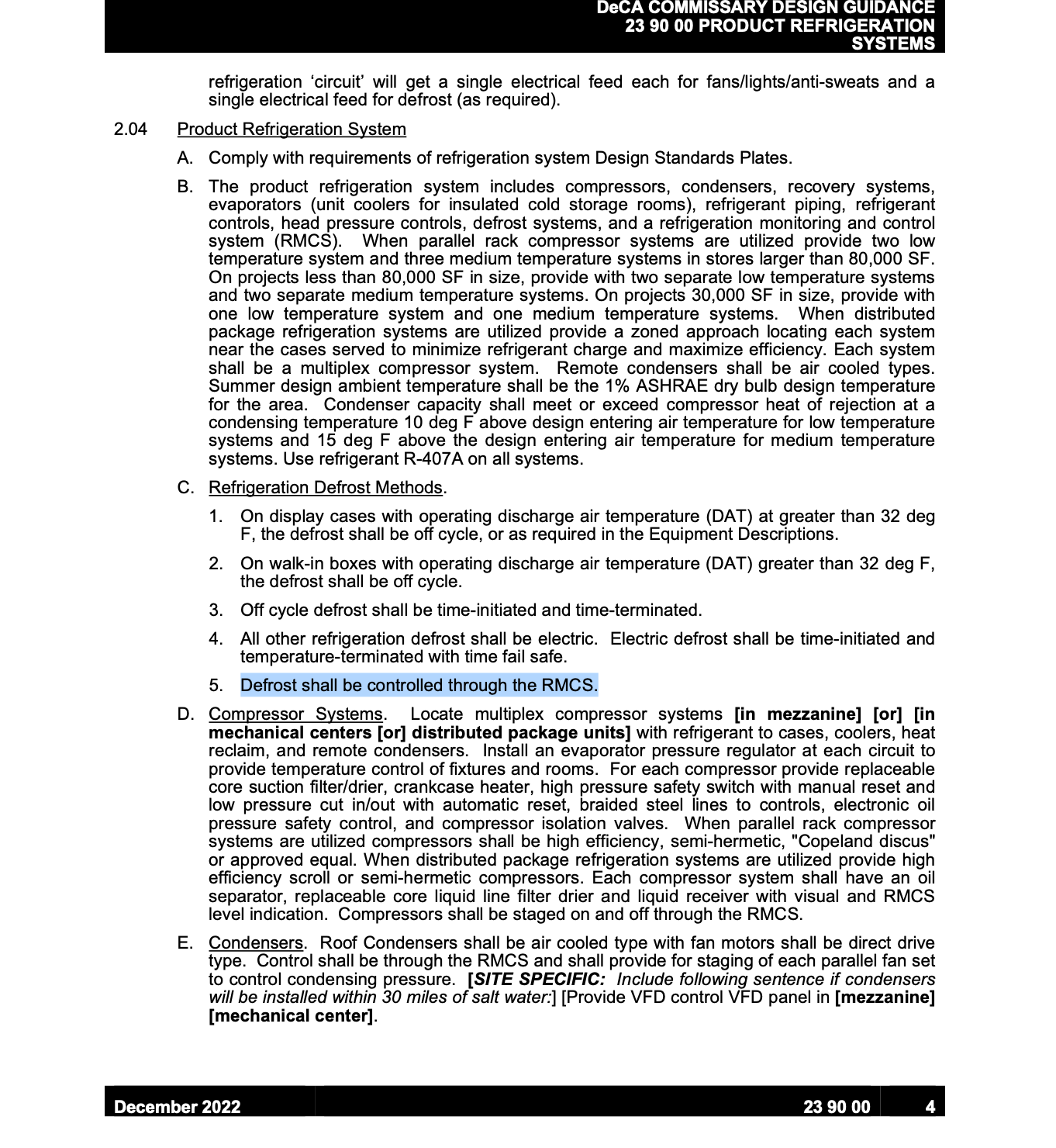
This contract covers roughly 182 locations—which includes every single base on my confirmed list. While digging through the engineering specifications, I found the definitive link:
"Defrost shall be controlled through the RMCS"
The Mathematical Improbability
If we assume the probability of a spontaneous, simultaneous hardware failure across independent sites is , the likelihood of this happening across 14 sites without a common trigger is: Given that is typically very low, the result is nearly zero, suggesting a single point of failure (the RMCS).
Final Thoughts
To be clear: I do not have a "smoking gun" log file proving a hack. However, we have:
- Multiple simultaneous failures.
- Official confirmation that power was stable.
- Evidence that "defrost" was the specific failure mode.
- Documentation proving "defrost" is controlled by a centralized remote network (RMCS).
Whether this was a catastrophic software bug or a deliberate attack, the implication is the same: our food supply chain's "cold chain" is vulnerable to a keyboard.
Visual Evidence from the Field



Supporting Documentation: