The Snow/Leavis ‘two cultures’ clash
The Intellectual Divide: The Snow/Leavis ‘Two Cultures’ Conflict
At the center of a historic academic feud lies the "two cultures" clash—a confrontation sparked by C.P. Snow’s provocative Rede Lecture and met with a scathing rebuttal from the critic F.R. Leavis.
The Ascent of C.P. Snow
When Charles Percy Snow stepped up to deliver the Rede Lecture at the University of Cambridge in 1959, he did so as a man who had successfully navigated the rigid strata of English class society. Born into a lower-middle-class family in a Leicester suburb, Snow’s trajectory was an improbable one.
Early Life and Social Climb
- Origins: Raised among laborers and artisans.
- Family Dynamics: A kind but distant father, three brothers, and an overbearing mother.
- The Destination: By age 55, he resided in a distinctive red-brick house on the prestigious Eaton Terrace in London.
By this stage of his life, Snow had established himself as a "serious man"—a figure of authority whose perspectives on science, politics, and literature were sought after and respected.
The Legacy of a Phrase
Of all the extensive theories Snow proposed throughout his career, only one has achieved lasting immortality: the concept of the two cultures.
While the term has become a staple of common parlance, its meaning has been diluted over the decades. Today, it is often used as a bland shorthand for the gap between the sciences and the humanities, suggesting two different, perhaps incompatible, methods of interpreting reality. However, this is a superficial interpretation. Snow's actual thesis was far more provocative than a simple academic distinction.
The Reaction
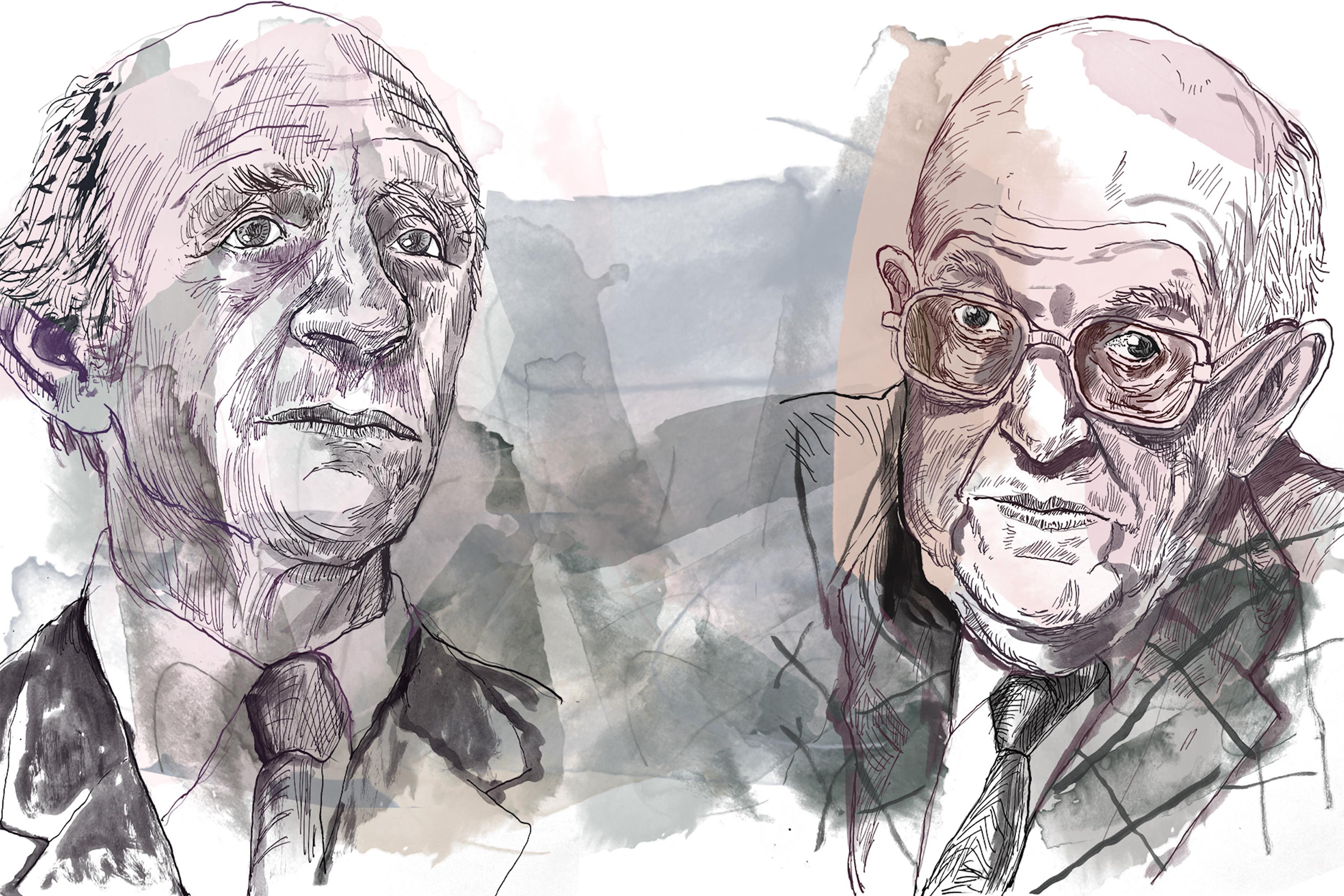
The lecture didn't just spark a conversation; it ignited a firestorm. While many appreciated his clarity, F.R. Leavis found the lecture so offensive and symptomatic of intellectual decay that he responded with a public attack three years later.
Leavis described Snow as a "preposterous and menacing absurdity."
This clash was not merely a disagreement over academic disciplines, but a collision of two fundamentally different temperaments toward existence.
The Persona of C.P. Snow
To the novelist Anthony Powell, Snow was a man of affability but lacked a sense of humor; he could appreciate a joke, but he never told one. His mind operated with a literalism and a capacity for labor that Powell likened to a computer.
Physical and Public Image
Snow's appearance—characterized by a large bald head, multiple chins, and thick glasses that magnified his eyes—made him a favorite target for satirists.
| Entity | Action/Perspective | Outcome |
|---|---|---|
| Private Eye | Polled readers on whether "C P Snurd" was the ugliest public figure. | Snow sued for libel and won. |
| The Queen | Granted Snow a knighthood. | Snow, being class-conscious, highly valued the title. |
The Literary "Sensible Man"
At the time of his lecture, Snow was immersed in his semi-autobiographical novel sequence, Strangers and Brothers. Through his protagonist, Lewis Eliot, Snow explored the "corridors of power"—the bureaucratic labyrinths of government and academia.
The essence of Snow's worldview is captured in a line from the eighth volume, The Affair:
"Sensible men usually reach sensible conclusions."
This commitment to "sensibility" and pragmatism defined his approach to the Rede Lecture on May 7, 1959.
The Rede Lecture: A Cultural Tempest
Snow originally considered calling his talk "The Rich and the Poor," but ultimately settled on "The Two Cultures and the Scientific Revolution." Although he had published similar ideas in the New Statesman years prior without much fanfare, the timing in 1959 was perfect for a cultural explosion.
The Dual Perspective
Snow occupied a unique intellectual space:
- The Scientist: Trained as a physicist in the 1930s.
- The Novelist: An acclaimed writer (though some, like George Steiner, hyperbolically compared him to Proust).
This duality allowed him to observe the "intellectual society" from both sides. He noticed a stark divide between the scientists he worked with and the "literary intellectuals" with whom he dined.
The Core Thesis
Snow's observation can be summarized as a lack of reciprocity in intellectual curiosity:
In mathematical terms, one might describe the intellectual overlap () as: While the general population experienced:
Lecture Objectives
- Highlight the divide between scientific and literary minds.
- Argue for the necessity of bridging this gap for societal progress.
- Challenge the "literary intellectuals" to engage with the scientific revolution.