Electronic skin for prosthetics to sense temperature and pressure
Advancing Prosthetics: WSU Develops Temperature and Pressure-Sensing Electronic Skin
Researchers at Washington State University (WSU) have engineered a sophisticated electronic skin (e-skin) designed for prosthetic limbs, capable of detecting both thermal and tactile stimuli. This breakthrough, led by Professor Kaiyan Qiu and graduate student Hongyi Shen from the School of Mechanical and Materials Engineering, aims to restore the sense of touch for amputees.
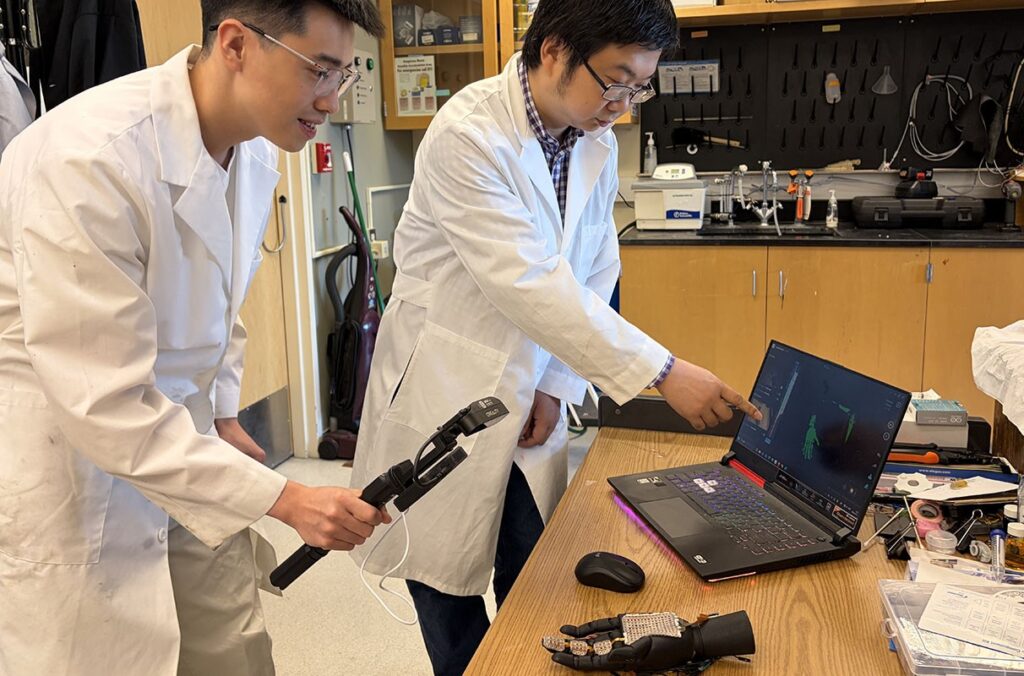
The Challenge of Current Tactile Technology
Existing e-skin technologies often suffer from significant drawbacks that hinder their clinical utility. The research team identified several critical failures in current commercial options:
Prohibitively high costsPoor sensing resolutionLack of anatomical fit (poor conformity to limbs)Performance degradation when customized to specific shapesLatency issues due to massive data loads from sensing arrays
"Often these devices are forced to compromise between comfort and mechanical reliability," noted Hongyi Shen, the study's first author.
Comparison: Commercial vs. WSU E-Skin
| Feature | Commercial Glove Sensors | WSU Electronic Skin |
|---|---|---|
| Resolution | Standard | finer scale |
| Fit | Generic/Small regions | Customizable/Freeform |
| Cost | Expensive | Relatively low-cost |
| Assembly | Adhesives/Fixed | Modular (Snap-together) |
The Innovation: A "Scan-Model-Print" Approach
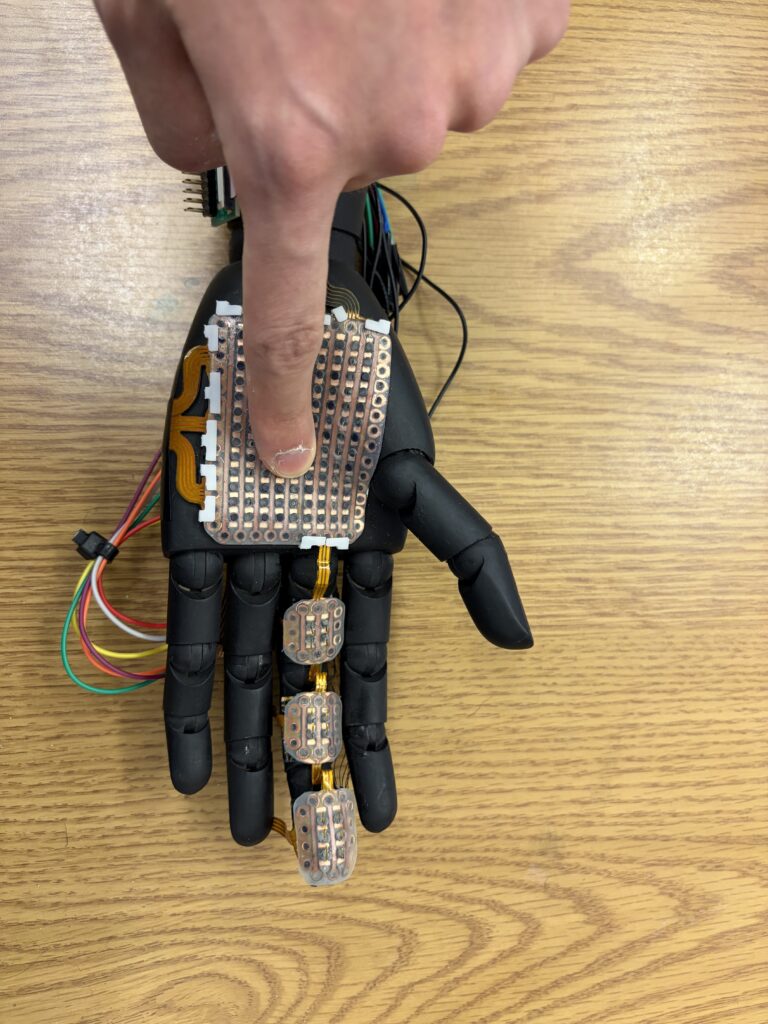
To overcome previous limitations, the team implemented a scan-model-print workflow. This allows the e-skin to maintain high-density sensing capabilities while conforming perfectly to the unique geometry of a patient's prosthetic.
Technical Specifications
The system utilizes thin-layered "sandwich" modules that integrate both pressure and temperature sensors. These modules are designed to be modular, snapping together similarly to Legos rather than relying on messy adhesives.
The precision of the sensing can be represented by the improvement in resolution:
Clinical Impact and Future Goals
The ultimate objective is to provide haptic stimulation, which is the process of replicating the physical sensation of touch. By identifying surface textures and material properties, amputees can perform daily tasks with much greater ease and confidence.
Project Roadmap
- Develop multimodal sensing modules
- Implement 3D-printed customizable fabrication
- Publish findings in Cell Reports Physical Science
- Submit provisional patent via WSU Office of Research Innovation and Entrepreneurship
- Develop actuators to convert signals into nerve stimulation
def process_tactile_data(sensor_input):
    # Conceptual logic for the future actuator
    if sensor_input == "pressure_detected":
        return "signal_to_nerve(intensity=high)"
    elif sensor_input == "temperature_detected":
        return "signal_to_nerve(type=thermal)"
Academic and Financial Support
This research was a collaborative effort supported by several funding sources:
- NSF Research Traineeship in Next-Generation Robotics (NRT-LEAD): Directed by Professor Prashanta Dutta and Richard Schneider Jr.
- Cougar Cage funds
- Professor Qiu's WSU startup
Hongyi Shen, an NRT-LEAD trainee with a passion for rehabilitation and 3D printing, believes this technology will significantly enhance the quality of life for prosthetic users.
Media Contact Information
- Kaiyan Qiu:
kaiyan.qiu@wsu.edu| (509) 335-3223 - Prashanta Dutta:
prashanta@wsu.edu| (509) 335-7989 - Shawn Vestal:
shawn.vestal@wsu.edu