VMware migration reduces Tottenham Hotspur's licensing fees by 85 percent
Massive Cost Cuts: Tottenham Hotspur Ditches VMware for HPE
The Premier League's Tottenham Hotspur has successfully overhauled its stadium's digital backbone, resulting in a staggering reduction in licensing expenditures. By migrating away from VMware and adopting Hewlett-Packard Enterprise (HPE) solutions, the club has slashed its licensing fees by more than 85%.
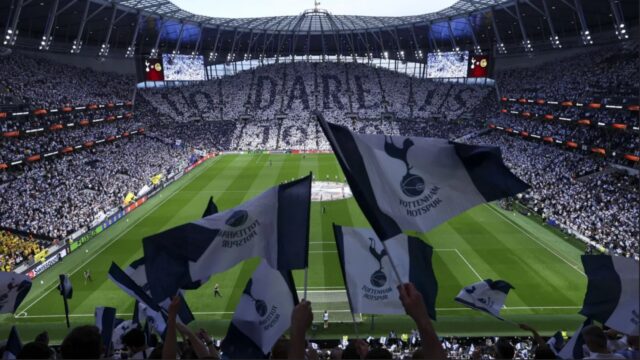
The Financial Catalyst
While the club has kept the specific details of its previous contracts and the exact products used under the Broadcom-owned VMware umbrella private, the financial incentive for the switch was undeniable.
The cost reduction can be expressed as:
Rob Pickering, the CTO of Tottenham Hotspur, cited the Broadcom acquisition of VMware as a primary driver for the change, noting that the resulting commercial shifts and client engagement strategies were problematic.
"For at least as long as my career in technology, hypervisor has been one of those very unsexy things that you bought from one person and you just sort of got on with it. And you know, with VMware, a 400-pound gorilla in that space, they took some decisions that I think run counter to both the system integrator side and the customer side." — Rob Pickering
Technical Architecture & Implementation
The migration is part of a comprehensive redesign of the stadium's data center and network. The entire ecosystem is now managed via HPE GreenLake, a hybrid cloud platform.
The Software Stack
The virtualization and management layers are now powered by:
Morpheus VM Essentials (VME): The core virtualization software.HPE OpsRamp: Used for managing hybrid and multi-cloud environments.
The Hardware Foundation
The physical data center consists of six aisles equipped with:
- Compute:
HPE ProLiant Compute Gen12servers. - Storage:
HPE Alletra Storage MP.
Infrastructure Workflow
Scaling for the Stadium
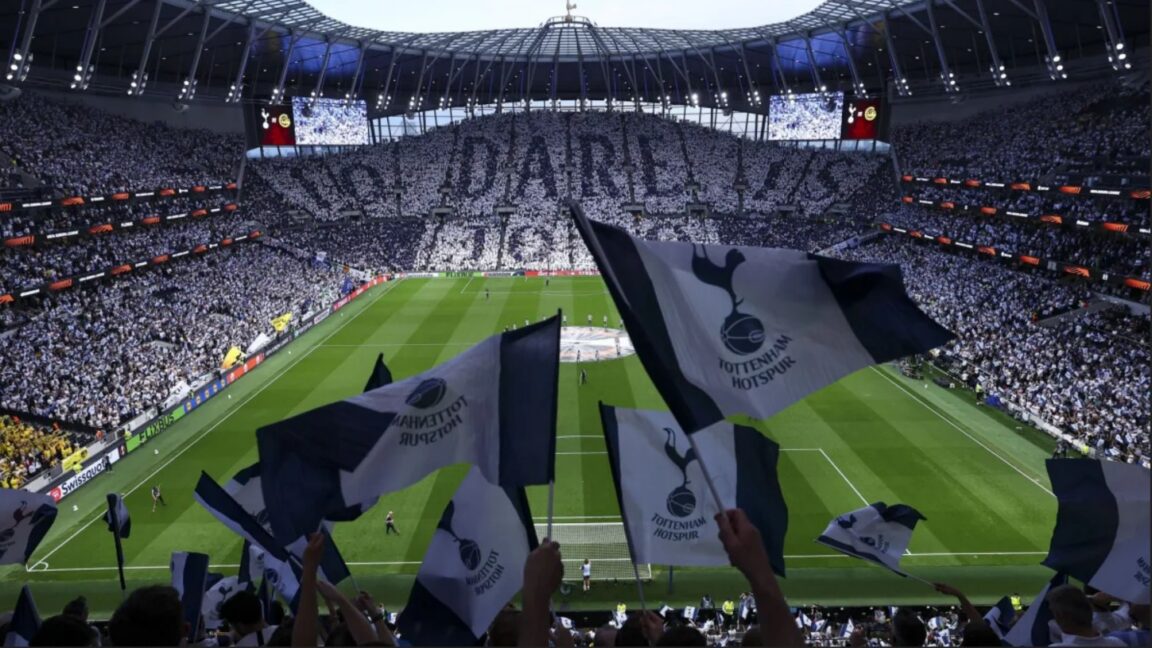
The sheer scale of the infrastructure required for a modern Premier League venue is immense. The current deployment supports a massive array of endpoints:
| Component | Quantity |
|---|---|
| Network Access Points | 20,000 |
| IPTV Screens | 1,849 |
| CCTV Screens | 519 |
Beyond the Bottom Line: The AI Strategy
For Pickering, the move wasn't merely about the money; it was about capability. He argued that Morpheus VME offers superior hardware integration compared to VMware. More importantly, the move integrates virtualization into a broader AI Operations (AIOps) strategy.
The Operational Challenge
As of 2025, Tottenham's technology department consists of only ~35 people. Managing a facility of this magnitude with a lean team requires extreme efficiency.
Migration Goals Checklist:
- Reduce licensing overhead by
- Modernize virtualization platforms
- Implement "Single Pane of Glass" management
- Deploy AI-driven proactive fault remediation
Pickering emphasized that without an AI-integrated operation stack, the value of virtualization is diminished. The goal is to utilize AI to identify and fix system faults automatically, reducing the need for manual human intervention.
System Logic Example
The team's approach to AIOps can be conceptualized as follows:
if system_fault_detected == True:
    if ai_remediation_available == True:
        execute_auto_fix()
        log_event("Fault resolved by AI without human input")
    else:
        alert_tech_team(priority="High")
About the Author: Scharon Harding is a Senior Technology Reporter at Ars Technica with over a decade of experience covering consumer gadgets and enterprise services.