I can't stop thinking about Papua New Guinea
Obsessed with Papua New Guinea: A Deep Dive
When most people hear "Papua New Guinea," their minds likely jump to a collection of fragmented, exotic trivia. You might hear things like:
- Genetic Oddities: A population with approximately
4.8%Denisovan DNA. - Linguistic Extremes: Home to nearly 1,000 distinct languages—roughly of the global total—making it the most linguistically diverse place on Earth.
- Demographic Mystery: A population count that fluctuates wildly in estimates between and .
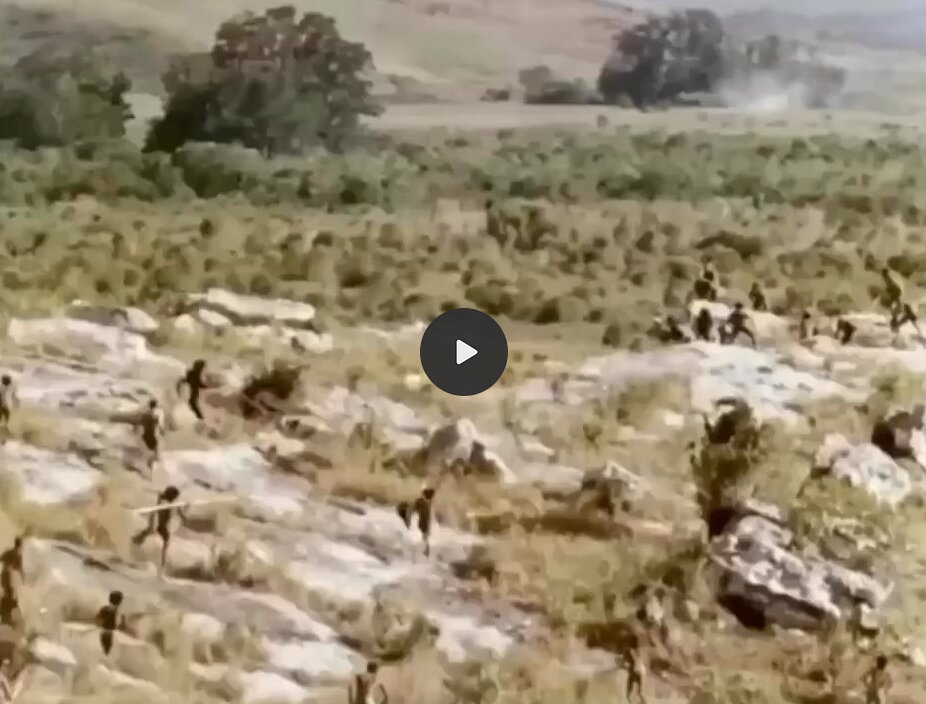
- Primitive Warfare: Reports of bow-and-arrow conflicts persisting as late as 1963.
- Urban Danger: A capital city regarded as one of the world's most perilous.
- Dark History: Tales of cannibalism (including the suspected fates of Michael Rockefeller and Joe Biden’s uncle).
- Rapid Evolution: The occurrence of kuru—a prion disease caused by eating deceased relatives' brains—which led to one of the fastest documented instances of human natural selection, as survivors developed a genetic mutation for protection.
- Cognitive Theory: The assertion by Jared Diamond that the local population may be genetically more intelligent than Europeans.
Despite these "fun facts," very few people possess a true conceptual grasp of what New Guinea actually is. I was in the same boat until I encountered a transformative book: First Contact: New Guinea’s Highlanders Encounter the Outside World.
The Great Discovery of 1930
The narrative centers on a staggering historical revelation: the 1930 discovery of roughly one million people living in the highlands—a population entirely unknown to the coastal tribes and the colonial powers.
Geopolitical Landscape
At the time, the island was split between two colonial masters:
Geography: A Tale of Two Worlds
The island is fundamentally divided by its terrain:
| Feature | Coastal Region | Highland Region |
|---|---|---|
| Environment | Swamps, rainforests, and rivers | Lush valleys and high peaks |
| Climate | Tropical and humid | Glaciers and snow (despite the equator) |
| Health Risks | High malaria prevalence | Virtually malaria-free |
| Elevation | Lowland | Peaks reaching nearly |
Because the highlands were thought to be empty shrouded in permanent cloud cover and guarded by malaria-ridden jungles, the world assumed they were uninhabitable.
The Encounter
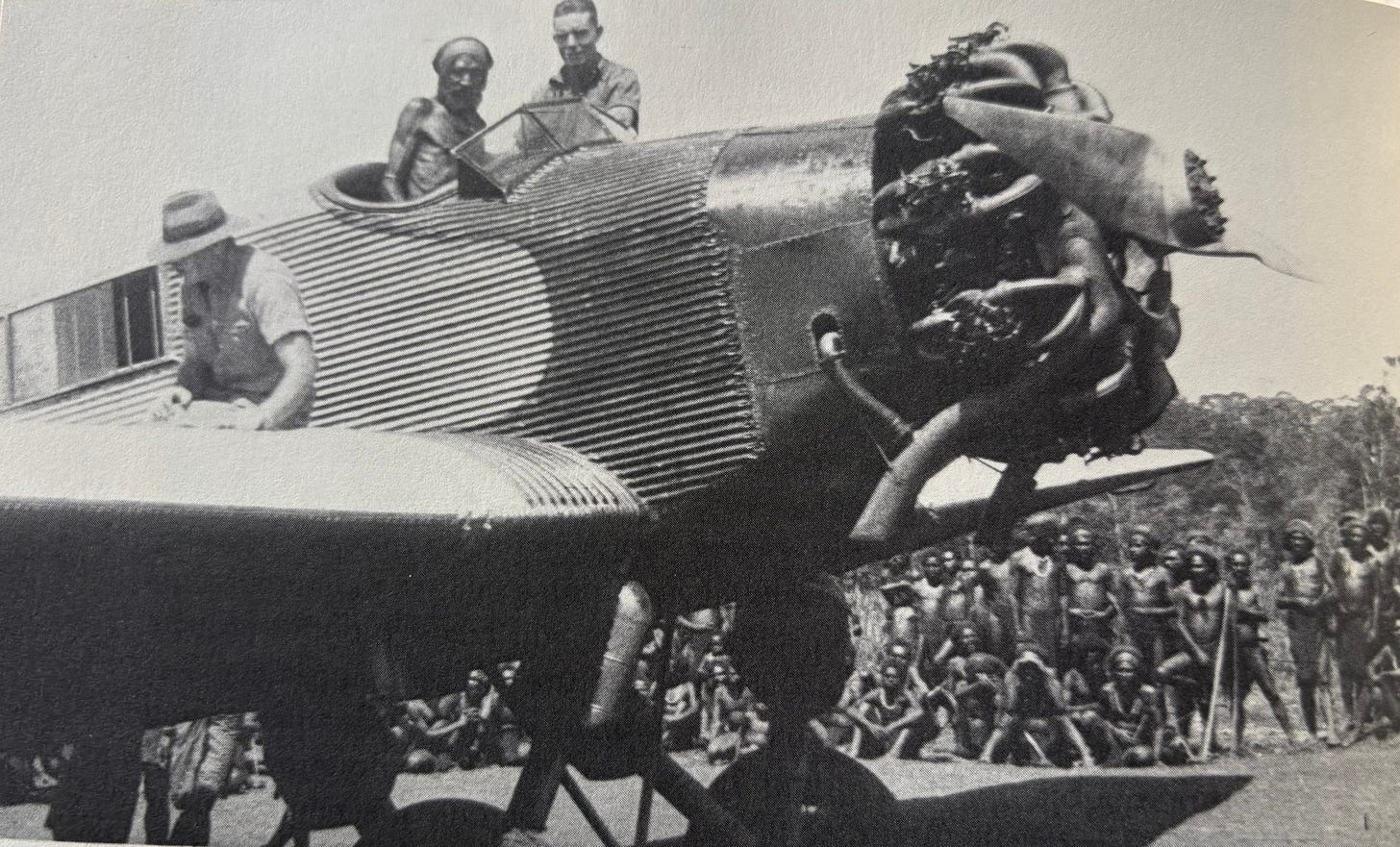
The status quo shifted when Australians began gold mining in 1926. An adventurous man named Mick Leahy pushed deeper inland than anyone before him. In 1930, he broke through the mountain barrier to find not a wasteland, but a thriving civilization of a million souls.
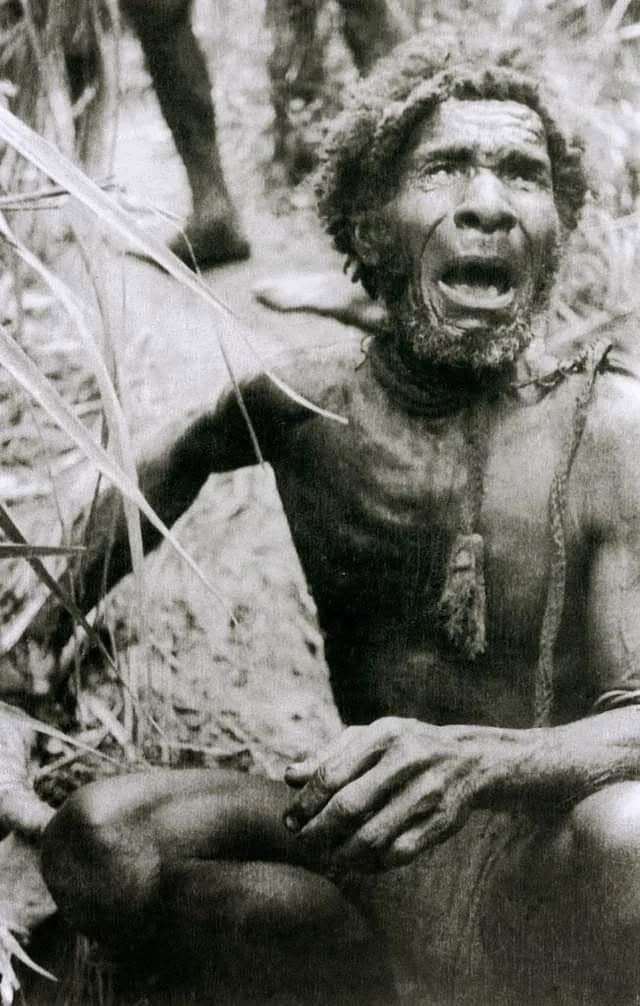
The book First Contact serves as a meticulous archive of this era, utilizing Leahy's extensive photography and film, supplemented by interviews from the 1970s with those who experienced the first contact.
Cultural Clashes and Curiosities
The interactions were surreal. The highlanders initially believed the white explorers were the ghosts of their ancestors. To verify this, they employed a very specific method:
They spied on the Australians while they were defecating and smelled the waste. Upon realizing the smell was the same as their own, they concluded these men were human.
To establish dominance and "wonder," the Australians performed various demonstrations:
- Shooting pigs to show off firearm power.
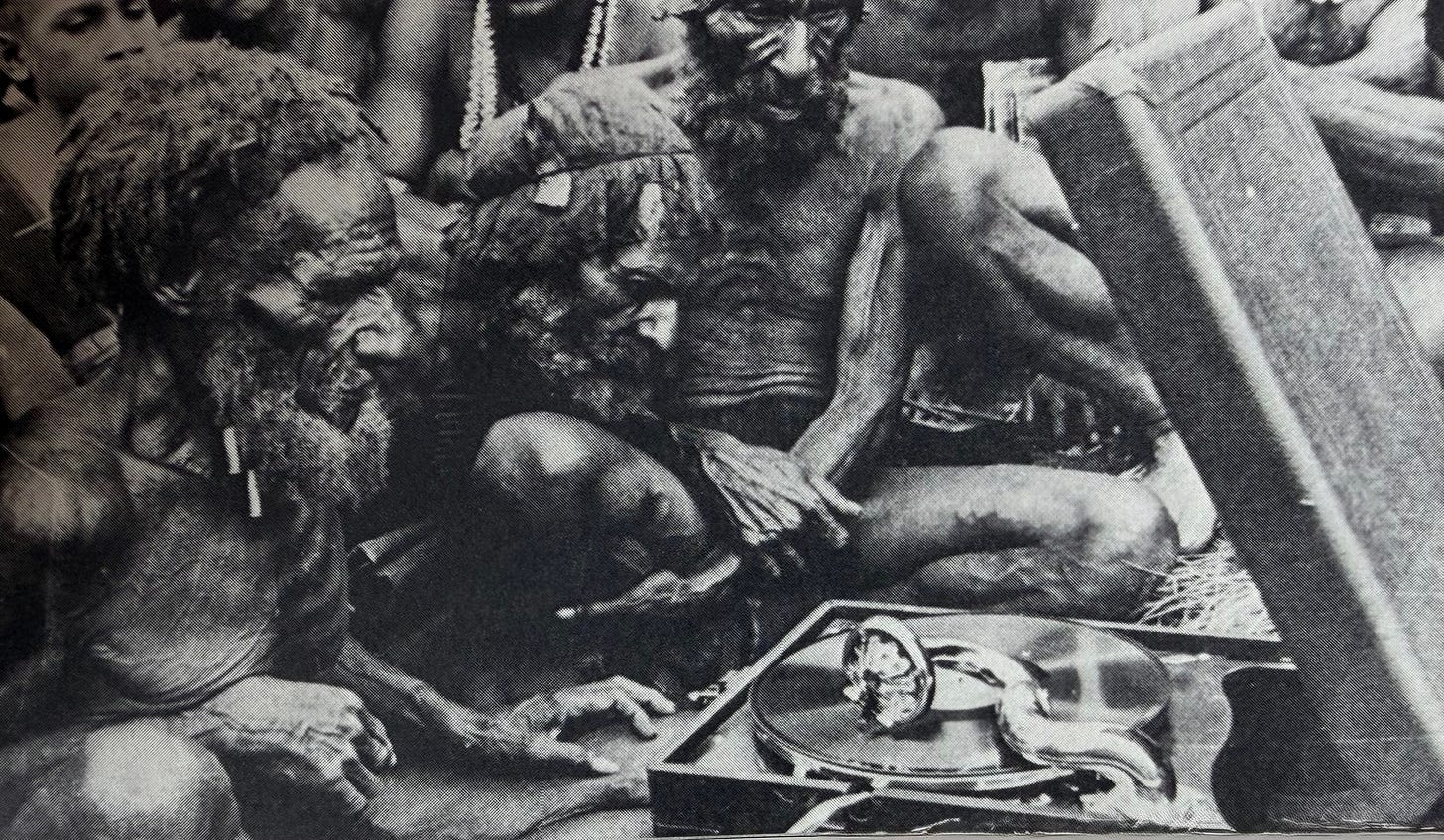
- Playing vinyl records for the first time.
- Introducing mirrors and child dolls.
- Landing airplanes in the valleys.
- Flying children to the coast to witness the ocean and "civilization."
Interestingly, the highlanders repurposed Australian trash—such as Kellogg's cereal wrappers—wearing them as high-status jewelry.
An Economic Lesson in Hyperinflation
The most poignant part of the book describes the collapse of the local economy. The highlanders used rare shells as a currency and a symbol of power.
The Australians recognized this and began importing shells by the planeload to pay for food and labor. The result was a textbook case of hyperinflation:
As the supply skyrocketed, the value plummeted. What began as a rare jewel that denoted leadership ended with children draped in hundreds of worthless shells.
# Simplified logic of the Shell Inflation
initial_shell_value = "High (Status Symbol)"
supply = "Limited"

while planes_arrive == True:
    supply += "Massive Quantities"
    shell_value -= "Value"
    if supply == "Ubiquitous":
        shell_value = "Worthless"
        break
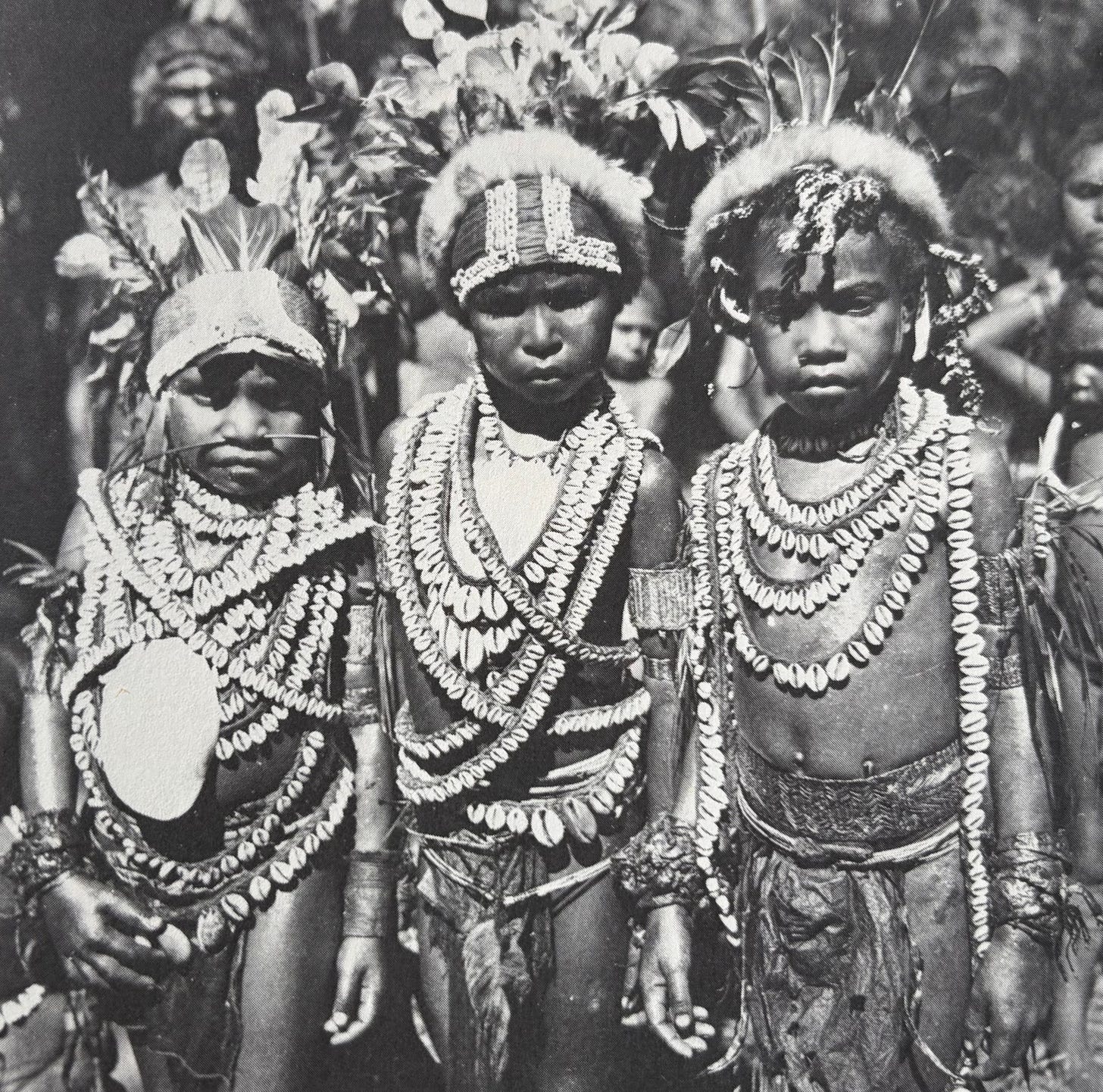
For those interested in seeing this history in motion, there is also a documentary titled First Contact that utilizes Leahy's original footage.