The Return of Sail Power: Cargo Ships Are Turning Back to the Wind
The Wind's Second Act: Modernizing Maritime Propulsion
For over a century, the shipping industry systematically abandoned the sail in favor of steam and diesel. However, a paradigm shift is occurring. Today, shipowners are once again looking to the horizon, installing high-tech wind systems on everything from tankers to massive bulk carriers.
"The goal is not to revert to the age of sail, but to create a hybrid model where wind supplements conventional engines to slash fuel consumption."
Wind propulsion was once a niche experiment. It is now evolving into a legitimate commercial sector. According to the International Windship Association, the current fleet of wind-equipped merchant vessels exceeds 100 ships, totaling over 5 million deadweight tons (DWT) of capacity.
🌪️ The Technology: How it Works
Modern wind propulsion isn't about canvas and rigging; it's about aerodynamics and automation.
The Magnus Effect
Many ships use Rotor Sails—massive vertical cylinders that spin. As wind hits the rotating cylinder, it creates a pressure difference that generates lift (thrust). This can be represented conceptually by the relationship:
Diverse Systems in Use
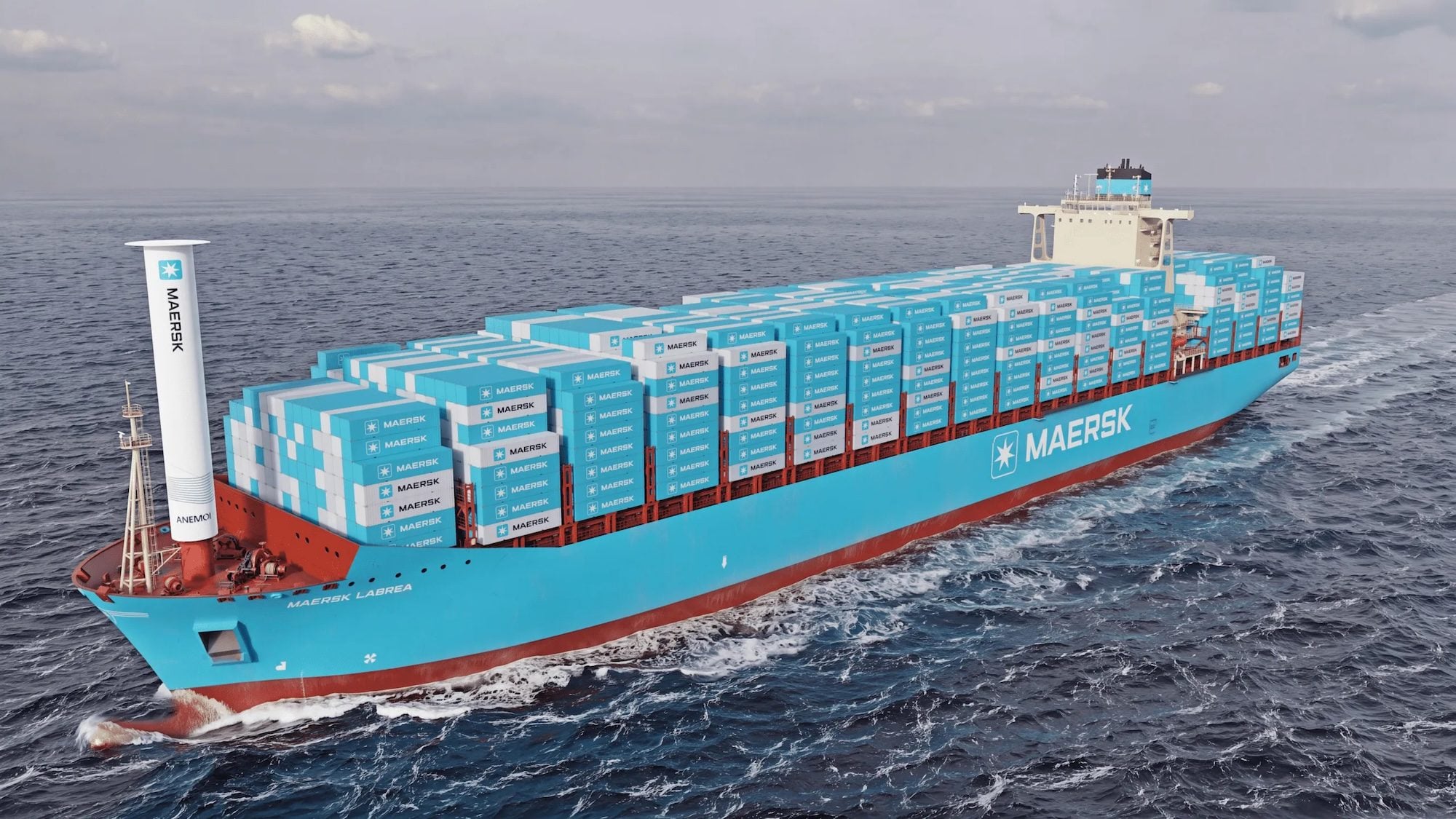
- Rotor Sails: Giant spinning cylinders (e.g., Anemoi, Norsepower).
- Rigid Wings: Fixed, airfoil-shaped sails (e.g., BAR Technologies'
WindWings). - Suction Sails: Systems like Bound4blue’s
eSAILthat use suction to enhance lift. - High-Tech Masts: Carbon-fiber structures for primary propulsion.
🚢 Fleet Implementation & Case Studies
The scale of these projects is growing rapidly. Below is a summary of key vessels and initiatives:
| Vessel/Company | Ship Type | Technology | Detail/Status |
|---|---|---|---|
| Maersk | 8,700-TEU Containership | 35m Rotor Sail | Testing begins 2027 (Atlantic) |
| Vale (Sohar Max) | 400,000-dwt VLOC | 5x 35m Rotor Sails | Largest wind-powered ship; ~6% fuel cut |
| Idemitsu Tanker | 2x VLCCs | Norsepower Rotors | Entering service in 2028 |
| Neoliner Origin | 136m Ro-Ro | 2x 76m Carbon Masts | 3,000 sail area; delivered 2025 |
| LNG Carrier Study | 174,000 LNG | BAR WindWings | Studying safety/regulatory hurdles |
| Atlantic Orchard | Juice Carrier | 4x 26m Suction Sails | Bound4blue eSAIL technology |
Notable Strategic Moves
- Airbus: Developing a new generation of ro-ro ships for aircraft components, blending wind, alternative fuels, and optimized routing.
- Vale: Planning to integrate rotor sails into future ethanol-powered very large ore carriers.
- Maersk Tankers: Implementing
eSAILacross several MR tankers.
⚙️ Integration and Automation
Modern sailing is a matter of software, not manual labor. Crews no longer trim sails by hand; instead, they rely on:
- Automated Controls: Systems adjust in real-time based on heading, vessel speed, and wind direction.
- Weather-Routing: Software optimizes courses to maximize wind capture without compromising schedules.
The WINTEGRATE Program
Launched in Norway, this initiative (including Kongsberg Maritime, DNV, Odfjell, Norsepower, and bound4blue) aims to move beyond "bolted-on" equipment.
# Conceptual logic for Wind-Integrated Power Management
if wind_speed > threshold and heading == optimal:
    reduce_engine_rpm(amount=calculated_lift)
    activate_battery_storage(mode="charging")
    print("Wind propulsion active: Fuel consumption reduced.")
else:
    maintain_engine_output(mode="standard")
📉 The Economic and Environmental Driver
The industry is facing a critical crossroads regarding decarbonization.
- Reduce Emissions: Urgent pressure to meet global climate targets.
- Fuel Costs: Low-carbon fuels are currently too expensive or scarce.
- Retrofitting: Wind tech can be added to existing ships, unlike some engine overhauls.
The Bottom Line: While fuel savings for retrofit projects typically fall within the single digits to low double digits, the ability to reduce reliance on expensive fuels makes wind a viable strategic asset.
Images and logos sourced from gCaptain, Anemoi Marine Technologies, and NEOLINE.
