New evidence for hidden chambers beyond Tutankhamun's tomb
Uncovering the Secrets of KV62: Potential Hidden Chambers Beyond Tutankhamun's Resting Place
Exclusive Report: New geophysical data provides "tantalizing" hints of undiscovered rooms adjacent to the tomb of Tutankhamun, potentially revealing the final resting place of Queen Nefertiti. However, experts caution that definitive proof remains elusive.
By Jo Marchant | September 17, 2026
The enigmatic burial site of Tutankhamun in the Valley of the Kings has long been a subject of intense archaeological scrutiny. The central question remains: Are there concealed chambers hidden behind the walls that might house the remains of the Pharaoh's predecessor, Nefertiti?
Recent findings suggest the answer may be yes. The fate of this discovery now rests with Egypt’s Supreme Council of Antiquities. If the council grants permission, the team intends to begin precision drilling in November to insert miniature, camera-equipped tractors into the suspected voids.

The Theoretical Framework
The current investigation builds upon a controversial theory proposed in 2015 by independent British Egyptologist Nicholas Reeves. He noted that KV62 (the designation for Tutankhamun's tomb) is remarkably small for a royal burial.
Reeves hypothesized that:
- The tomb was originally designed for a more prominent figure (likely Nefertiti).
- When the young Tutankhamun died unexpectedly, the site was hastily modified.
- The original, deeper sections were sealed off behind false walls, a common tactic used by ancient Egyptian architects.
Evidence for this included specific cracks and lines in the north wall of the burial chamber and modifications to the original wall art.
Technical Methodology and Findings
Lead researcher Mamdouh Eldamaty (Ain Shams University) and structural engineer George Ballard (GBG Group) utilized a multi-pronged geophysical approach to test these theories.
Survey Techniques Comparison
| Technique | Method | Key Finding |
|---|---|---|
| GPR | Ground-Penetrating Radar | Identified a wide corridor filled with rubble. |
| Microgravity | Measuring (gravitational variations) | Detected low-density, right-angled structures parallel to the north wall. |
| ERT | Electrical-Resistivity Tomography | Found anomalies in 2017 that were |
The "Anomaly 7" Discovery
Ballard highlighted a specific area of interest termed anomaly 7. This region consists of a low-density zone containing a smaller, high-density square. In mathematical terms, the density can be visualized as:
This suggests a room potentially filled with ancient artifacts, though Ballard admits this is at the absolute limit of current detection capabilities.
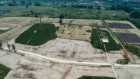
Proposed Site Layout
The researchers believe the layout of the hidden complex follows a specific orientation:
Analysis and Current Status
The team's findings, published on September 17 in the Occasional Papers of the Amarna Royal Tombs Project, suggest that these chambers have remained sealed since antiquity, as no other entrances have been detected.
While some previous surveys were inconclusive, Ballard argues that earlier teams failed because they were searching for large, empty voids rather than rubble-filled corridors. Christopher Gaffney of the University of Bradford has also been involved in reviewing the GPR data.
Next Steps for the Expedition
- Obtain formal approval from the Supreme Council of Antiquities.
- Finalize the deployment plan for miniature robotic tractors.
- Execute precision drilling (Target date: November).
- Deploy internal cameras to visually confirm the chambers.
If these rooms are confirmed to exist and contain royal remains, Eldamaty believes it would be one of the most significant archaeological breakthroughs of the modern era.
Additional Visual Evidence: