Singapore Is Paying People to Put Down Their Phones and Read Books
Incentivizing Literacy: Singapore’s Quest to Trade Screen Time for Pages
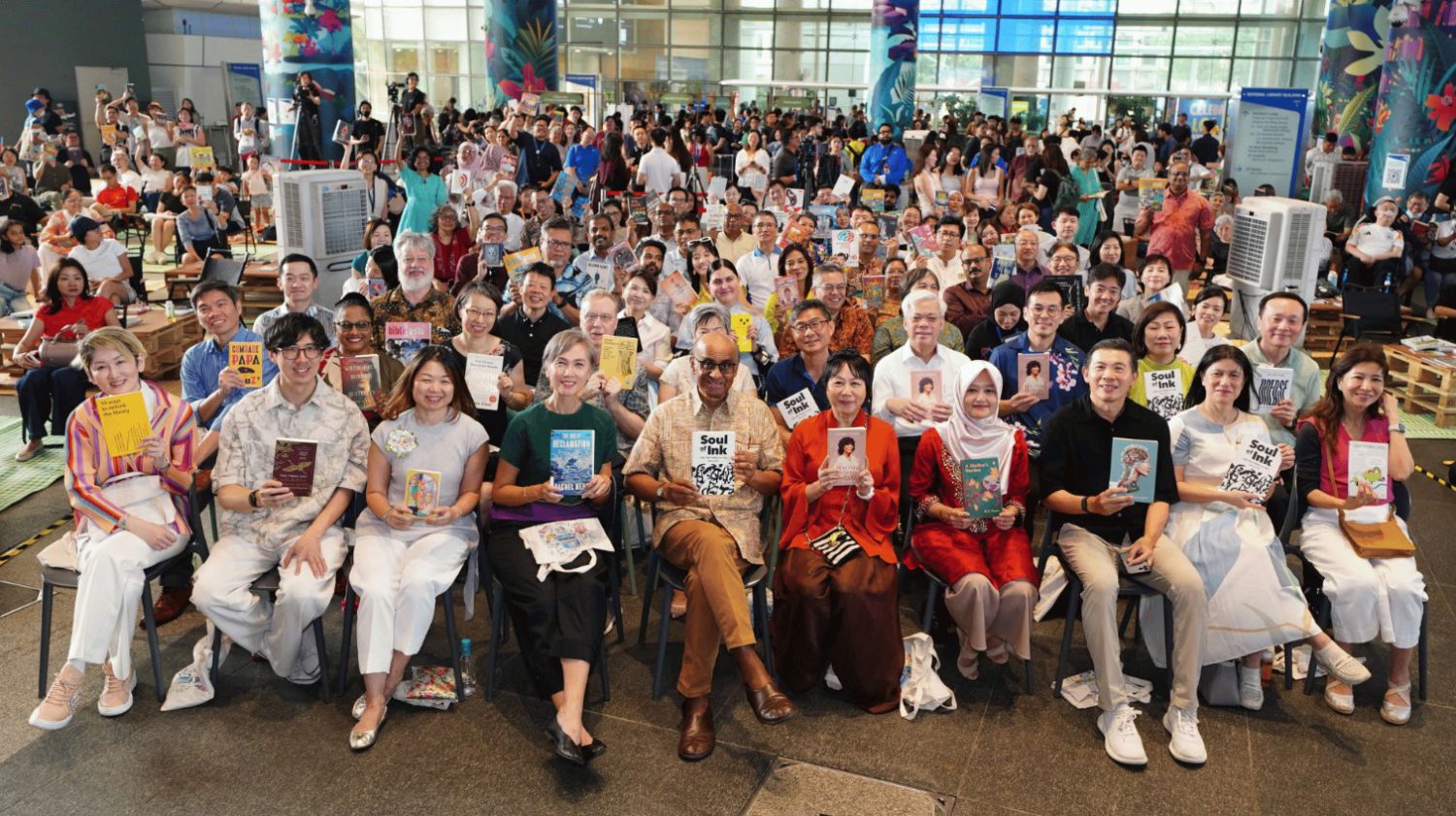
On September 6, 2026, Singapore's National Library Board (NLB) debuted ReadSG, an ambitious five-year pilot program. The goal is simple yet daunting: encourage a population dominated by smartphone usage to cultivate a consistent, daily reading habit by offering small financial incentives.
📌 Quick Summary
- The Reward: 15 minutes of reading =
20 virtual coins. - The Goal: Shift population-scale behavior away from screens.
- The Social Impact: A collective target of 7.5 million minutes unlocks a S$150,000 donation via Read for Good.
- The Global View: International governments are monitoring this as a case study in civic gamification.
⚙️ How the ReadSG Ecosystem Works
The program leverages a "coin mechanic" similar to those found in fitness trackers or loyalty apps. Users don't just read; they log their progress through a specific government gateway.
The Reward Pipeline
Financial Breakdown
The payouts are intentionally minimal. The NLB isn't trying to provide a salary, but rather a "behavioral nudge."
| Action | Reward | Cash Value (Approx.) |
|---|---|---|
| 15 Minutes of Reading | 20 Coins | S$0.02 |
| 50 Consecutive Days | 1,000 Coins | S$1.00 |
| Conversion Rate | 1,000 Coins | S$1.00 |
To put this in mathematical terms, the value of a single daily session is calculated as:
🤝 The Communal Component: Read for Good
Beyond individual gain, ReadSG incorporates a collective mission. This transforms a solitary act into a shared social achievement.
"Your 15 minutes of daily reading is no longer just a personal habit. It contributes to a shared number with a concrete social outcome attached."
The Collective Milestone:
- Reach 7.5 million cumulative reading minutes across all users.
- Result: Unlock a charitable contribution of up to S$150,000.
📚 A History of Literacy Efforts
ReadSG is not a standalone experiment; it is the latest evolution in a decade-long effort to boost literacy in Singapore.
- 2016: Launch of the National Reading Movement.
- Intervening Years: Various literacy initiatives (as noted by The Financial Coconut).
- 2026: Introduction of the gamified
ReadSGpilot.
The Straits Times reports that the NLB views this as a pilot phase, meaning the parameters may shift based on how the public responds.
The Great Debate: Does it Actually Work?
The initiative has sparked a divide among observers:
- The Skeptics: Argue that the payout is
too low to motivateinsignificant for anyone who doesn't already enjoy reading. - The Optimists: Point to behavioral economics, suggesting that low-friction, trivial rewards are often enough to trigger the formation of a new habit.
🌍 Global Implications & Civic Design
The world is watching Singapore. In an era where notification feeds are designed to hijack attention, libraries and educators are desperate for tools that can compete.
{
  "experiment": "ReadSG",
  "variable": "Micropayments",
  "target_behavior": "Reduced screen time",
  "scale": "Population-level",
  "duration": "5 years"
}
If the data shows a significant shift in habits, ReadSG could become the blueprint for other cities attempting to combat digital addiction. It highlights a poignant reality of 2026: governments now feel the need to make reading competitive with the infinite scroll.
Ultimately, the success of this experiment depends on a simple action: Will people open a book tomorrow and remember to log it?
Related Content:
- Chipotle's use of Palantir for food safety.
- University job offer rescinded over phone wiping.
- The story of a Syrian man hiding banned books.
