Loss of cell identity drives human aging: Two new papers
The Erosion of Cellular Identity: A New Paradigm for Human Aging
Based on the analysis by Eric Topol
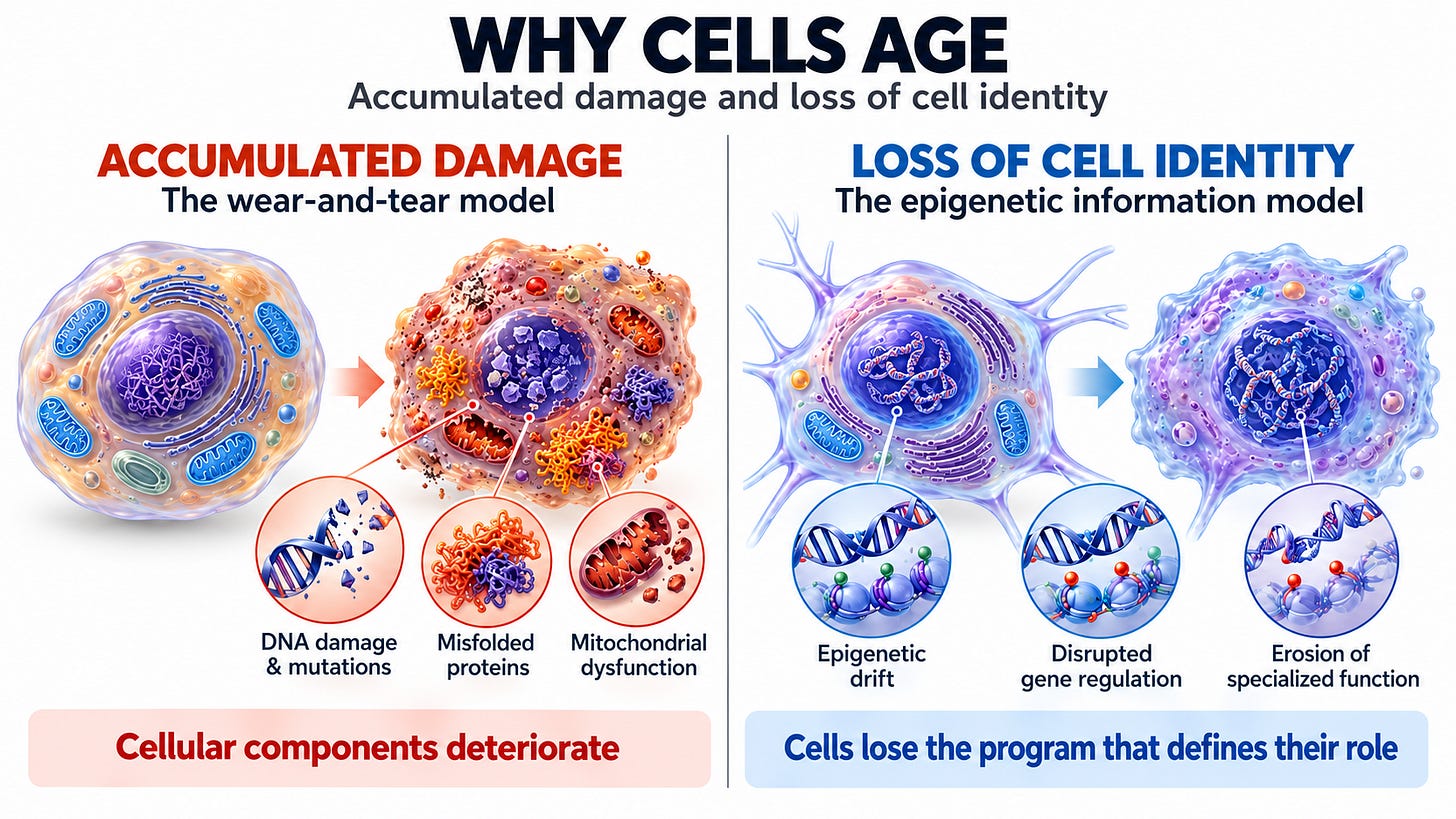
Recent breakthroughs in longevity science—specifically a study in Nature by Vadim Gladyshev (Harvard) and another in Cell by Juan Carlos Izpisua Belmonte (Altos Labs)—have introduced a transformative model for understanding why we age and how we might potentially reverse the clock.
Shifting the Aging Narrative
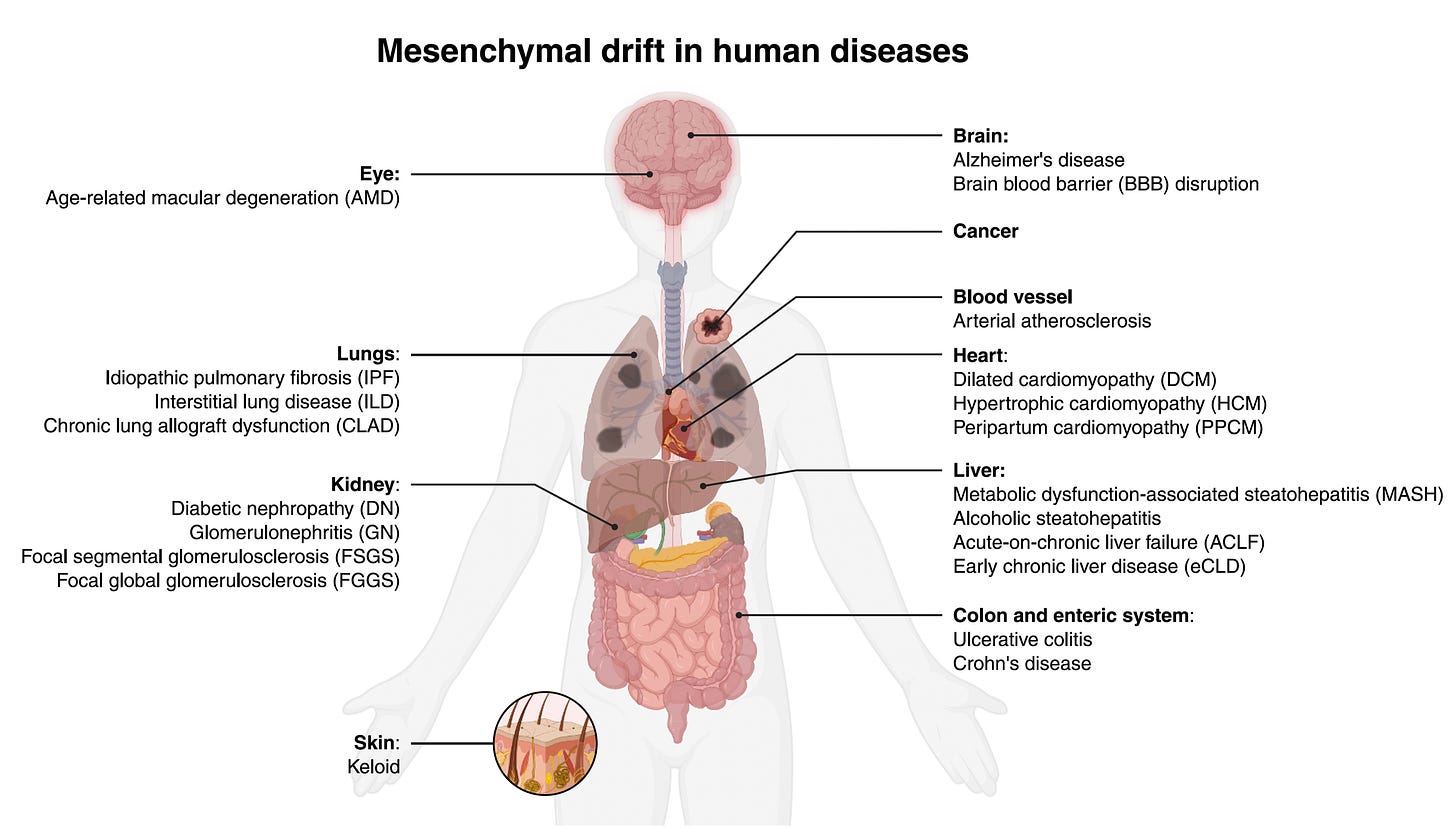
For decades, the prevailing wisdom was that aging was simply a matter of "wear and tear"—much like a car rusting over time due to accumulated environmental and metabolic damage. While that damage still occurs, we now have a complementary theory: the loss of cell identity.
Comparing Models of Cellular Decay
| Feature | The "Wear and Tear" Model | The "Loss of Identity" Model |
|---|---|---|
| Primary Driver | Accumulated molecular damage | Epigenetic instability |
| Analogy | A rusting engine | A fading blueprint |
| Mechanism | Oxidative stress, protein aggregates | Decanalization of the epigenetic landscape |
| Outcome | Organ failure due to "broken parts" | Organ failure due to "confused cells" |
Note: It remains unclear whether these two models operate independently or if one triggers the other.
The Architecture of Cellular Identity
During embryonic development, cells undergo a process of specialization. While nearly every cell shares the same DNA sequence, their function is determined by their epigenetic structure. This 3D arrangement in the nucleus—comprising histones, nucleosomes, chromatin, and methylation side chains—acts as the cell's "mission control."
The Three-Tier Regulatory Grammar
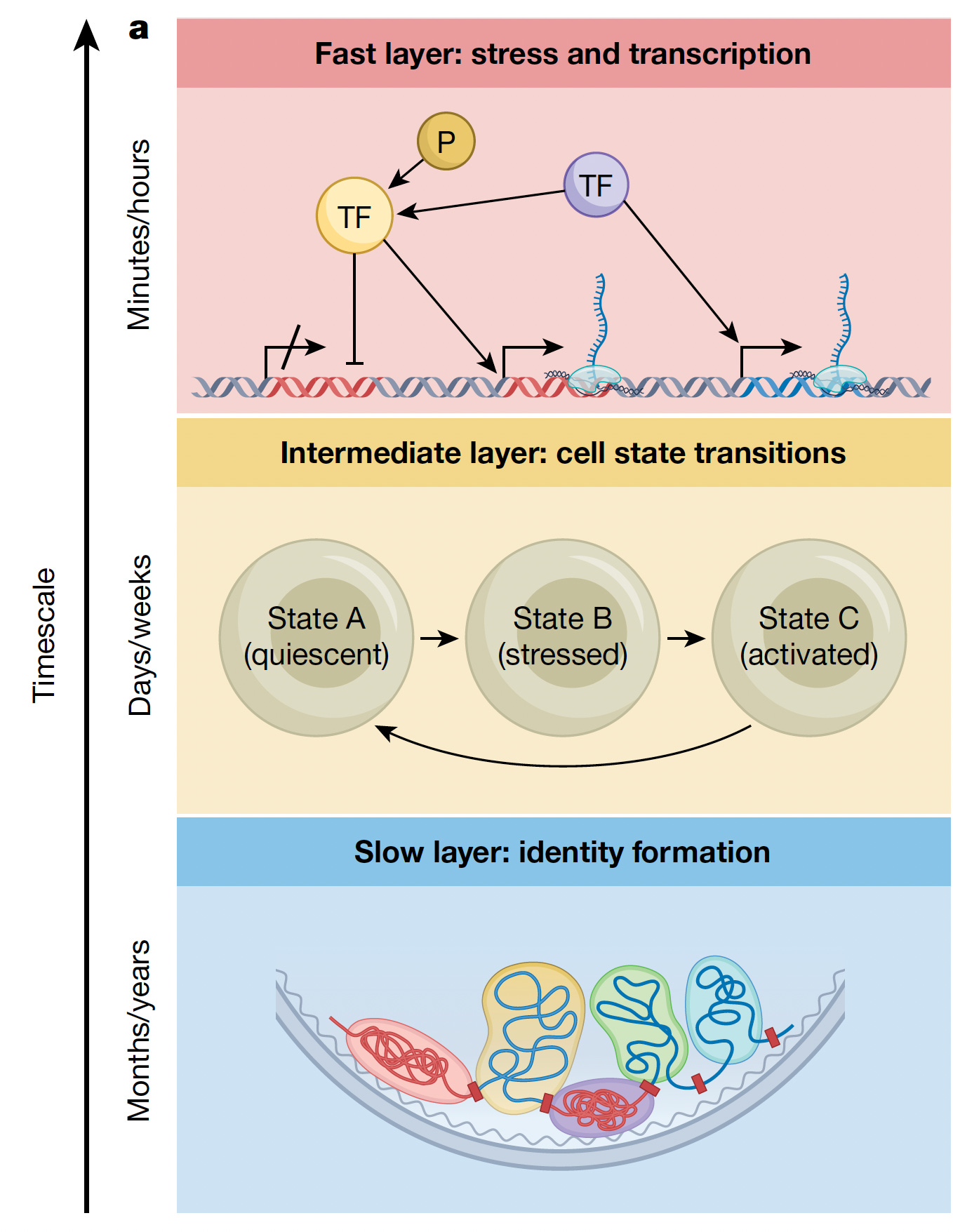
To maintain this identity, the cell employs a hierarchical system of regulation:
- The Fast Layer: Responds to acute stress within minutes or hours. It relies on the rapid production of transcription factors, such as
AP-1. - The Intermediate Layer: Operates over days or weeks. This layer manages state transitions, such as shifting a cell into a "healing mode" before returning it to its basal state.
- The Slow Layer: The "hard boundary." This layer uses chromatin architecture to lock in and insulate the cell's identity for the long term.
Waddington’s Landscape and "Decanalization"
To visualize this, scientists use Waddington’s epigenetic landscape. Imagine a ball (a cell) rolling down a hill into a deep valley.
- Canalization: The steep slopes and deep basins of the valley represent a robust, stable cell identity. The cell is "staying in its lane."
- Decanalization: As we age, these valleys flatten and the basins become shallow. The epigenetic constraints weaken, and the cell becomes unstable.
The Role of PRC2 and the "Selection Shadow"
The Polycomb repressive complex 2 (PRC2) acts as the molecular sculptor, carving the deep grooves of the Waddington landscape to maintain cellular boundaries.
However, because humans generally live past their reproductive peak, there is no evolutionary pressure to maintain these grooves in old age—a concept known as the selection shadow. Mathematically, we can think of the stability of cell identity () as a function of time () and the efficiency of PRC2 ():
As declines or is inhibited, drops, leading to architectural collapse.
Mesenchymal Drift: The Path to Disease
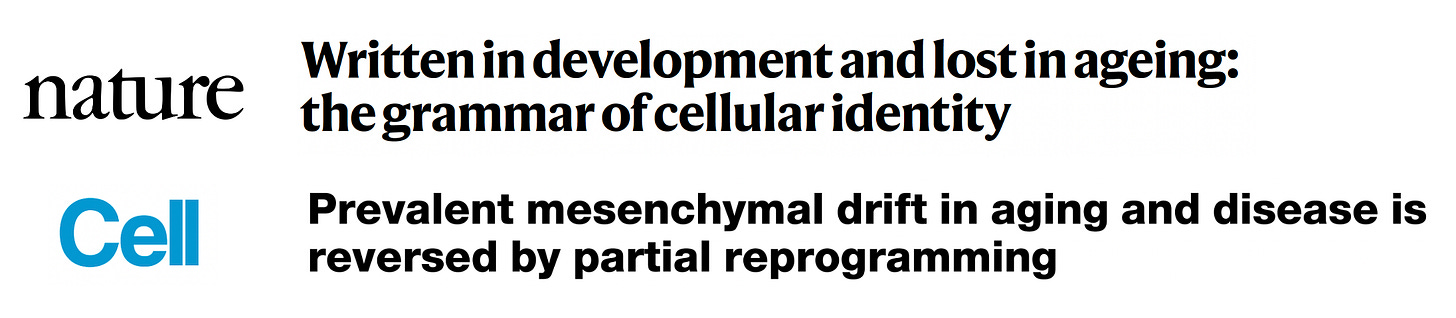
When a specialized cell (like a heart or liver cell) loses its identity, it often undergoes mesenchymal drift. This means the cell begins to resemble a fibroblast.
Instead of performing its specialized organ function, the cell starts producing extracellular matrix—essentially turning the tissue into "mushy putty" or fibrous scar tissue. This phenomenon has been observed across 46 different tissue types.
Clinical Implications
This drift is a cornerstone of various age-related pathologies:
- Cardiovascular: Atherosclerosis
- Ocular: Age-related macular degeneration
- Neurological: Alzheimer’s disease
Future Interventions: Freezing the Clock
The discovery that epigenetic clocks (which accurately predict lifespan across 348 mammalian species) are actually measuring the erosion of PRC2-low-methylated regions opens the door for targeted therapy.
If we can understand the positive feedback loop where activated fibroblasts trigger further scarring, we can develop strategies to intervene.
The Roadmap for Anti-Aging Research
- Freeze the Drift: Develop molecules to prevent the erosion of the "slow layer."
- Preserve the Landscape: Enhance PRC2 activity to maintain deep epigenetic basins.
- Identity Restoration: Explore the possibility of "re-carving" the Waddington landscape to return cells to a youthful state.
def cellular_state(age, inflammation_level):
    if inflammation_level > threshold:
        return "Mesenchymal Drift (Fibrosis)"
    elif age < reproductive_peak:
        return "Stable Identity (Canalized)"
    else:
        return "Epigenetic Instability (Decanalization)"