The future of independence is interdependence
The Future of Independence is Interdependence
By Angie Dixon | August 31, 2026
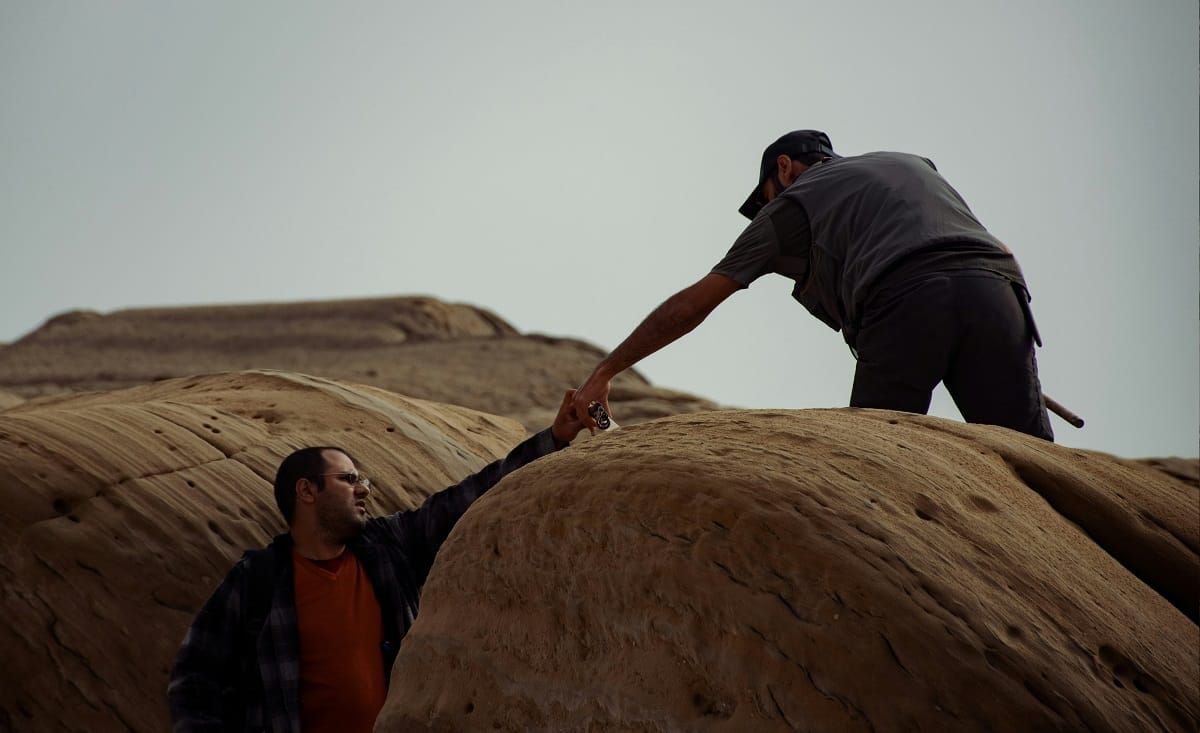
For the vast majority of my existence, my world is contained within a single room. This space is the hub where my life happens, and it is fueled by a constant stream of external support: medications, groceries, and meals all arrive at my door.
To maintain my life, I rely on a complex ecosystem of:
- Mobility aids and adaptive hardware.
- Remote healthcare and digital appointments.
- Delivery logistics.
- An almost absurd quantity of
charging_cables.
The Architecture of Support
My environment isn't accidental; it has been meticulously engineered to accommodate the specific capabilities and limitations of my body. If you were to walk in, you would see:
- Furniture: An adjustable bed and a stability pole.
- Accessibility: A trapeze bar and shelves positioned within reach.
- Tools: Rolling carts, grabbers, and wall-mounted devices.
- Customizations: A small keyboard equipped with a specialized grip to prevent it from slipping.
This room is the result of a long journey involving trial and error, frustration, creative invention, and the unwavering support of loved ones.
"It would be easy to look at this arrangement and see dependence."
However, from this very room, I am an active participant in the world. I manage complex projects, edit essays, attend graduate school courses, and maintain my social circle. The technology and assistance I use do not erase my independence; they enable it.
The Myth of the Self-Sufficient Person
Our society clings to a distorted definition of independence: the idea that being "independent" means performing every single task in isolation, without any visible help.
The Ideal Adult The Mythical Self-Sufficient Person
We imagine this person as someone who:
- Earns their own income.
- Drives their own vehicle.
- Maintains a home solo.
- Solves every problem without outside aid.
But this is a fantasy. This "independent" person is actually deeply embedded in a web of interdependence:
| Resource | The Invisible Support System |
|---|---|
| Shelter | Built by contractors and architects. |
| Utilities | Electricity and water provided by municipal grids. |
| Nutrition | Food grown, processed, and shipped by strangers. |
| Transport | Roads constructed by the state; cars maintained by mechanics. |
| Health | Pharmacists, doctors, and software developers. |
The only real difference between their dependence and mine is the visibility of the support.
Socially Acceptable Dependence
Society is highly selective about which types of help are viewed as "failures."
- Normalized Dependence: A person driving to a store is seen as independent, despite relying on a global manufacturing network and fuel infrastructure.
- Stigmatized Dependence: A person who uses a delivery service because they cannot walk through a store is labeled "dependent."
This disparity is often a matter of class and privilege. A wealthy individual can outsource their cleaning, cooking, and scheduling—essentially buying a suite of assistants—and be hailed as a "success." Conversely, a disabled or impoverished person requiring the same help must often prove they have tried every other possible avenue first.
The distinction isn't about the presence of help; it's about whether that help is purchased, concealed, or transformed into a status symbol.

Assistance Loss of Agency
We frequently confuse independence (doing a task alone) with autonomy (having control over one's life).
We can express the relationship between autonomy and assistance using a simple conceptual formula:
In other words, the who and how of a task's completion does not dictate the why.
- I may need help moving an object, but I decide what to do with it.
- I may need a driver, but I choose the destination.
- I may use assistive tech to work, but the intellectual output is mine.
Performing every physical task alone is not the pinnacle of human evolution; often, it is simply the most inefficient way to live. For disabled people, insisting on total self-reliance can be a waste of precious energy, leading to increased pain or danger.
The Reality of Human Nature
Humans have always functioned as a collective. We hunted, farmed, and raised children together. The idea of the "lone wolf" is a modern fiction.
A Future That Demands Interdependence
We are moving toward a world where the fantasy of self-sufficiency is no longer sustainable.
- Demographics: An increase in chronic illness and the natural process of aging.
- Social Shifts: Smaller families and wider geographic dispersion mean fewer unpaid family caregivers.
- Systemic Failure: Our world is still designed for an "imaginary person"—someone who is perpetually healthy, mobile, and cognitively consistent.

If we continue to treat the need for help as an "individual crisis," we will exhaust our caregivers and abandon those in need. We must stop pretending that independence is the absence of help and realize that true independence is found in the strength of our interdependence.