AI Is Throwing a Roadside Picnic
AI Is Throwing a Roadside Picnic
By Mete Polat
October 10, 2026

Hello! I'm Mete—a builder, inventor, and product designer with over a decade of experience at giants like Peloton and Netflix. Think of me as your AI sommelier: I'm here to guide you through the complex vintages of the AI industry, its products, and the evolving methodologies of work.
If you want to move past the surface-level hype and truly grasp how to utilize AI, you've come to the right place.
[!WARNING] Spoiler Alert: If you have been planning to read the novel Roadside Picnic, be advised that this article contains plot details.
The Literary Lens: Roadside Picnic
I recently read a piece of Soviet philosophical sci-fi by Arkady and Boris Strugatsky titled Roadside Picnic.
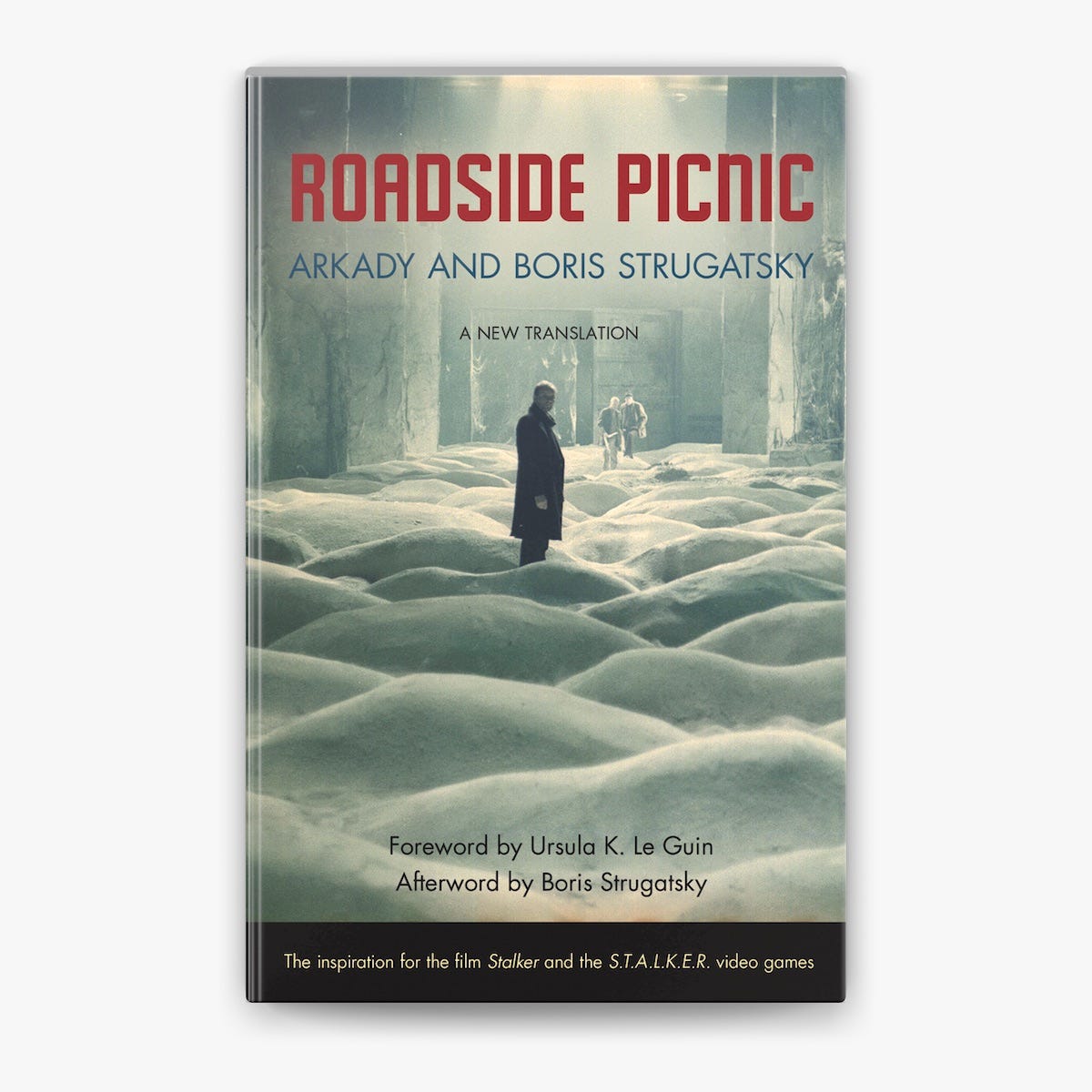
In the story, extraterrestrials visit Earth, leaving behind "zones" filled with artifacts. These objects are completely incomprehensible to human logic, yet they spark a dangerous black market and a specialized subculture of "stalkers" who risk their lives to retrieve them. For instance, they discover «этак» (or "so-so"), which are essentially eternal batteries used to power homes and vehicles.
One character posits a humbling theory: the "Visitation" wasn't a planned encounter, but merely a roadside picnic.
"A car drives off the country road into the meadow, a group of young people get out of the car carrying bottles, baskets of food, transistor radios, and cameras... And of course, the usual mess—apple cores, candy wrappers, charred remains of the campfire, cans, bottles, somebody’s handkerchief, somebody’s penknife, torn newspapers, coins, faded flowers picked in another meadow."
The aliens didn't come to teach us; they just left their trash behind. We are the ants crawling over the remnants of a party we weren't invited to.
The AI Parallel: Discovery vs. Understanding
I believe this thought experiment provides a vital framework for understanding how AI is currently transforming science, particularly in the realm of mathematics.
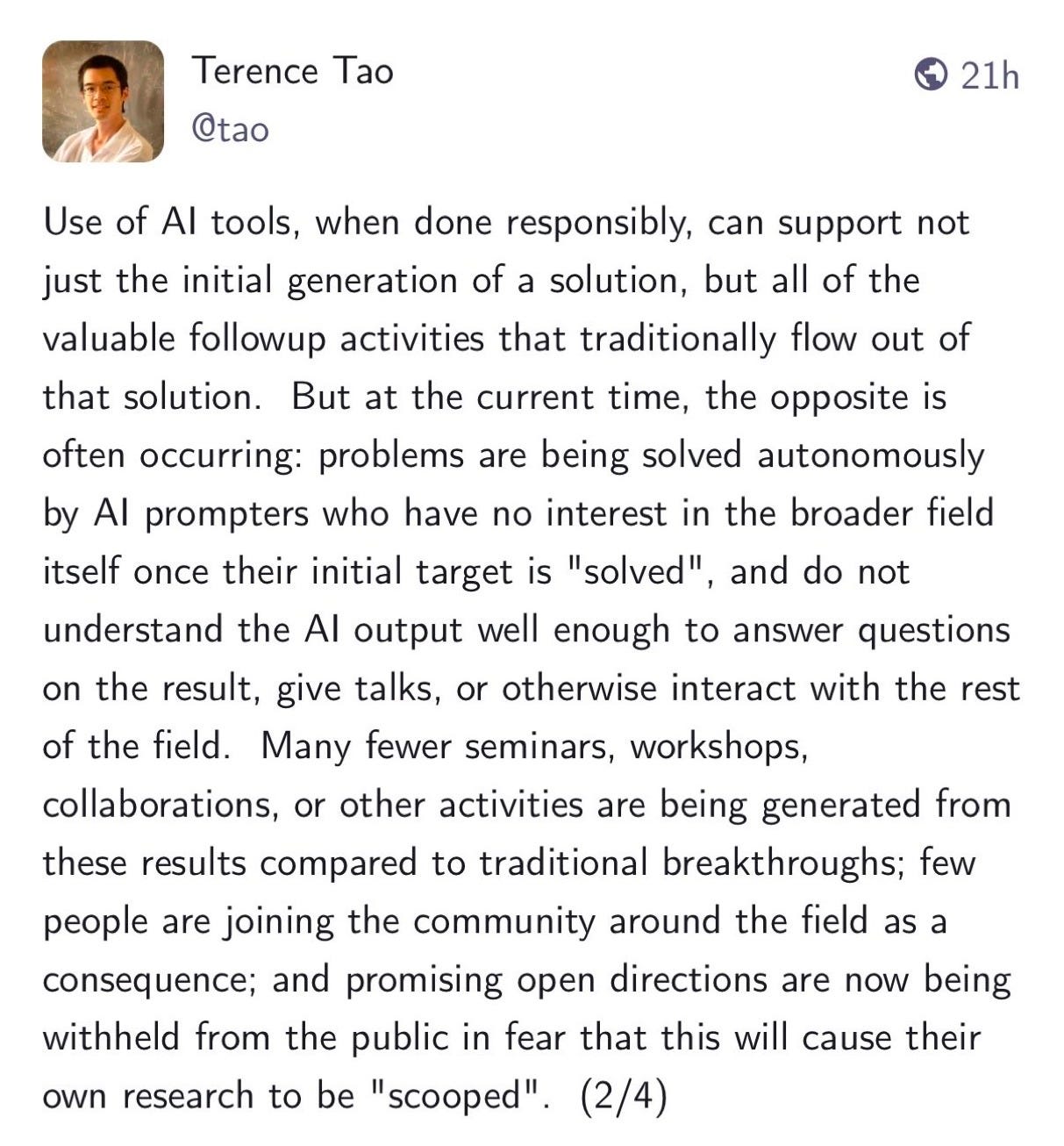
Currently, AI labs are solving Millennium Prize problems and releasing massive "dumps" of discoveries. These troves are so vast that the labs must provide separate guides just to help scientists navigate the data. We are seeing a fundamental shift in the scientific process:
| Traditional Science | AI-Driven Science |
|---|---|
| Incremental discovery Understanding Application | Discovery Application (Attempted) Understanding |
| Peer-reviewed, slow-burn integration | Rapid "discovery dumps" |
| Human-centric logic | Orthogonal, "black box" logic |
The Bottleneck of Comprehension
The speed of these revelations is far outstripping our capacity to process them. While people spent years asking, "When will AI actually find something useful?", the answer has arrived—but it has brought chaos with it.
I recently debated this with a stranger online, and it led to a profound realization: Answers are now arriving before the understanding.
As Sakeeb Rahman noted:
"The shape of things to come: proof will become cheap and understanding will become the bottleneck."
Mathematically, we can represent this divergence as:
The Risk of "Alien Artifacts"
If the gap between finding the answer and understanding why it is the answer continues to widen, AI outputs will become the modern equivalent of alien artifacts. They will exist as tools we can use, but whose inner workings remain a mystery.
This isn't just a theoretical concern. NYU math professor Tristan Buckmaster noted that some recent AI scientific releases essentially invalidated wiped out entire research programs overnight.
The Anti-Accelerationist Argument
This presents a compelling case against blind acceleration. If AI outpaces our ability to comprehend the significance of its findings, the collateral damage—the loss of human intellectual agency and the destruction of academic frameworks—might outweigh the raw scientific gain.
In Roadside Picnic, the tragedy is the realization of human irrelevance. The aliens didn't hate us; they simply didn't notice us.
Conclusion: A Choice for the Labs
Unlike an alien visitation, AI is a human creation. While the game theory of frontier AI development makes coordinated global action unlikely, the labs still have a choice in their engagement strategy.
The Goal for AI Labs:
- Stop "speed-running" scientists into obsolescence.
- Develop methods to augment human understanding.
- Ensure the "how" is discovered alongside the "what."
If we fail to bridge this gap, we risk becoming the insects in the meadow—watching in horror as our entire body of knowledge is treated as the leftovers of a cosmic picnic.

Further Reading: Check out the Santa Fe Institute series on the Roadside Picnic premise at aliencrashsite.org