Secret of Orange Cats Revealed After 60-Year Search
The Genetic Puzzle of Orange Cats: Solved After Six Decades
For those who share their homes with a ginger feline, it often feels like these pets are simply built different. While orange fur is one of the most striking visual markers in the feline world, it has remained one of the most elusive mysteries in the realm of cat genetics.
Unlike standard mammalian coat inheritance, orange fur doesn't play by the usual rules. For over 60 years, the specific genetic trigger remained a secret—until now.
The Breakthrough Discovery
Two separate research teams have finally pinpointed the cause: a missing chunk of DNA located in a non-protein-coding region of the genome.
"It's been a genetic mystery, a conundrum," remarked Stanford University geneticist Greg Barsh in 2024, discussing the initial preprint findings.
The Mechanics of the Mutation
Barsh's team discovered that skin cells responsible for producing orange fur exhibit a massive spike in RNA from a specific gene.
| Feature | Non-Orange Skin Cells | Orange Skin Cells |
|---|---|---|
| Target Gene | Arhgap36 | Arhgap36 |
| RNA Expression | Baseline | 13x Higher |
| DNA Sequence | Intact | 5 kb Deletion |
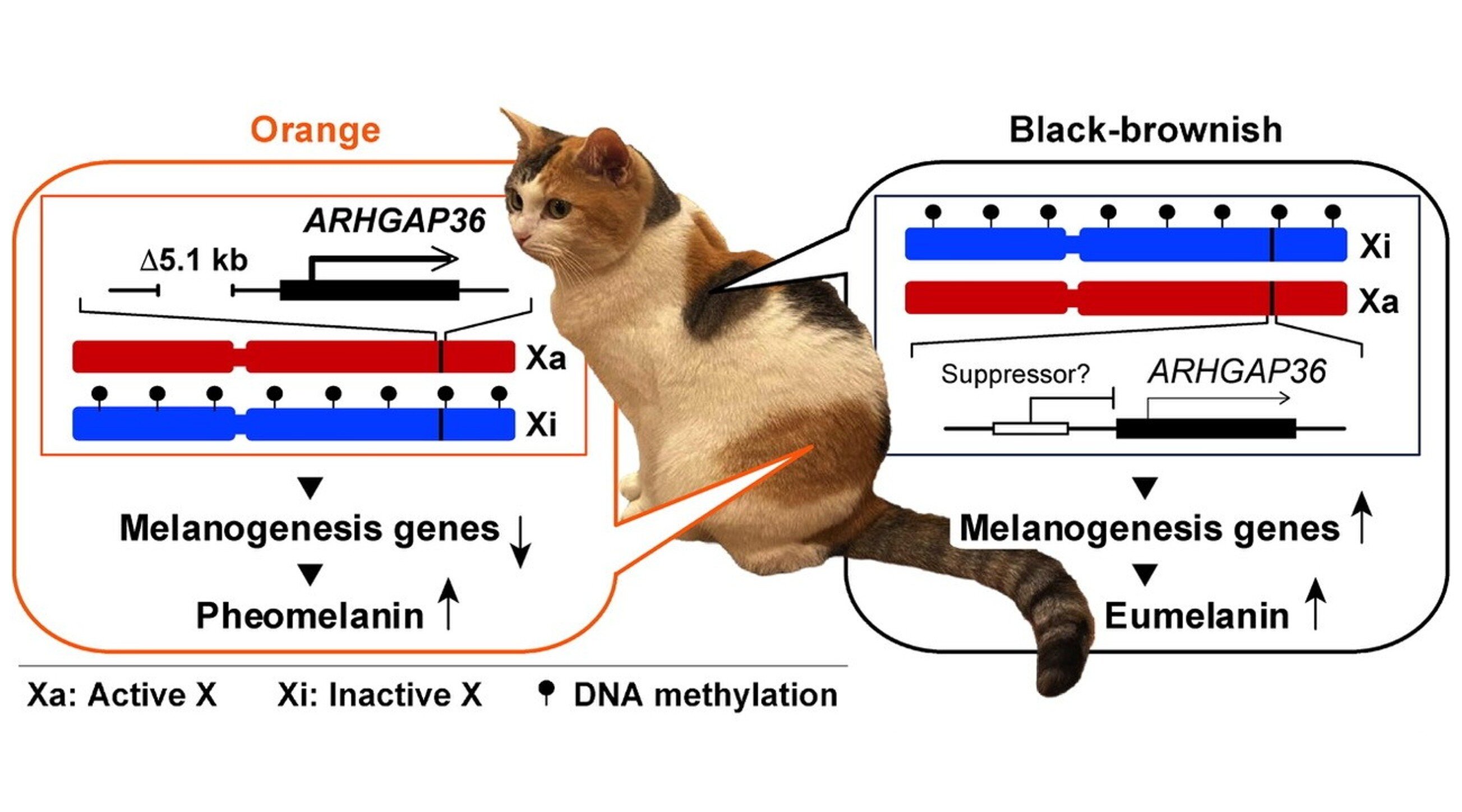
The researchers initially looked for mutations in the protein-coding section of the Arhgap36 gene. However, they found that the "glitch" was actually a 5 kilobase (kb) deletion in the sequence preceding the gene, which acts as a volume knob, cranking up the gene's expression.
Study Scope
The team verified this deletion across a database of 188 cats:
- 145 Orange cats (All possessed the deletion)
- 6 Calico/Tortoiseshell cats
- 37 Non-orange cats
The X-Factor: Why Gender Matters
The mutation is located on the X chromosome, which explains the distinct distribution of orange fur between males and females.
Inheritance Logic
Because males have only one X chromosome, they are typically either fully orange or not orange at all. Females, however, possess two X chromosomes. To prevent an overdose of genetic products, mammals utilize a process called X-inactivation, where one X chromosome is randomly "switched off" in each cell.
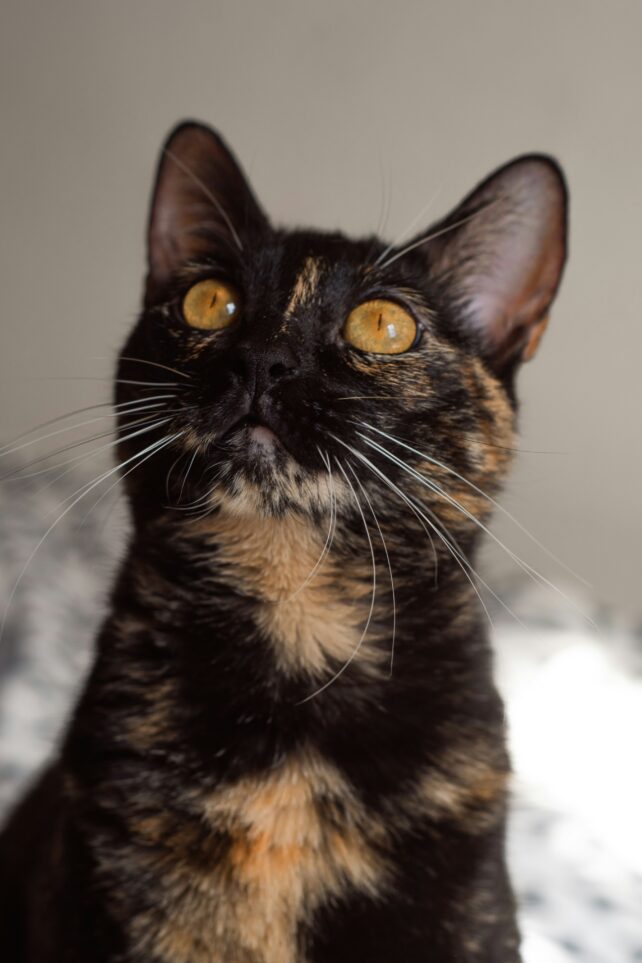
- Tortoiseshells: A marbled mix of orange and black.
- Calicos: A patchwork of orange, black, and white.
- Solid Orange Females: A rarity occurring only when both X chromosomes carry the mutation.
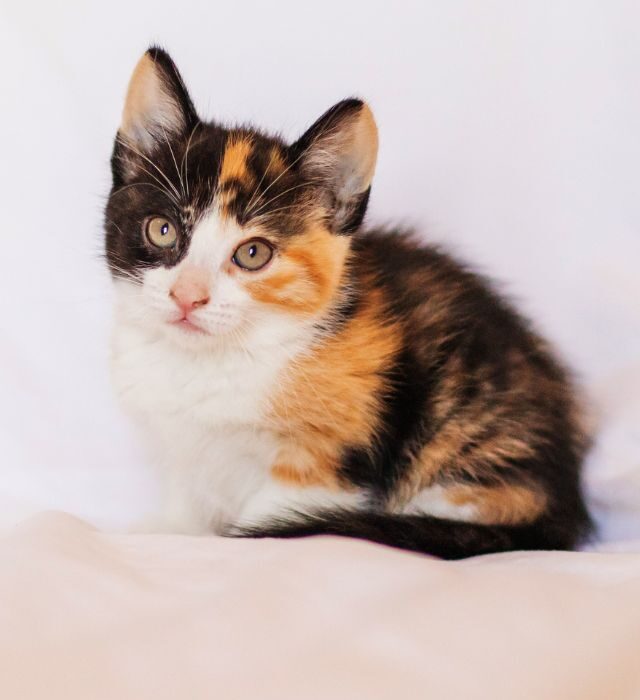
Calico vs. Tortoiseshell
The difference between these two patterns comes down to an additional factor:
White Spotting Mutation Affects melanocyte survival during migration Creates distinct white patches.
Pigmentation and the "One Brain Cell" Myth
The second study, led by Hidehiro Toh of Kyushu University, confirmed that Arhgap36 is indeed the culprit. The overexpression of this gene suppresses the production of dark pigments.
The Chemical Shift:
Cognition and Health
There is a popular internet meme that orange cats are less intelligent than other cats. However, science does not support this. While Arhgap36 malfunctions can cause developmental issues in other species, in cats, it is only overexpressed in melanocytes (pigment cells). There are no observed negative effects on their mental wellbeing or overall health.
Final Thoughts: Cats and Happiness
Regardless of their genetic makeup, orange cats are part of a species that seems to boost human morale. A study across 93 countries indicated that nations with higher cat populations tend to report higher levels of general happiness. (Though researchers caution that ).
Summary of Findings
def orange_cat_genetics():
    gene = "Arhgap36"
    mutation = "5kb deletion"
    location = "X Chromosome"
    result = "Pheomelanin > Eumelanin"
    return f"The {mutation} in {gene} on the {location} causes {result}."

print(orange_cat_genetics())
This research was published in Current Biology.