US report details extent of 'devastating' dating-app scams
US Congressional Report: The Devastating Reality of Dating App Fraud
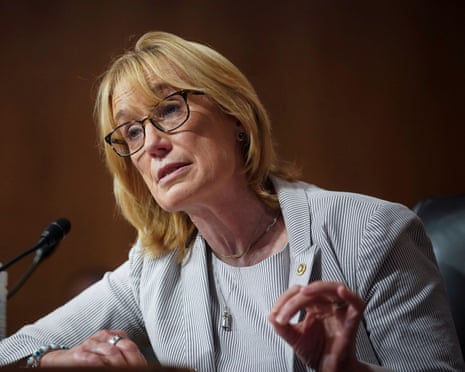 Senator Maggie Hassan in Washington, 2020.
A recent US government report has shed light on the "devastating" nature of romance scams, describing the experience of victims as being trapped in a vortex. The investigation, led by Senator Maggie Hassan (D-NH) and Senator Marsha Blackburn (R-TN), specifically targeted the practices of Match Group.
The Human Toll: Mary's Story
In 2024, a woman named Mary joined the app Plenty of Fish seeking a genuine emotional connection. Instead, she encountered a predator. Her experience followed a predatory pattern:
- Initial rapport and frequent conversation.
- Transition to constant contact and psychological pressure.
- Repeated requests for financial assistance.
- Escalation of demands.
"You’re sending money, and it’s adding up, but each one of those times that you send money, it’s, like, not connected to the other times. But finally when I realized how much money I lost, I was like: ‘Whoa.’"
Mary eventually lost approximately $100,000, which she transferred via cryptocurrency. She later discovered that the scammer had used the same photos across multiple profiles. She attributes her vulnerability to a "force of control" exerted by the fraudster.
The Scale of the Crisis
The financial impact of these scams is staggering. According to the senators, the annual cost to Americans is:
Match Group Ecosystem
The investigation focused on the various platforms operated by Match Group:
| App Name | Status |
|---|---|
| Tinder | Investigated for outdated security |
| Hinge | Investigated for bad actor matches |
| Plenty of Fish | Platform used in Mary's case |
| Match | Formerly Match.com |
The "Bad Actor" Pipeline
The following diagram illustrates the flow of fraud identified in the report:
Technical Failures and Findings
The report reveals a significant lag in security updates. Internal documents suggest that Tinder's machine learning capabilities were stagnant.
REPORT FINDING:
As of H2 2025, Tinder had failed to update
the majority of its ML models for several years.
Result: Decreased reliability in detecting
emerging threats and bad actors.
Key Statistics (US Market, through Q3 2025):
- 1.5 million scammers or bad actors on Tinder and Hinge successfully matched with at least one user.
- 500,000 of those fraudulent accounts successfully moved the conversation off-platform by exchanging contact information.
Corporate Response and Remediation
Match Group has since implemented several changes to ignore combat these issues. These include:
- Facial Verification: A new requirement for all new Tinder users in the US to provide a video selfie.
- AI Integration: The deployment of a
new AI modelin the first half of 2025 to better identify and purge harmful accounts.
Yoel Roth, Senior VP of Trust and Safety at Match Group, defended the company:
"We’re grateful the committee recognized our significant advancements... That said, the report mischaracterizes both the historical scale of our investment and the work already complete."
Match Group further claimed to NBC News that many of these safety features, including the "face check," were already in development prior to the Congressional inquiry.
Legislative Next Steps
To protect citizens from "global criminal enterprises," Senator Hassan and Senator Rick Scott (R-FL) have introduced legislation to create a centralized reporting portal. This would allow victims to:
- Report scams efficiently.
- Access direct assistance from law enforcement.
- Coordinate with relevant government agencies.
Senator Hassan emphasized that while Match Group has made progress, the delay in action was unacceptable: "It shouldn’t have taken so long, and there’s still more that Match needs to do."
 Reference image from the investigation.